Global Population Statistics
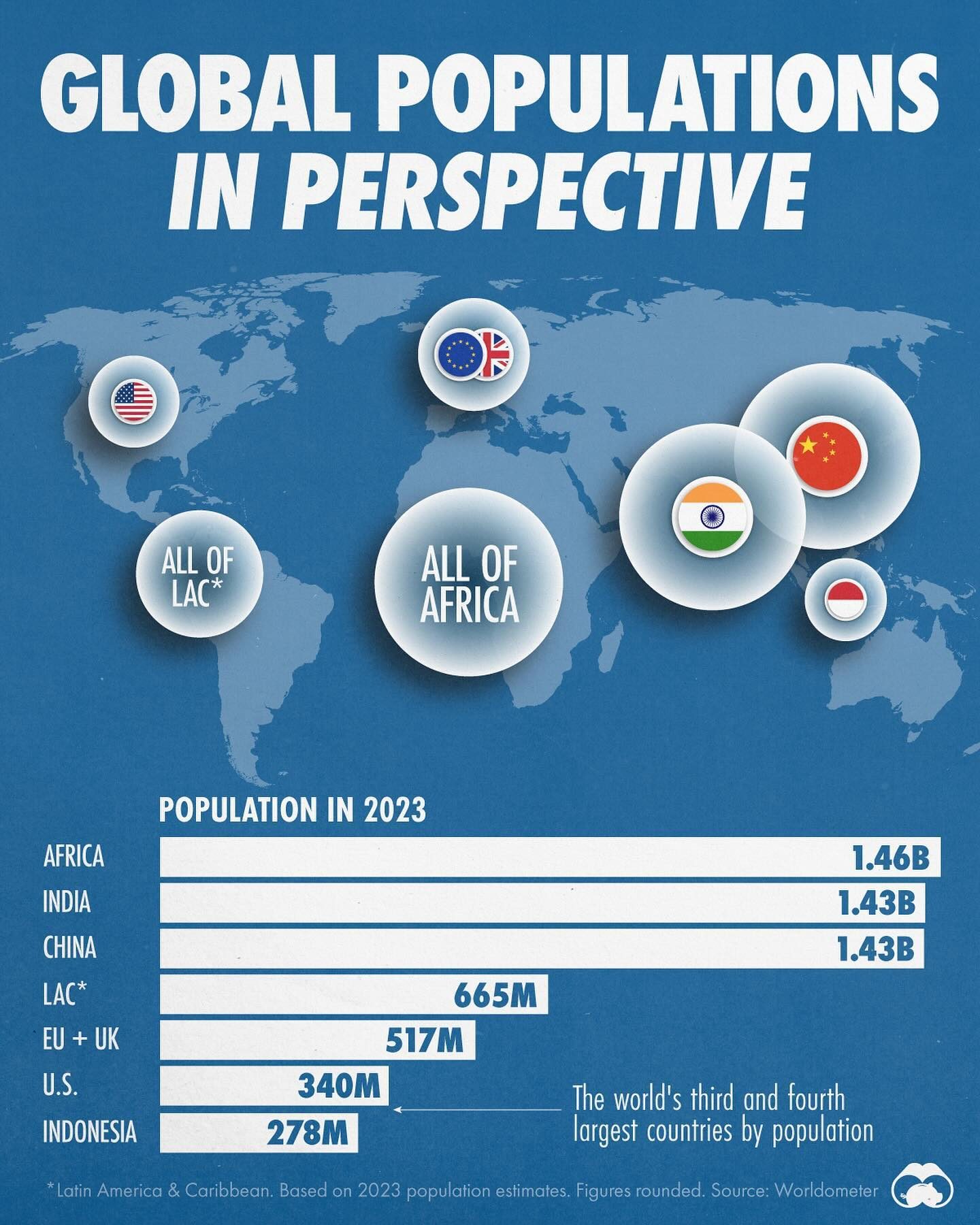
China and India are the two most populous countries in the world, with each having more than twice the population of all of Latin America and the Caribbean combined. Together, these two Asian giants make up 35.5% of the global population. But how do these numbers compare to those of other nations around the globe? Let's break down the data to gain a clearer perspective.
Context / Why this matters
Understanding global population statistics is crucial for various reasons, including resource allocation, policy-making, and economic planning. The distribution of the world's population influences everything from international trade and environmental impact to healthcare and education. By examining the populations of major countries and regions, we can better appreciate the demographic forces shaping our world.
Main discussion
The Powerhouses: China and India
China and India are the undisputed leaders in terms of population. Each country has a staggering 1.43 billion people. This means that together, they account for a massive 29.9% of the global population. The sheer size of these populations has significant implications for global economics, politics, and environmental sustainability. For instance, the consumer markets in these countries are enormous, influencing global manufacturing, agriculture, and services. However, such large populations also pose challenges, including housing, food security, and healthcare.
Africa: A Rising Continent
Africa, the second-most populous continent, has a population of 1.46 billion. This figure is projected to continue rising, with the United Nations estimating that Africa will have the largest population growth over the next few decades. This demographic shift will have profound implications for Africa and the world. The youthful population in Africa presents both opportunities and challenges. While a large youth population can drive economic growth through innovation and productivity, it also requires substantial investment in education and job creation.
Latin America and the Caribbean
Latin America and the Caribbean (LAC) have a combined population of 665 million. Although this figure is less than half of the populations of China and India, it represents a significant portion of the global population. The region is diverse, with countries ranging from large economies like Brazil and Mexico to smaller nations in the Caribbean. The demographic trends in LAC are varied, with some countries facing aging populations while others have a significant youth bulge.
Europe and the United States
Europe, when including the United Kingdom (EU + UK), has a population of 517 million. This figure highlights the significant demographic weight of Europe in global affairs. The EU + UK is a major economic and political bloc, and its population and economic policies have a broad impact on the world. Meanwhile, the United States, with a population of 340 million, remains a global superpower with a profound influence on global politics and economics.
Asia and the Pacific
Beyond China and India, other Asian countries also hold significant populations. Indonesia, for instance, has a population of 278 million, making it the fourth most populous country in the world. This highlights the demographic importance of Southeast Asia in global affairs. Other countries in the region, such as Pakistan, Bangladesh, and the Philippines, also have large populations, contributing to Asia's overall dominance in global demographic statistics.
Practical tips
Navigating Global Population Data
When interpreting global population data, it's essential to consider not just the numbers but also the trends and implications. For instance, while China and India have the largest populations, their aging populations present unique challenges. In contrast, Africa's youthful population offers opportunities for economic growth but also requires significant investment in infrastructure and education. Understanding these nuances can help policymakers, businesses, and individuals make informed decisions.
Leveraging Population Data for Strategic Planning
For businesses, understanding population data can provide valuable insights into potential markets. For instance, the large and growing youth population in Africa presents opportunities for tech companies, while the aging populations in developed countries may offer opportunities in healthcare and senior services. For governments, population data can inform policies on education, healthcare, and infrastructure.
Important takeaways
The Dominance of Asia
Asian countries, particularly China and India, dominate the global population landscape. Together, they account for nearly a third of the world's population, making them key players in global affairs.
Africa's Future Growth
While Africa currently has the second-largest population, it is projected to have the largest population growth in the coming decades. This demographic shift will have profound implications for Africa and the world.
The Influence of Europe and the United States
Europe and the United States, despite having smaller populations than China and India, remain significant global players due to their economic and political influence.
The Diversity of Latin America and the Caribbean
Latin America and the Caribbean present a diverse demographic landscape, with varying population trends and challenges. Understanding these nuances is crucial for effective policy-making and economic planning.
Conclusion
The global population distribution is a complex and dynamic topic, with significant implications for various aspects of our world. By examining the populations of major countries and regions, we can gain a better understanding of the demographic forces shaping our world. China and India's dominance, Africa's future growth, Europe and the United States' influence, and Latin America and the Caribbean's diversity highlight the importance of population data in global affairs. Understanding these trends and their implications can help us navigate the challenges and opportunities of the 21st century.
Watch the Reel
Questions readers ask
What is the current population of China and India?
As of 2023, both China and India have populations exceeding 1.4 billion people each. This makes them the world’s most populous countries, with China approximately 1,425,888,636 and India approximately 1,428,627,663.
Who is the world’s largest population in 2023?
India surpasses China to become the most populous country in 2023.
Which region is expected to see the most significant population growth?
Africa is projected to experience the largest population growth in the coming decades. With a current population of about 1.46 billion, Africa's growth presents both opportunities and challenges for the continent and the global community.
How do China and India's populations compare to the rest of the world?
Together, China and India comprise 36% of the world's total population. This means that more than one-third of the global population resides in these two countries alone, highlighting their significant influence on global economies and resource allocation.
How do China and India's populations compare to the population of Latin America and the Caribbean?
China and India each possess more than twice the population of all of Latin America and the Caribbean, which have a combined population of around 666 million. This disparity underscores the sheer scale of China and India's populations.
What are some of the challenges faced by highly populous countries like China and India?
Highly populous countries like China and India face substantial challenges in resource allocation. These challenges include ensuring adequate supplies of food, water, and energy, as well as providing housing, healthcare, and employment opportunities for their large populations.
Recent articles
Fresh deep dives from the latest Reels we unpacked.




Comments
Be the first to comment.