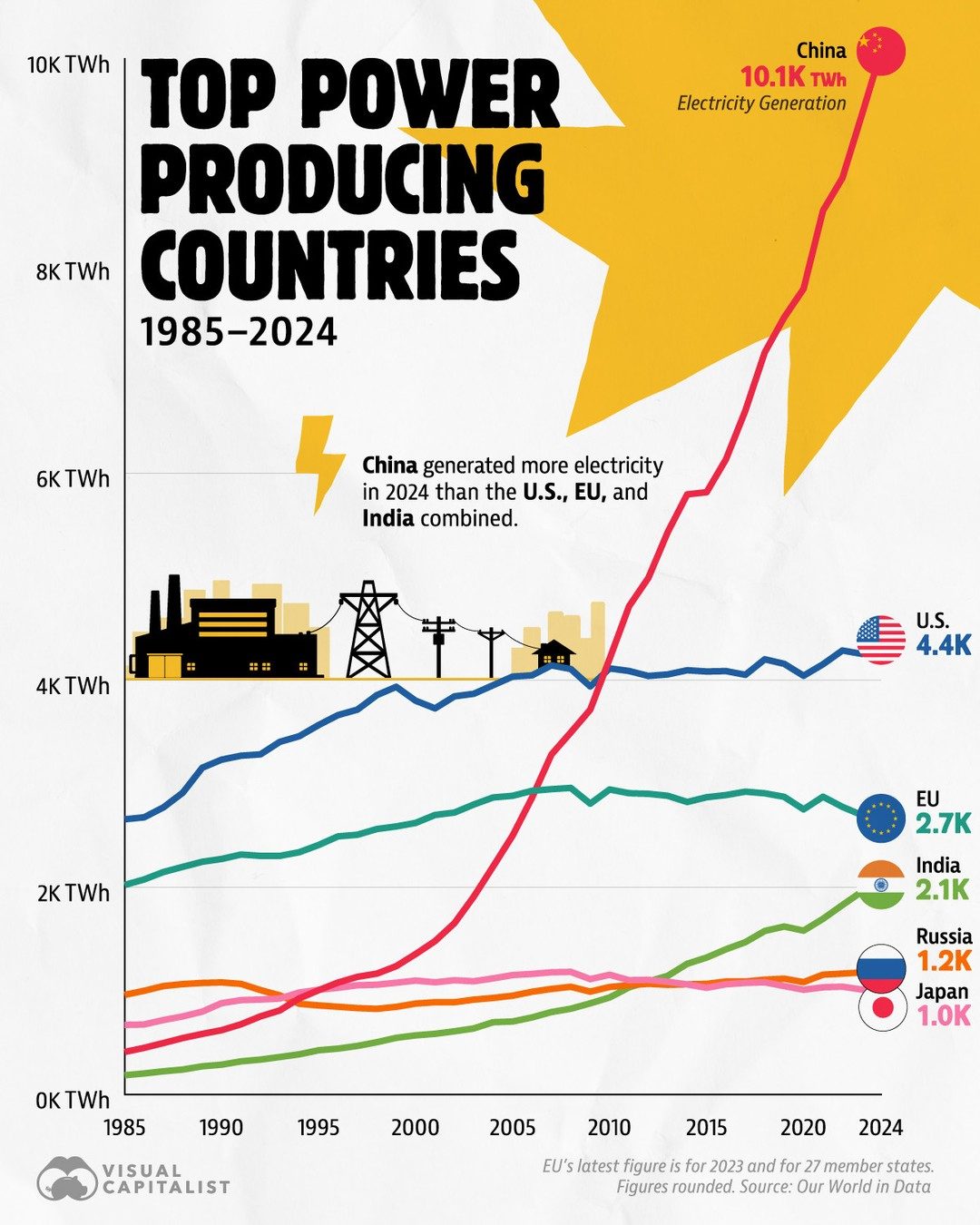
Power Generation by Country
China's emergence as the world's top power producer is a critical development in the global energy landscape. In 2024, China generated more electricity than the United States, the European Union, and India combined, marking a significant milestone in its energy production capabilities. This rapid rise in electricity generation has been a driving force behind China's economic growth.
Context
Understanding the shifts in power generation across countries provides valuable insights into global economic trends and energy policies. China's surge in electricity production reflects its ambitious infrastructure investments and industrial expansion. This growth is not just about meeting domestic energy demands but also about positioning China as a global leader in energy production and technology.
Top Power-Producing Countries: A Historical Perspective
To fully grasp China's achievements, it's helpful to look at the broader context of global electricity production over the past few decades. From 1985 to 2024, several countries have emerged as key players in the energy sector. Here are some of the top power-producing countries and their contributions to global electricity generation:
China
China's electricity generation has seen a dramatic increase, from 6,000 TWh in 1985 to over 10,100 TWh in 2024. This rapid expansion is a result of China's extensive investment in renewable energy sources, such as hydro, wind, and solar power, as well as its continued reliance on coal and natural gas. China's focus on renewable energy is part of a broader strategy to reduce its carbon footprint and enhance energy security.
United States
The United States has been a consistent leader in electricity production, generating approximately 4,400 TWh in 2024. The U.S. relies heavily on a mix of fossil fuels and renewable energy sources. The country has invested significantly in natural gas and nuclear power, while also increasing its capacity in wind and solar energy. The U.S. is known for its advanced energy infrastructure and technological innovations, which contribute to its high electricity generation.
European Union
The European Union, comprising 27 member states, produced around 2,700 TWh in 2023. The EU has been at the forefront of promoting renewable energy and reducing its dependence on fossil fuels. Countries like Germany, France, and Spain have made significant strides in wind, solar, and hydroelectric power. The EU's focus on sustainability and environmental policies has driven its energy production trends.
Russia
Russia generated approximately 2,100 TWh in 2024. The country is rich in natural resources, particularly natural gas and coal, which are key to its electricity production. Russia has also invested in nuclear power, making it a significant player in the global energy market. The country's vast landmass and diverse energy resources contribute to its high electricity generation.
India
India produced about 1,200 TWh in 2024. As one of the world's fastest-growing economies, India faces significant challenges in meeting its energy demands. The country has a mix of fossil fuels and renewable energy sources, with a growing emphasis on solar and wind power. India's rapid industrialization and urbanization have driven its electricity demand, making energy production a critical priority.
Japan
Japan generated around 1,000 TWh in 2024. Following the Fukushima nuclear disaster, Japan has shifted its focus towards renewable energy sources, particularly solar and wind power. The country has also invested in natural gas and hydroelectric power. Japan's energy policies aim to balance energy security, sustainability, and economic growth.
Key Drivers of Electricity Generation
Several factors contribute to a country's electricity generation, including economic growth, industrial development, and energy policies.
Economic Growth
Countries with robust economic growth typically experience an increase in energy demand. As economies expand, industries, transportation, and households require more electricity to support their activities. China's rapid economic growth has been a significant driver of its electricity demand and production.
Industrial Development
Industrial activities, particularly in manufacturing and heavy industries, are energy-intensive. Countries with strong industrial sectors, like China and the U.S., invest heavily in electricity generation to support these activities. Industrial development not only drives energy demand but also influences the types of energy sources used.
Energy Policies
Energy policies play a crucial role in shaping a country's electricity generation landscape. Policies that promote renewable energy, energy efficiency, and sustainability can significantly impact electricity production. For example, the EU's focus on environmental sustainability has driven its investment in renewable energy sources. Similarly, China's policies aimed at reducing carbon emissions have influenced its energy mix, shifting towards cleaner energy sources.
Practical Tips for Energy Consumers and Producers
For consumers and producers alike, understanding the trends in electricity generation can provide valuable insights and strategies for managing energy use and production.
For Consumers
-
Energy Efficiency: Adopting energy-efficient appliances and practices can help reduce electricity consumption. This not only saves money but also contributes to a more sustainable energy future.
-
Renewable Energy: Consumers can invest in renewable energy sources, such as solar panels or wind turbines, to generate their own electricity. This can reduce dependence on grid electricity and contribute to a cleaner environment.
-
Smart Grids: Utilizing smart grid technology can help consumers monitor and manage their energy use more effectively. Smart meters and automated systems can provide real-time data on energy consumption, enabling better management.
For Producers
-
Diversify Energy Sources: Investing in a mix of energy sources, including renewable and fossil fuels, can enhance energy security and sustainability. This diversification can also help meet fluctuating energy demands.
-
Invest in Technology: Advanced technologies, such as smart grids and energy storage systems, can improve the efficiency and reliability of electricity production and distribution.
-
Policy Advocacy: Engaging in policy advocacy to promote a favorable regulatory environment for energy production and innovation can drive sustainable growth. This includes supporting policies that incentivize renewable energy and energy efficiency.
Important Takeaways
- China's rapid rise in electricity generation has been a critical factor in its economic growth, surpassing the combined output of the U.S., EU, and India.
- The global energy landscape is shaped by economic growth, industrial development, and energy policies.
- Diversifying energy sources, investing in technology, and promoting sustainable practices are key strategies for both consumers and producers.
Conclusion
China's achievement in becoming the world's top power producer highlights the dynamic nature of global energy trends. Understanding the factors driving electricity generation in different countries provides valuable insights into energy policies and economic development. As we move forward, embracing sustainability, technological innovation, and a diverse energy mix will be crucial for meeting future energy demands and ensuring a cleaner, more secure energy future.
Watch the Reel
Questions readers ask
How much more electricity does China produce compared to other major countries?
China generates more electricity than the United States, the European Union, and India combined. This means that China's power output exceeds the total output of these three major economies put together.
What factors have contributed to China's rise in electricity production?
China's surge in electricity production can be attributed to its substantial investments in infrastructure and its strategic focus on both renewable and traditional energy sources. This has allowed China to significantly increase its power generation capacity.
How does China's electricity production compare to other top-producing countries like Russia and Japan?
As of 2024, China leads the world in electricity production, surpassing countries like Russia and Japan. While specific data for these countries is not mentioned, China's output is notably higher than these significant producers.
What trends in electricity production have been observed in 2024?
In 2024, China's electricity production has shown remarkable growth, establishing it as the global leader. This trend highlights China's increasing dominance in the global energy landscape, driven by its ambitious infrastructure projects and industrial expansion.
How has China's electricity production changed since 1985?
While the article does not provide specific figures, it is clear that China's electricity production has grown significantly since 1985. This growth reflects China's rapid industrialization and infrastructure development over the past several decades.
What are China's strategic goals in electricity production and energy policies?
China aims not only to meet its domestic energy demands but also to establish itself as a global leader in energy production. This involves a balanced approach to developing both renewable and traditional energy sources, along with substantial infrastructure investments.
Related deep dives
Similar reads based on topic and creator.


Recent articles
Fresh deep dives from the latest Reels we unpacked.




Comments
Be the first to comment.