Clean Energy Manufacturing: Global Distribution
Clean energy technologies are pivotal in the global shift towards sustainability. Understanding where these technologies and their components are manufactured is crucial for grasping the dynamics of the clean energy market. China leads the industry, dominating the manufacturing of many clean energy technologies. This article breaks down the global manufacturing capacity by region for mass-manufactured clean energy technologies.
Why This Matters
The geography of clean energy manufacturing influences everything from supply chains to geopolitical dynamics. Knowing where these technologies are produced helps stakeholders make informed decisions about investments, trade policies, and environmental impacts. The distribution of manufacturing capacity also highlights the competitive advantages and challenges faced by different regions.
Main Discussion
Global Manufacturing Capacity
The global distribution of clean energy technology manufacturing is complex and varied. China holds a significant share in various sectors. Europe and the Asia Pacific region also contribute substantially, each with their own strengths.
Offshore Wind
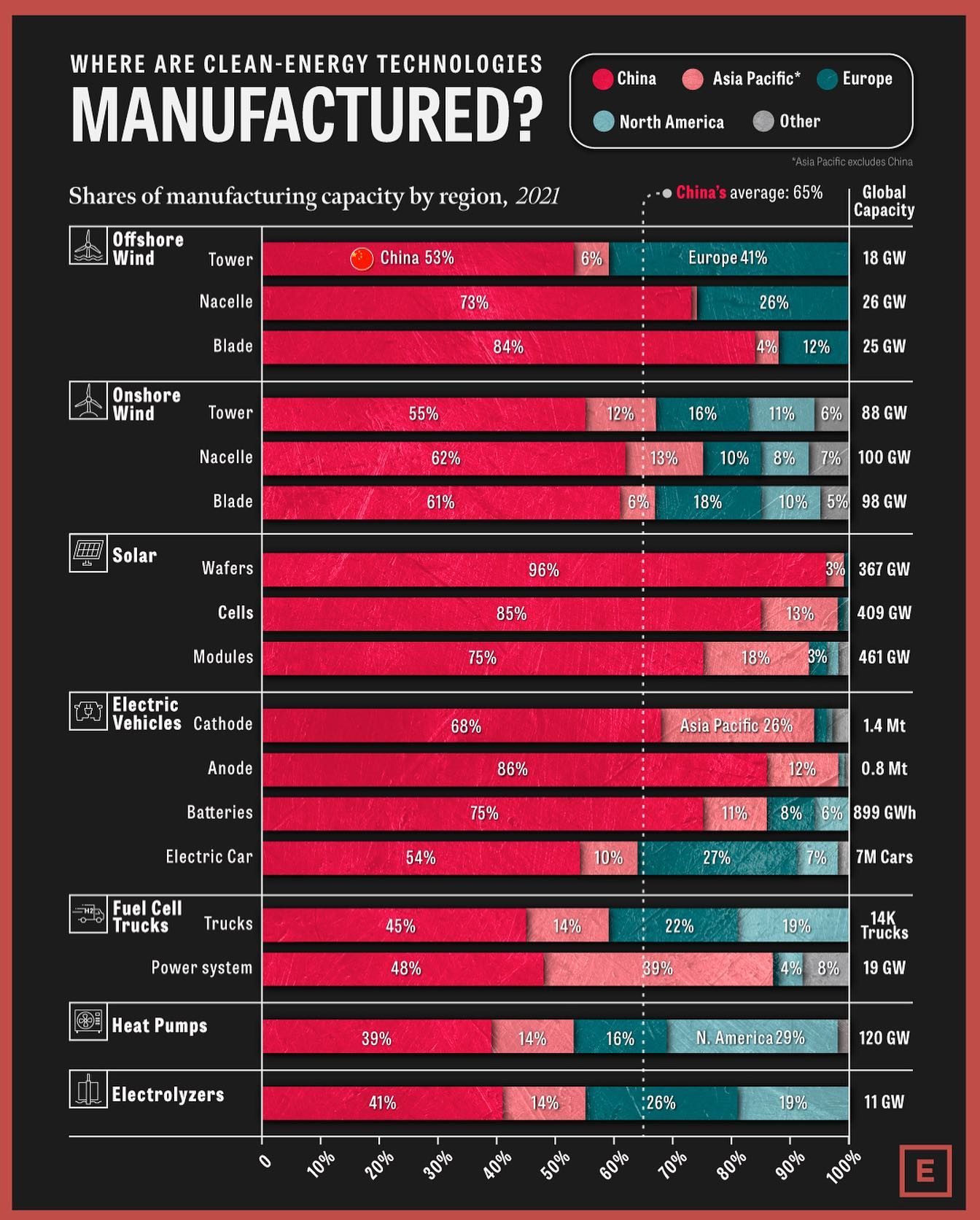
Offshore wind technology is a critical component of the renewable energy landscape. China leads in the manufacturing of offshore wind components, with an average of 53% market share. Specifically, China produces 73% of nacelles, 84% of towers, and 62% of blades. Europe follows closely, contributing 41% to the manufacturing capacity.
Onshore Wind
Onshore wind technology is another vital sector. China dominates this market as well, manufacturing 55% of towers and 61% of blades. Europe and the Asia Pacific region also play significant roles, with their combined shares making up a considerable portion of the global manufacturing capacity.
Solar Energy
Solar energy is a cornerstone of the clean energy transition. China is the undisputed leader in solar technology manufacturing, producing 85% of wafers, 86% of cells, and 75% of modules. The disparity between China and other regions is notable, with Europe and the Asia Pacific region contributing smaller but still significant shares to the global capacity.
Electric Vehicles
Electric vehicles (EVs) are transforming the transportation sector. China's dominance extends to this area as well, manufacturing 75% of batteries and 54% of electric cars. However, the Asia Pacific region, including countries like South Korea and Japan, also plays a crucial role, especially in the production of fuel cells and electric trucks. Europe contributes 41% to the manufacturing capacity of fuel cells and electric vehicles, showcasing a balanced approach to clean energy production.
Regional Breakdown
North America
North America is a significant player in the clean energy sector, though it trails behind China in terms of manufacturing capacity. The region's contributions to wind and solar technology manufacturing are modest but notable. North America's focus is on innovation and technology development, which often complements its manufacturing efforts.
Europe
Europe is a key player in the global clean energy market, particularly in wind turbine manufacturing. The region's strengths lie in technological innovation and stringent environmental regulations, driving its competitive edge in certain sectors. Europe's manufacturing capacity in offshore and onshore wind technologies is significant, with Europe producing 41% of offshore wind components and contributing to a substantial portion of global onshore wind technology manufacturing.
Asia Pacific
The Asia Pacific region, excluding China, is a major contributor to the global clean energy sector. The region's strengths lie in electric vehicle component manufacturing, particularly in countries like South Korea and Japan. The Asia Pacific region's manufacturing capacity for electric vehicle components is notable, with a significant share of global production.
Practical Tips
For Investors
When considering investments in clean energy technologies, it's essential to understand the global manufacturing landscape. Identifying key regions for specific technologies can help investors make strategic decisions. For example, focusing on China for solar technology investments or Europe for wind turbine investments could yield better returns.
For Policymakers
Policymakers should consider the regional distribution of manufacturing capacity when formulating trade policies and incentives. Encouraging domestic manufacturing through incentives and regulations can bolster a country's position in the global clean energy market.
For Consumers
Consumers interested in adopting clean energy technologies should be aware of the source of these technologies. Understanding the manufacturing landscape can help consumers make informed decisions about the environmental and ethical implications of their purchases.
Important Takeaways
- China's Dominance: China leads the manufacturing of most clean energy technologies, with a significant global market share.
- European Strengths: Europe is a key player in wind turbine manufacturing, driven by innovation and environmental regulations.
- Asia Pacific Contributions: The Asia Pacific region, particularly countries like South Korea and Japan, is crucial in electric vehicle component manufacturing.
- North American Innovation: North America's focus on innovation and technology development complements its manufacturing efforts.
Conclusion
The global manufacturing capacity for clean energy technologies is distributed unevenly, with China leading in most sectors. Europe and the Asia Pacific region also play crucial roles, each with unique strengths. Understanding this distribution is vital for investors, policymakers, and consumers alike. As the demand for clean energy technologies continues to grow, the global manufacturing landscape will undoubtedly evolve, presenting new opportunities and challenges.
Watch the Reel
Questions readers ask
Why is China considered a global leader in clean energy manufacturing?
China is a global leader in clean energy manufacturing due to its significant production capacity for various clean energy technologies. The country dominates the manufacturing of wind components, both offshore and onshore, as well as solar energy technologies. This extensive production capability has positioned China at the forefront of the global clean energy industry.
What are the implications of China's dominance in the clean energy supply chain?
China's dominance in the clean energy supply chain has several implications. It influences global supply chains, making many countries reliant on Chinese-made components. This dominance also impacts investment decisions, as stakeholders may prioritize China for manufacturing partnerships. Additionally, it shapes geopolitical dynamics and environmental impacts, as the production of clean energy technologies can have varying effects on the environment and global energy policies.
Which clean energy technologies does China manufacture the most?
China is particularly dominant in the manufacturing of wind and solar energy technologies. This includes both onshore and offshore wind components, as well as solar panels and related equipment. Additionally, China is a significant player in the manufacturing of electric vehicle components, further solidifying its role in the global clean energy market.
How does China's influence affect global clean energy investments?
China's influence affects global clean energy investments by attracting significant capital due to its production capabilities and market size. Investors may opt to fund projects and technologies in China to leverage its extensive manufacturing capacity and infrastructure. This can result in substantial investments in renewable energy projects, both within China and through international collaborations.
Why is it important to track the global distribution of clean energy manufacturing?
Tracking the global distribution of clean energy manufacturing is important for understanding the dynamics of the clean energy market. This information helps stakeholders make informed decisions about where to invest, how to shape trade policies, and how to mitigate environmental impacts. By knowing the geographic distribution of manufacturing, countries and companies can better navigate the complexities of the global clean energy sector and foster sustainable development.
Related deep dives
Similar reads based on topic and creator.


Recent articles
Fresh deep dives from the latest Reels we unpacked.




Comments
Be the first to comment.