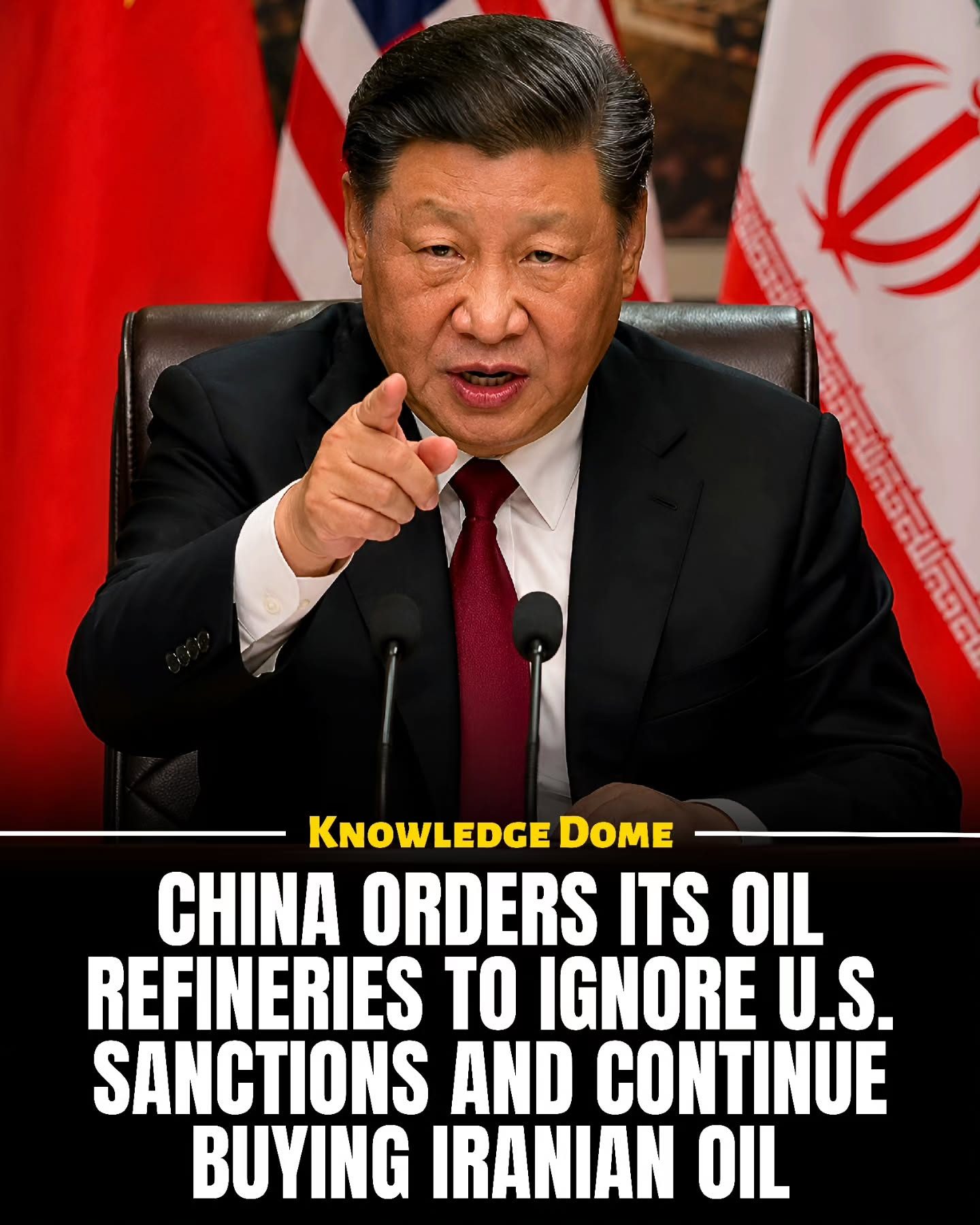
China Orders Its Refineries to Ignore U.S. Sanctions on Iranian Oil
The People's Republic of China has directed its oil refineries to defy recent U.S. sanctions on Iranian oil purchases, escalating tensions between the two global superpowers. This bold move comes as no surprise, given the ongoing geopolitical maneuvering between China, the U.S., and Iran. The sanctions, imposed by the Commerce Ministry in April, targeted five specific refineries: Hengli Petrochemical (Dalian) Refinery, Shandong Jincheng Petrochemical Group, Hebei Xinhai Chemical Group, Shouguang Luqing Petrochemical, and Shandong Shengxing Chemical. China's stance on these sanctions is clear: the country will not recognize or enforce them, citing a 2021 blocking law. This move highlights China's determination to maintain its economic ties with Iran, despite U.S. efforts to isolate the country.
Why This Matters
The geopolitical implications of this move by China cannot be overstated. China is the world's largest importer of Iranian crude oil, accounting for over 80% of Iran's shipped oil. The U.S. sanctions, therefore, directly challenge China's economic interests and its relationships with other countries. Moreover, this situation underscores the complexities of international relations, particularly when economic interests and political ideologies clash.
The Sanctions and China’s Response
U.S. Sanctions and Their Impact
The U.S. sanctions on Iranian oil were designed to curb Iran's influence and limit its access to financial resources. The sanctions specifically targeted five Chinese refineries that had been buying billions of dollars in Iranian oil. This move was part of a broader strategy to isolate Iran and limit its ability to fund its nuclear program and other controversial activities. The U.S. had previously sanctioned these refineries, including Hengli Petrochemical (Dalian) Refinery, for their continued purchase of Iranian crude.
China’s Blocking Law
In response to these sanctions, China invoked a 2021 blocking law, which allows the country to disregard foreign legal measures that it deems incompatible with its own laws and interests. By doing so, China has effectively nullified the effects of the U.S. sanctions within its jurisdiction. This move not only protects Chinese companies but also sends a clear message to the international community about Beijing's stance on unilateral sanctions.
Economic Implications
China's decision extends beyond the oil refineries and involves financial support as well. Chinese banks have reportedly been instructed to pause new yuan loans to some of the sanctioned refineries, showing that China’s pushback is as much about money and trade support as it is about the refineries themselves. This demonstrates the intricate web of economic and political relationships that underpin the oil industry.
Trade and Financial Support
The importance of trade and financial support in this context cannot be overlooked. China's refusal to recognize the U.S. sanctions means that Chinese companies can continue to engage in trade with Iran, maintaining vital economic ties. This move also ensures that financial institutions do not face repercussions for continuing trade with sanctioned entities, a crucial aspect of maintaining economic stability and support for Chinese companies.
Political Dimensions
Diplomatic Relations
The sanctions and China's response highlight the fragile nature of diplomatic relations between the U.S. and China, as well as between China and Iran. China has accused the U.S. of violating international law and diplomatic norms, a stance that could strain relations between the two countries. This diplomatic posturing is part of a broader geopolitical strategy, where economic measures are used as leverage in diplomatic negotiations.
Geopolitical Significance
For Iran, China's support is a lifeline in the face of international isolation. As the largest importer of Iranian oil, China's continued trade helps mitigate the economic impact of U.S. sanctions. This support underscores the geopolitical significance of the relationship between China and Iran, as both countries seek to counterbalance U.S. influence in the region.
Practical Tips for Doing Business in This Environment
For businesses operating in this complex geopolitical environment, staying informed and adaptable is crucial. Here are some practical tips for navigating these uncertain waters:
Stay Informed
Keeping abreast of the latest developments in international relations and trade policies is essential. Pay close attention to statements from governmental agencies, trade organizations, and industry experts to understand the evolving landscape.
Diversify Suppliers and Markets
Diversifying your supply chain and market presence can help mitigate risks associated with geopolitical tensions. By not relying on a single country or supplier, you can better insulate your business from the fallout of diplomatic disputes.
Legal Compliance
Ensure that your business complies with all relevant laws and regulations, including those related to trade and sanctions. Consult with legal experts to understand the implications of international laws and regulations on your operations.
Strategic Partnerships
Forming strategic partnerships with businesses and organizations in different regions can provide a buffer against geopolitical risks. These partnerships can offer insights into local markets and help you navigate regulatory challenges.
Important Takeaways
The Role of China
China's decision to defy U.S. sanctions on Iranian oil underscores its commitment to maintaining economic and political ties with Iran, despite international pressure. This move also highlights China's growing influence in global affairs and its willingness to challenge U.S. hegemony.
Impact on International Relations
The geopolitical tensions between the U.S. and China, exacerbated by the sanctions and China's response, have far-reaching implications for international relations. These tensions could lead to broader economic and political consequences, affecting trade, diplomacy, and global security.
Conclusion
China's directive to its oil refineries to ignore U.S. sanctions on Iranian oil is a significant development in the complex landscape of international relations. This move underscores the deep-seated economic and political interests at stake and has far-reaching implications for global trade and diplomatic relations. As these tensions continue to unfold, it is evident that the interplay between economic interests, political ideologies, and diplomatic maneuvering will shape the future of international relations. For businesses and policymakers alike, understanding and navigating this dynamic environment will be crucial for success.
Watch the Reel
Questions readers ask
Why has China directed its refineries to buy Iranian oil despite U.S. sanctions?
China has ordered its refineries to purchase Iranian oil to maintain its significant economic interests, and due to a 2021 blocking law, China does not recognize the U.S. sanctions. This move also underscores China’s stance on maintaining independent trade policies.
Which Chinese refineries are involved in defying the U.S. sanctions on Iranian oil?
The five specific refineries targeted by the U.S. sanctions are Hengli Petrochemical (Dalian) Refinery, Shandong Jincheng Petrochemical Group, Hebei Xinhai Chemical Group, Shouguang Luqing Petrochemical, and Shandong Shengxing Chemical.
What is China's 2021 blocking law and how does it relate to the Iranian oil sanctions?
China's 2021 blocking law is a legislative measure that allows China to ignore and effectively block foreign sanctions that it deems unlawful. This law has been a key factor in China's decision to defy the U.S. sanctions on Iranian oil.
How does China's stance on Iranian oil impact geopolitical tensions?
China's defiance of U.S. sanctions on Iranian oil escalates geopolitical tensions, particularly between China and the U.S. It reflects the ongoing power struggle and economic competition between the two global superpowers.
What role do economic interests play in China's decision to defy U.S. sanctions on Iranian oil?
China’s economic interests are a major factor in its decision to defy U.S. sanctions. Iranian crude oil is a crucial component for many Chinese refineries, and the country is the leading importer of Iranian oil, making it a vital source of revenue and resources.
How have U.S. sanctions on Iranian oil affected global politics?
The U.S. sanctions on Iranian oil have had a significant impact on global politics, leading to increased tensions and highlighting the complexity of international relations. China's defiance of these sanctions further complicates the geopolitical landscape, particularly in the Middle East and Asia.
What are the implications of China's move on its relationship with Iran?
China's move to defy U.S. sanctions and buy Iranian oil strengthens its relationship with Iran, fostering economic ties and bolstering its position as a key ally in the region. This move also sends a strong message to the U.S. and other countries about China's independence in trade and international relations.
Recent articles
Fresh deep dives from the latest Reels we unpacked.




Comments
Be the first to comment.