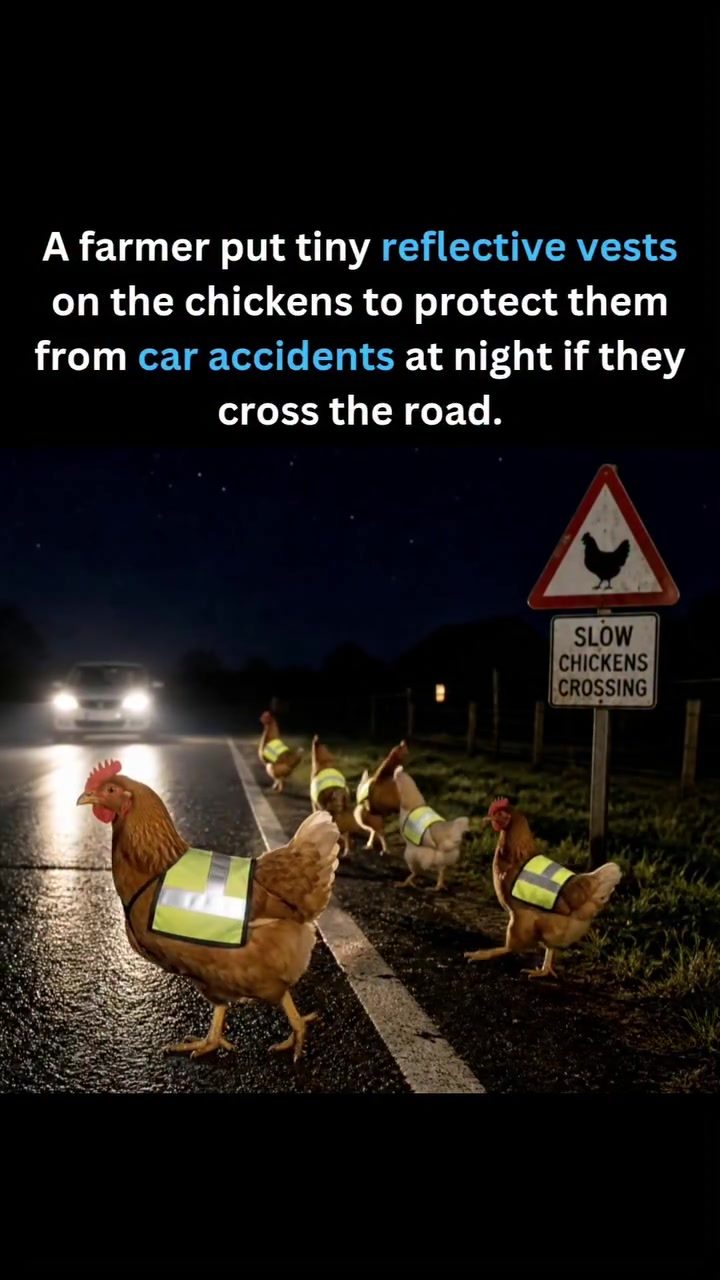
Chickens with Reflective Vests
In rural and semi-rural areas, protecting livestock from vehicular accidents is a significant concern. One innovative solution has been spotted: outfitting chickens with reflective vests. This unique approach aims to enhance the visibility of these crossers, especially at night, thereby reducing the risk of accidents.
Why This Matters
In many rural areas, roads are shared by both vehicles and animals. Chickens, being smaller and less predictable, are particularly vulnerable to accidents. Ensuring their safety is crucial for both animal welfare and the peace of mind of local residents. Reflective vests on chickens make them more visible to drivers, which is especially important during nighttime hours when visibility is poor.
The Concept in Action
Purpose and Design
The reflective vests are designed to be worn by chickens, with the primary purpose of making them more visible to drivers. These vests are equipped with reflective materials that catch the light from vehicle headlights, making the chickens stand out even in low-light conditions. The vests are typically worn by a group of chickens, as they often move in flocks, which increases their chances of crossing a road together.
Implementation
A farmer put tiny reflective vests on the chickens to protect them from car accidents at night if they cross the road. This method ensures that even in the darkest hours, the chickens can be seen by oncoming traffic. The implementation involves carefully fitting the vests on the chickens, taking into account their size and comfort. The process is straightforward, and the vests do not impede the chickens' movement or daily activities.
Practical Tips
If you are considering implementing a similar strategy to protect your chickens, here are some practical tips to keep in mind:
Measurement and Fit
Ensure that the reflective vests are the right size for the chickens. Ill-fitting vests can cause discomfort and may even harm the chickens. Measure each chicken's torso to get an accurate size for the vest. Some vest designs may come in adjustable sizes, which can be beneficial for growing chickens.
Reflectivity
Choose vests with high-quality reflective materials. These materials should be bright and highly reflective to ensure maximum visibility. Check for certifications or reviews that verify the reflectivity of the vests.
Durability
Opt for vests that are durable and can withstand the elements. Chickens may wander into various environments, and their vests should be able to endure the wear and tear. Look for vests made from sturdy materials that can withstand moisture, dirt, and other environmental factors.
Comfort
Ensure that the vests are comfortable for the chickens. They should not restrict movement or cause any discomfort. The vests should be lightweight and allow the chickens to move freely, as this is essential for their well-being.
Signage
Complement the vests with appropriate signage. A “SLOW CHICKENS CROSSING” sign can alert drivers to the potential presence of chickens on the road, making them more cautious and reducing the risk of accidents. Place the sign in a visible location, preferably near the road intersection or crossing.
Important Takeaways
The use of reflective vests for chickens is an effective and innovative way to protect these animals from road accidents. Here are some key takeaways:
- Increased Visibility: Reflective vests significantly enhance the visibility of chickens, making them more noticeable to drivers, especially at night.
- Easy Implementation: Fitting chickens with reflective vests is a straightforward process that requires minimal effort.
- Cost-Effective: The cost of reflective vests is relatively low, making this a cost-effective solution for protecting livestock.
- Community Safety: By implementing this method, not only do you protect your chickens but also enhance road safety for the entire community.
Conclusion
Outfitting chickens with reflective vests is a practical and effective solution for reducing the risk of road accidents. This method ensures the safety of chickens while also contributing to the overall safety of the community. By investing in reflective vests and appropriate signage, you can protect your livestock and promote a safer environment for everyone.
Watch the Reel
Questions readers ask
What is the primary benefit of using reflective vests on chickens?
Reflective vests significantly enhance the visibility of chickens at night. This is especially crucial in rural areas where roads are shared with vehicles, helping to prevent accidents and protect both the chickens and drivers.
Are reflective vests effective in all weather conditions?
Reflective vests are designed to enhance visibility using light from vehicle headlights. While they are effective in most conditions, their effectiveness can be reduced in heavy rain or fog, but they are still beneficial in most scenarios compared to having no reflective gear at all.
How do reflective vests improve animal welfare on roads?
By increasing the visibility of chickens, reflective vests help to reduce the number of accidents involving these animals. This means fewer injuries or fatalities for the chickens, contributing to their overall well-being and safety on rural roads.
Can reflective vests be used on other small animals as well?
Yes, the concept of using reflective gear can be applied to other small animals that roam near roads, such as ducks, rabbits, or even small dogs and cats. This can help to protect a wider range of animals and reduce road accidents involving these creatures.
How can rural residents implement this safety measure for their chickens?
Rural residents can purchase or make reflective vests designed for small animals. It's important to ensure the vests fit properly and are comfortable for the chickens. Many designs allow for easy fitting and removal, making them practical for daily use.
Are there any downsides to using reflective vests on chickens?
While reflective vests offer numerous benefits, they may not be a foolproof solution. Some chickens may become entangled or stressed by wearing the vests. Regularly inspecting the vests for any signs of wear and tear, and ensuring they fit correctly, can help minimize these issues.
Can this method be used in urban areas as well?
While the concept is more commonly discussed in rural areas, urban areas with free-roaming chickens could also benefit. However, urban environments typically have different challenges, such as higher vehicle traffic and less open space, which might require additional safety measures.
Recent articles
Fresh deep dives from the latest Reels we unpacked.




Comments
Be the first to comment.