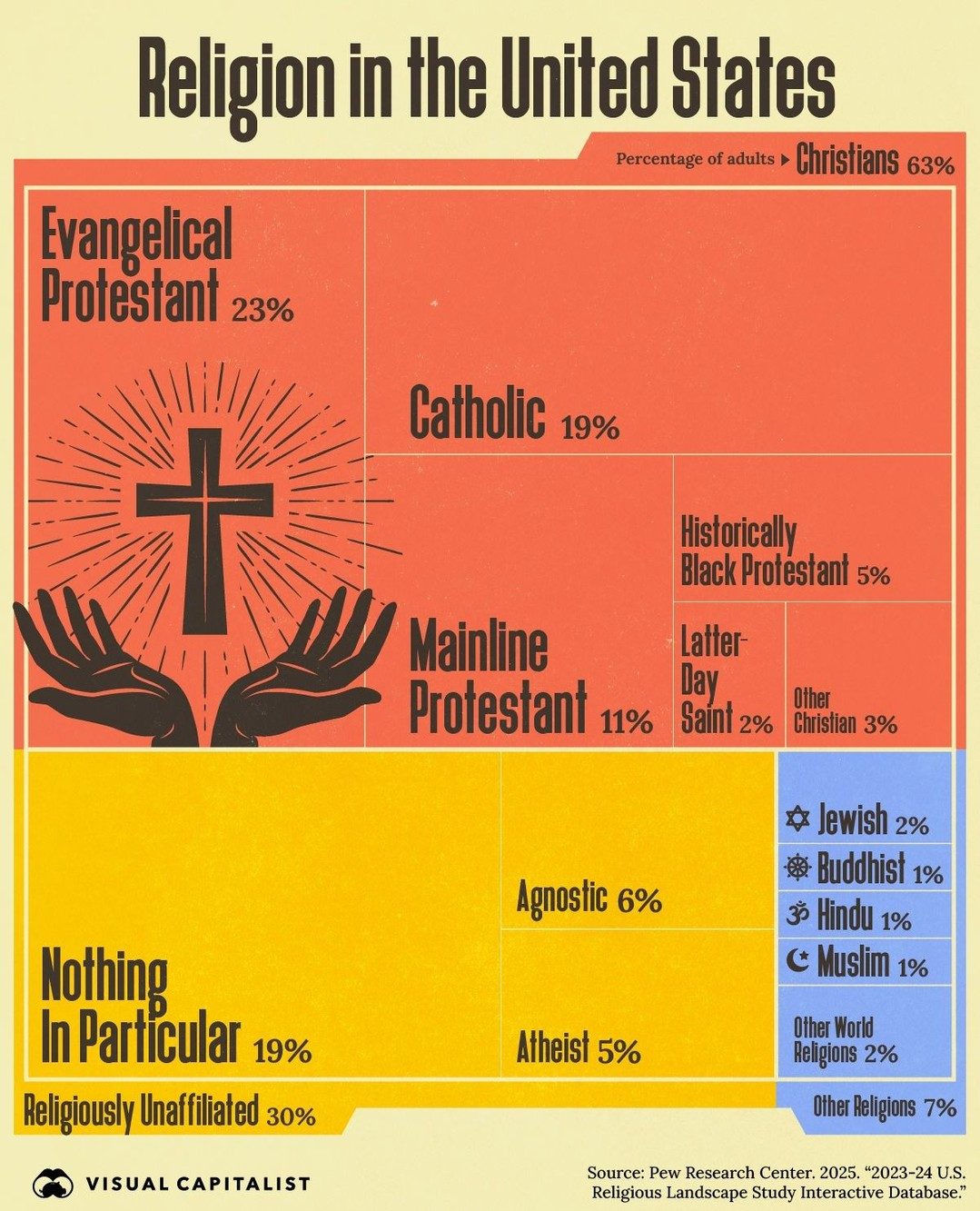
Religion in the United States
The religious landscape of the United States has undergone significant changes over the past decade and a half. Christians, who have long been the dominant religious group, now make up 62% of the population, down from 78% in 2007. Simultaneously, the number of Americans who identify as religiously unaffiliated has seen a notable rise, increasing from 16% to 29% during the same period.
Why this matters
Understanding the shifts in religious affiliation in the United States is crucial for various reasons. It impacts social and political dynamics, cultural norms, and community structures. These changes also reflect broader trends in society, such as the evolving role of faith in everyday life and the increasing diversity of religious beliefs and practices.
Main discussion
The Decline of Christianity
Christians remain the largest religious group in the U.S., but their numbers have been steadily declining. According to the Pew Research Center's 2023-24 U.S. Religious Landscape Study, Christians now account for 63% of adults in the country. This decline is evident across various Christian denominations, including Evangelicals, Catholics, and Mainline Protestants.
- Evangelical Christians make up 23% of the population, down from a higher percentage in previous years.
- Catholics represent 19% of the population.
- Mainline Protestants account for 11%.
- Historically Black Protestants make up 5% of the population.
The Rise of the Religiously Unaffiliated
The most significant change in the U.S. religious landscape is the rise of the religiously unaffiliated. This group, which includes agnostics, atheists, and those who identify with "nothing in particular," now constitutes 30% of the adult population. This rise reflects a broader trend of individuals moving away from traditional religious institutions and practices.
- Agnostics make up 6% of the population.
- Atheists account for 5%.
- Those who identify with "nothing in particular" make up 19% of the population.
The Diversity of Other Religions
While Christianity's share of the population has decreased, the diversity of other religious groups has increased. These groups, though smaller in number, contribute to the rich tapestry of religious beliefs in the U.S.
- Other World Religions include 7% of the population, encompassing a variety of faiths such as Hinduism, Sikhism, and others.
- Jewish individuals make up 2%.
- Buddhist and Muslim populations each represent 1% of the population.
Other Religions
There is also 1% of the population who identify with other religions, these include, but are not limited to, Hinduism, Sikhism, and various indigenous religions. They contribute to the diverse array of spiritual beliefs in the U.S. This diversity reflects the country's ongoing cultural and demographic shifts.
Practical tips
For those interested in navigating or understanding the religious landscape, here are a few practical tips:
- Engage in Dialogue: Understanding different religious perspectives can foster empathy and mutual respect. Engage in conversations with people from various faith backgrounds to learn more about their beliefs and practices.
- Stay Informed: Keep up with the latest research and reports from organizations like the Pew Research Center. These studies provide valuable insights into the evolving religious landscape.
- Embrace Diversity: Recognize and celebrate the diversity of religious and spiritual beliefs in the U.S. This can foster a more inclusive and understanding society.
Important takeaways
The shifting religious landscape of the United States is a complex and multifaceted phenomenon. While Christianity remains the dominant religious affiliation, its share of the population has decreased significantly. Simultaneously, the number of religiously unaffiliated individuals has grown, reflecting broader societal changes. Additionally, the diversity of other religious groups highlights the rich tapestry of beliefs in the country.
Conclusion
The religious landscape of the United States is dynamic and evolving. As Christians make up a smaller percentage of the population and the number of religiously unaffiliated individuals grows, it is essential to understand and embrace this diversity. By engaging in dialogue, staying informed, and recognizing the richness of our religious landscape, we can foster a more inclusive and understanding society.
Watch the Reel
Questions readers ask
What are the most significant changes in the religious landscape of the USA over the past 15 years?
The most significant change is the decrease in the percentage of Americans identifying as Christian, from 78% to 62%, and the increase in the number of religiously unaffiliated Americans, from 16% to 29%. This shift indicates a move away from traditional religious affiliations and towards unaffiliated identities.
What does it mean to be 'religiously unaffiliated'?
Being 'religiously unaffiliated' means an individual does not identify with any particular religious group. This does not necessarily mean they are non-believers or atheists, though many are. It can also apply to those who believe in a higher power but are not tied to any specific organized religion, and those who are spiritual but not religious.
How do these religious shifts impact American society?
These shifts have wide-ranging impacts on American society. They influence social norms, political views, and community structures. Additionally, these changes reflect broader trends in society, such as the evolving role of faith in everyday life and the increasing diversity of religious beliefs and practices.
What are the main findings of the Pew Research religion study?
The Pew Research study highlights the decreasing percentage of Christians in the USA, from 78% to 62%, and the increasing number of religiously unaffiliated Americans, from 16% to 29%. Additionally, the study suggests that these trends are part of a broader societal shift in attitudes towards religion and spirituality.
How do these religious trends compare to other Western nations?
Similar to the USA, many Western nations are experiencing a decline in traditional religious affiliations and an increase in the number of people who are religiously unaffiliated. However, the pace and specific dynamics of these changes can vary greatly between countries. For instance, some European countries have a larger proportion of unaffiliated individuals than the USA.
What are the most common reasons given by Americans for becoming religiously unaffiliated?
Americans often cite several reasons for becoming religiously unaffiliated. These include disillusionment with religious institutions, disagreements with religious teachings, a desire for spiritual independence, or a shift in personal beliefs. Some also report that they simply do not find organized religion to be personally meaningful.
Related deep dives
Similar reads based on topic and creator.




Recent articles
Fresh deep dives from the latest Reels we unpacked.




Comments
Be the first to comment.