CEO Turnover in U.S. Industries
CEO turnover has been a significant trend from January to November 2024, with certain industries experiencing notably higher rates of leadership changes. This analysis delves into the dynamics of CEO departures across various sectors, highlighting the most affected industries and the common reasons behind these changes.
Why This Matters
Understanding CEO turnover is crucial for several reasons. It provides insights into the stability and strategic direction of companies. High turnover rates can indicate broader challenges within an industry, such as regulatory pressures, economic shifts, or internal management issues. For investors, employees, and stakeholders, tracking these trends can offer valuable information about the health and future prospects of different sectors.
Main Discussion
Industries with the Highest CEO Turnover
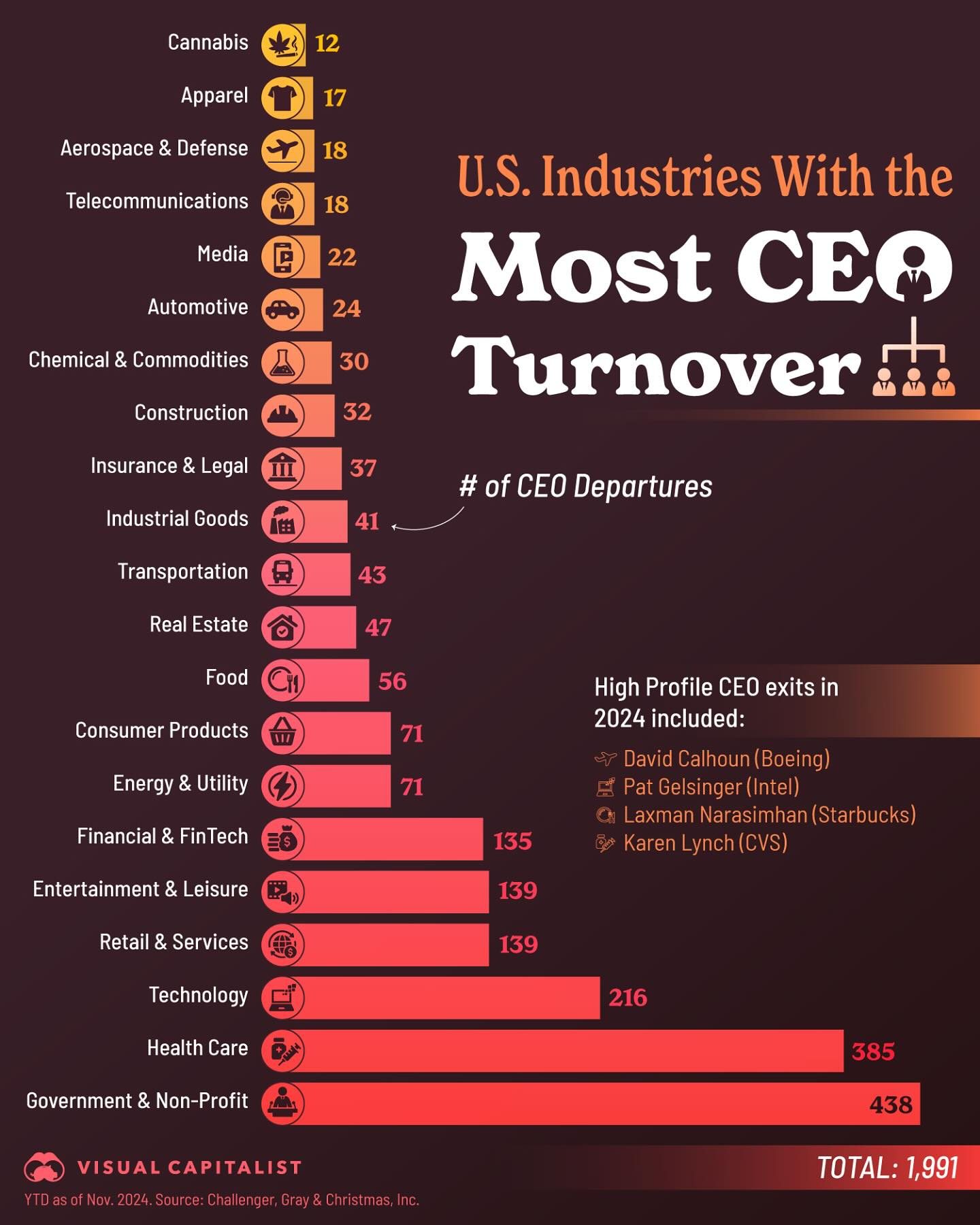
From January to November 2024, the Government & Non-Profit sector topped the list with 438 departures, closely followed by Health Care with 385, and Technology with 139 departures.
Government & Non-Profit
The Government & Non-Profit sector saw the highest number of CEO departures. This could be attributed to various factors, including political transitions, policy changes, and organizational restructuring. Non-profits, in particular, often face unique challenges related to funding, public perception, and leadership vision, all of which can contribute to high turnover rates.
Health Care
Health Care ranked second with 385 departures. This industry is under constant pressure from regulatory changes, technological advancements, and the evolving needs of patients. High turnover in this sector can be linked to the complexities of managing healthcare systems, the need for specialized leadership, and the impact of public health crises such as the COVID-19 pandemic.
Technology
Technology, with 139 departures, experienced significant CEO turnover. The rapid pace of innovation, competition, and the need for agile leadership contribute to frequent changes at the top. Additionally, the sector's reliance on intelligent capital and talent retention makes it particularly susceptible to leadership changes.
Common Reasons for CEO Departures
The most common reason cited for CEO departures was ‘stepped down,’ with 551 cases. This broad term can encompass a range of situations, from personal decisions to strategic shifts within the organization. It is important to note that this differs from retirement, which accounted for 445 departures. Retirement typically indicates a planned exit, often due to age or long-term planning, whereas ‘stepped down’ can be more spontaneous and vary widely in context.
High-Profile CEO Exits
Several high-profile CEOs exited their positions in 2024, including David Calhoun from Boeing, Pat Gelsinger from Intel, and Karen Lynch from CVS. These departures highlight the dynamic nature of leadership in key industries. Calhoun’s exit from Boeing, for example, came amid significant challenges in the aerospace industry, including supply chain disruptions and regulatory scrutiny. Similarly, Pat Gelsinger’s departure from Intel reflects the ongoing transformation in the tech sector, driven by advancements in semiconductor technology and global competition. Karen Lynch’s exit from CVS underscores the complexities of managing a large healthcare organization, especially in times of rapid change and heightened public health concerns.
Other Industries
While Government & Non-Profit, Health Care, and Technology saw the highest turnover, other sectors also experienced notable changes:
- Retail & Services: With 139 departures, this sector faced significant leadership changes, likely due to the ongoing shift towards e-commerce and evolving consumer behaviors.
- Energy & Utility: This sector saw 71 departures, reflecting the challenges of transitioning to renewable energy sources and adapting to regulatory changes.
- Consumer Products: With 71 departures, this sector faced leadership changes, possibly due to shifts in consumer preferences and market trends.
Practical Tips
For companies experiencing high CEO turnover, it is essential to have a robust succession planning process in place. This involves identifying and grooming potential leaders from within the organization, ensuring a smooth transition when changes occur. Additionally, companies should focus on fostering a positive work environment that encourages long-term commitment from leaders.
Important Takeaways
- Government & Non-Profit, Health Care, and Technology industries experienced the highest CEO turnover from January to November 2024.
- The most common reason for CEO departures was ‘stepped down,’ which differs from retirement.
- High-profile exits, such as those from Boeing, Intel, and CVS, highlight the dynamic nature of leadership in key industries.
- Succession planning and fostering a positive work environment are crucial for mitigating the impact of high turnover.
Conclusion
CEO turnover is a complex and multifaceted issue that affects various industries differently. Understanding the trends and reasons behind these changes can provide valuable insights for stakeholders, investors, and industry observers. By focusing on succession planning and creating a supportive work environment, companies can better navigate the challenges posed by high turnover rates and ensure long-term stability and success.
Watch the Reel
Questions readers ask
What sectors have seen the most CEO departures from January to November 2024?
The sectors with the most CEO departures during this period are Government & Non-Profit, Health Care, and Technology. These industries have experienced significant leadership changes, reflecting broader challenges within each sector.
What are the main reasons behind the high CEO turnover in the tech industry?
The high CEO turnover in the tech industry can be attributed to several factors, including regulatory shifts, economic pressures, and internal management issues. These challenges have led to a surge in leadership changes from January to November 2024.
How does CEO turnover in the healthcare sector compare to other industries?
The healthcare sector has seen a notably high rate of CEO departures, comparable to the tech and government sectors. This trend suggests significant challenges within the industry, such as regulatory pressures and economic shifts.
What insights can be gained from tracking CEO turnover in the government sector?
Tracking CEO turnover in the government sector can provide valuable insights into the stability and strategic direction of public and non-profit organizations. High turnover rates may indicate broader industry challenges or internal management issues.
Why is understanding CEO turnover important for stakeholders in the tech industry?
Understanding CEO turnover in the tech industry is important for stakeholders as it can offer insights into the health and future prospects of the sector. High turnover rates may signal broader challenges, such as regulatory pressures and economic shifts.
How do economic pressures contribute to CEO departures in the healthcare industry?
Economic pressures, such as budget constraints and financial performance, can significantly contribute to CEO departures in the healthcare industry. These pressures may lead to leadership changes as organizations seek to adapt and improve their strategic direction.
What can be inferred about the future direction of an industry with high CEO turnover?
An industry with high CEO turnover may be navigating significant challenges, such as regulatory shifts, economic pressures, or internal management issues. This trend can signal a period of transition and uncertainty, offering both challenges and opportunities for strategic realignment.
Recent articles
Fresh deep dives from the latest Reels we unpacked.




Comments
Be the first to comment.