Geopolitical Finance
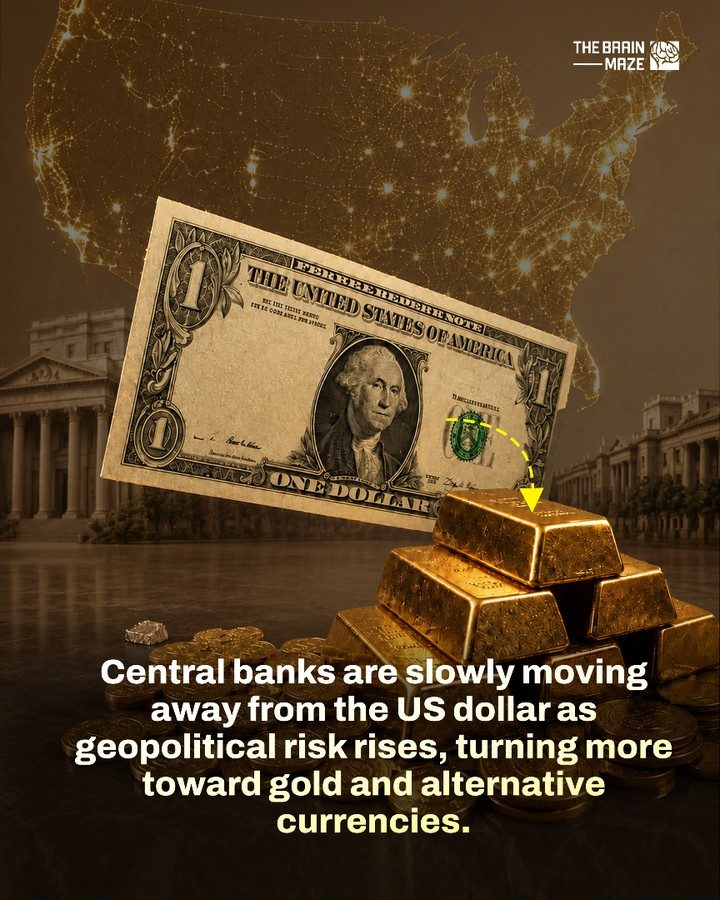
The global financial landscape is witnessing a significant shift as central banks increasingly view the US dollar as a riskier asset. This change is driven by escalating geopolitical tensions and the unpredictable nature of American policy. A recent survey underscores this trend, revealing that more central banks are planning to reduce their dollar holdings rather than increase them. In response, gold, the euro, and other currencies are emerging as more attractive options for safeguarding national reserves.
Context: Why This Matters
The US dollar has long been the cornerstone of global finance, serving as the world's primary reserve currency. This status has provided the US with numerous economic advantages, including lower borrowing costs and greater influence over international financial institutions. However, the recent surge in geopolitical risks has prompted central banks to reassess their reliance on the dollar. This shift in strategy reflects a broader trend towards diversification in foreign exchange reserves as countries seek to mitigate potential economic fallout from geopolitical instability.
Global Finance Trends
The Rise of Alternative Currencies
As geopolitical tensions escalate, central banks are turning to alternative currencies and assets to diversify their reserves. The euro, in particular, has gained traction as a safe haven for foreign exchange reserves, especially among European countries. This trend is not limited to developed economies; emerging markets are also exploring different currencies to reduce their exposure to dollar-denominated assets.
The Role of Gold
Gold has long been a symbol of stability and security in the financial world, and its appeal as a reserve asset is on the rise. Central banks are increasing their gold holdings to hedge against geopolitical risks and currency volatility. Gold's intrinsic value and lack of counterparty risk make it an attractive option for central banks looking to safeguard their reserves in uncertain times.
Currencies and Geopolitical Risks
Geopolitical risks are a significant driver of this shift in reserve management strategies. Unpredictable American policy, trade wars, and diplomatic tensions are pushing central banks to look beyond the dollar. The increasing use of sanctions and tariffs by the US has made dollar holdings more volatile, thereby reducing the dollar's appeal as a stable reserve currency.
The US Dollar and Geopolitical Risks
The US dollar's dominance in global finance has been a double-edged sword for the US. While it offers economic benefits, it also makes the US vulnerable to geopolitical risks. International tensions and policy unpredictability can erode confidence in the dollar, leading central banks to seek alternatives. This trend highlights the need for the US to address geopolitical risks to maintain its economic influence.
The Euro and Emerging Markets
The euro has emerged as a viable alternative to the dollar, particularly for European economies. Its stability and integration with the European Union's economic policies make it an attractive option for reserve management. Emerging markets are also increasingly diversifying their reserves, with some opting for a mix of currencies and assets to reduce reliance on the dollar.
Practical Tips for Investors
Given the evolving geopolitical landscape, investors should consider diversifying their portfolios to mitigate risks associated with dollar volatility. Here are some practical tips for navigating this shifting financial landscape:
-
Explore Alternative Currencies
Investing in a mix of currencies can help diversify risk. Consider allocating a portion of your portfolio to stable currencies such as the euro, the Japanese yen, or the Swiss franc.
-
Add Gold to Your Portfolio
Gold remains a reliable hedge against geopolitical uncertainty. Allocate a portion of your portfolio to gold to protect against market volatility and currency fluctuations.
-
Stay Informed
Stay updated on geopolitical developments and their potential impact on financial markets. This knowledge will help you make informed investment decisions.
-
Consider Emerging Markets
While emerging markets have their own risks, they offer opportunities for growth and diversification. Investing in emerging markets can provide exposure to currencies and assets that are less correlated with the dollar.
Important Takeaways
The increasing perception of the US dollar as a riskier asset is reshaping global finance. Central banks are diversifying their reserves away from the dollar, turning to gold, the euro, and other currencies. This trend reflects broader geopolitical risks and the need for countries to safeguard their economic stability. For investors, understanding these shifts can provide valuable insights for managing portfolios in a more volatile and unpredictable world.
Conclusion
The shift away from the US dollar towards gold and alternative currencies highlights the growing importance of geopolitical risks in global finance. This trend underscores the need for both central banks and individual investors to adapt their strategies to navigate an increasingly complex financial landscape. By staying informed and diversifying their portfolios, investors can better manage the risks and opportunities presented by these evolving trends.
Watch the Reel
Questions readers ask
What are the primary drivers behind central banks' shift away from the US dollar?
The primary drivers include escalating geopolitical tensions and the perceived unpredictability of American policy. These factors have led central banks to view the US dollar as a riskier asset, prompting them to seek more stable alternatives for their reserves.
Which currencies and assets are central banks turning to as US dollar alternatives?
Central banks are increasingly diversifying their reserves with alternatives such as the euro and gold. Other currencies may also be gaining traction as they present less risk compared to the US dollar.
How does diversifying reserves help mitigate economic risks?
Diversifying reserves helps central banks spread risk across multiple assets and currencies, thereby reducing their exposure to any single point of failure. This strategy can provide greater stability and security, especially during times of geopolitical instability.
What are the implications of central banks reducing their reliance on the US dollar?
This shift could lead to a decrease in demand for the US dollar, potentially affecting its status as the world's primary reserve currency. It may also influence global financial markets and the US economy, as the dollar's dominance has historically provided certain economic advantages.
Why are central banks considering gold as a reserve asset?
Gold is considered a safe-haven asset due to its historical stability and intrinsic value. By increasing their gold reserves, central banks aim to hedge against geopolitical risks and economic uncertainties, providing a reliable store of value during turbulent times.
What role do geopolitical tensions play in central banks' reserve management strategies?
Geopolitical tensions contribute to the perceived instability of the US dollar, prompting central banks to reevaluate their reserve management strategies. As tensions rise, central banks seek to minimize risk by diversifying their reserves into alternatives like the euro and gold.
How might the reduced reliance on the US dollar impact global financial markets?
A reduced reliance on the US dollar could lead to increased volatility in currency markets as the demand for alternative currencies grows. It may also prompt shifts in trading patterns and investment strategies, as global financial institutions adapt to the changing landscape.
Recent articles
Fresh deep dives from the latest Reels we unpacked.




Comments
Be the first to comment.