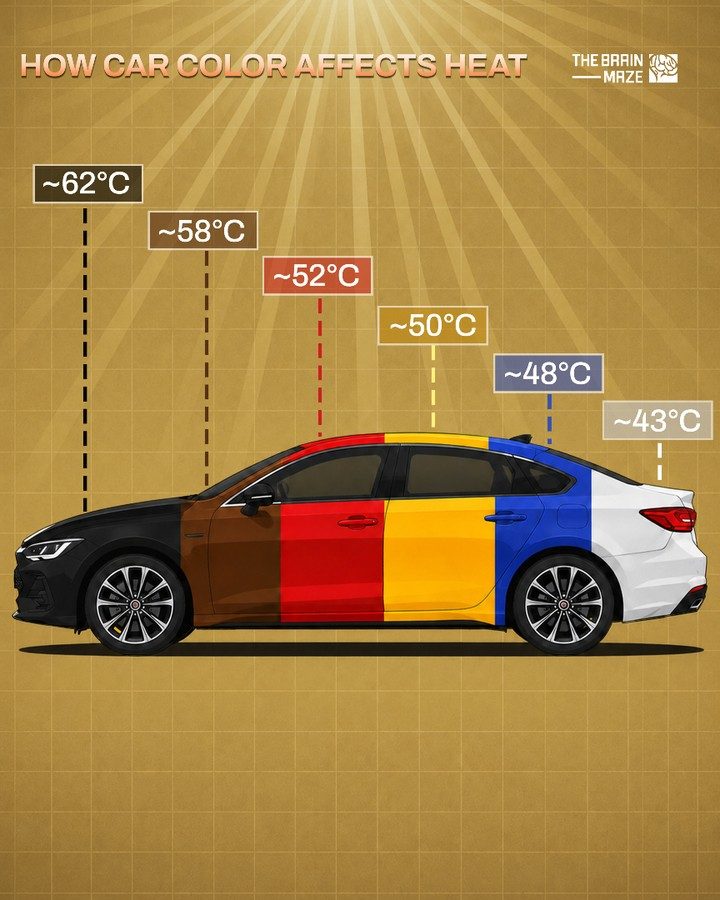
Car Color and Heat
When it comes to cars, color choice extends beyond aesthetics—it also plays a significant role in how much heat the vehicle absorbs from the sun. Understanding this dynamic can help car owners make informed decisions about paint color, especially in regions with intense sunlight.
Why This Matters
The temperature inside a car can rise rapidly, especially when parked in direct sunlight. This isn't just about comfort; it can also affect the vehicle's performance and the longevity of its interior. For instance, high temperatures can cause dashboard components to warp, and over time, the sun’s ultraviolet rays can damage leather seats and other interior materials. Knowing how different car colors affect heat absorption can help mitigate these issues.
Main Discussion
The Science Behind Car Color and Heat Absorption
The difference in heat absorption between car colors is due to how they interact with solar radiation. Dark colors, such as black and brown, absorb more solar energy, leading to higher surface temperatures. In contrast, lighter colors, like white and blue, reflect more of the sun's rays, keeping the car's exterior cooler.
Comparative Temperatures of Different Car Colors
To illustrate this phenomenon, let's look at some approximate surface temperatures for different car colors under similar sunny conditions:
- Black: Around 62°C (144°F)
- Brown: Approximately 58°C (136°F)
- Orange: About 52°C (126°F)
- Blue: Around 50°C (122°F)
- White: About 48°C (118°F)
These temperatures can vary depending on several factors, including the intensity of sunlight, weather conditions, the type of paint finish, and the duration of exposure.
Why Darker Colors Get Hotter
Dark colors absorb a broader spectrum of light, including both visible and infrared light. Infrared light is a form of heat, so when a dark-colored car absorbs it, the surface temperature rises. This is why black cars can feel so hot to the touch on a sunny day. On the other hand, lighter colors reflect a significant portion of this infrared light, which is why they stay cooler.
The Role of Paint Finish
The type of paint finish can also influence how much heat a car absorbs. For example, a glossy finish might reflect more light than a matte finish, potentially keeping the car cooler. However, the color of the paint remains the primary factor in heat absorption.
Practical Tips
Choosing the Right Color for Your Climate
If you live in a hot climate, consider opting for a lighter color like white or light blue. These colors will help keep your car cooler, making it more comfortable to drive and reducing the strain on your vehicle's cooling systems.
Using Window Tinting and Sunshades
While choosing a lighter car color can help, additional measures can further reduce interior heating. Window tinting can block a significant amount of solar heat, and using sunshades when the car is parked can also make a difference.
Maintaining Your Car's Exterior
Regularly washing and waxing your car can help maintain its paint finish, which in turn affects how it absorbs and reflects heat. A well-maintained paint job can also improve the car's overall appearance and resale value.
Driving Tips to Reduce Heat Absorption
Parking in the shade when possible, using reflective parking mats, and avoiding direct sunlight can all help keep your car cooler. Additionally, consider investing in a car cover that reflects heat, especially if you frequently park in sunny areas.
Important Takeaways
- Darker car colors absorb more heat, leading to higher surface temperatures, while lighter colors reflect more light and stay cooler.
- The type of paint finish can also influence heat absorption, but color is the primary factor.
- In hot climates, choosing a lighter color can help keep the car cooler and more comfortable to drive.
- Regular maintenance and additional measures like window tinting and sunshades can further reduce heat absorption.
Conclusion
Car color significantly affects how much heat your vehicle absorbs, particularly in sunny conditions. Understanding this dynamic can help you make informed decisions about your car's color and maintenance, ultimately improving comfort and prolonging the life of your vehicle's interior. Whether you're in the market for a new car or looking to upgrade your current one, considering the heat-absorbing properties of different colors can make a big difference in your driving experience.
Watch the Reel
Questions readers ask
Does the color of my car really affect how hot it gets inside?
Yes, car color significantly impacts interior temperature. Darker colors absorb more heat, while lighter colors reflect more sunlight, keeping the interior cooler.
What are the best car colors for hot weather?
Lighter colors such as white, silver, and light blue are ideal for hot weather. These colors reflect more sunlight, reducing the amount of heat absorbed by the car.
Why do black cars get so hot?
Black cars absorb nearly all the visible wavelengths of light, converting them into heat. This leads to higher surface temperatures and a much hotter interior, especially in sunny conditions.
How does car color impact the longevity of interior materials?
Darker car colors can lead to higher interior temperatures, which may cause dashboard components to warp and accelerate the deterioration of materials like leather. Lighter colors help maintain lower temperatures, preserving the interior longer.
Can changing my car's color reduce heat absorption?
Yes, repainting your car with a lighter color can help reduce heat absorption. However, consider the cost and the potential benefits for your specific situation, such as improved comfort and reduced wear on interior materials.
How does a white car fare in summer compared to other colors?
A white car is one of the best choices for summer. It reflects a significant portion of the sun's rays, keeping the interior cooler and more comfortable, and reducing the potential for heat-related damage to interior components.
What are some solutions to reduce a hot car interior besides changing the color?
Using sunshades, tinted windows, and parking in shaded areas can help reduce interior heat. Regularly ventilating the car and using air conditioning can also cool down the interior more quickly after parking. Also, consider window films that can block heat and UV rays.
Related deep dives
Similar reads based on topic and creator.

Recent articles
Fresh deep dives from the latest Reels we unpacked.




Comments
Be the first to comment.