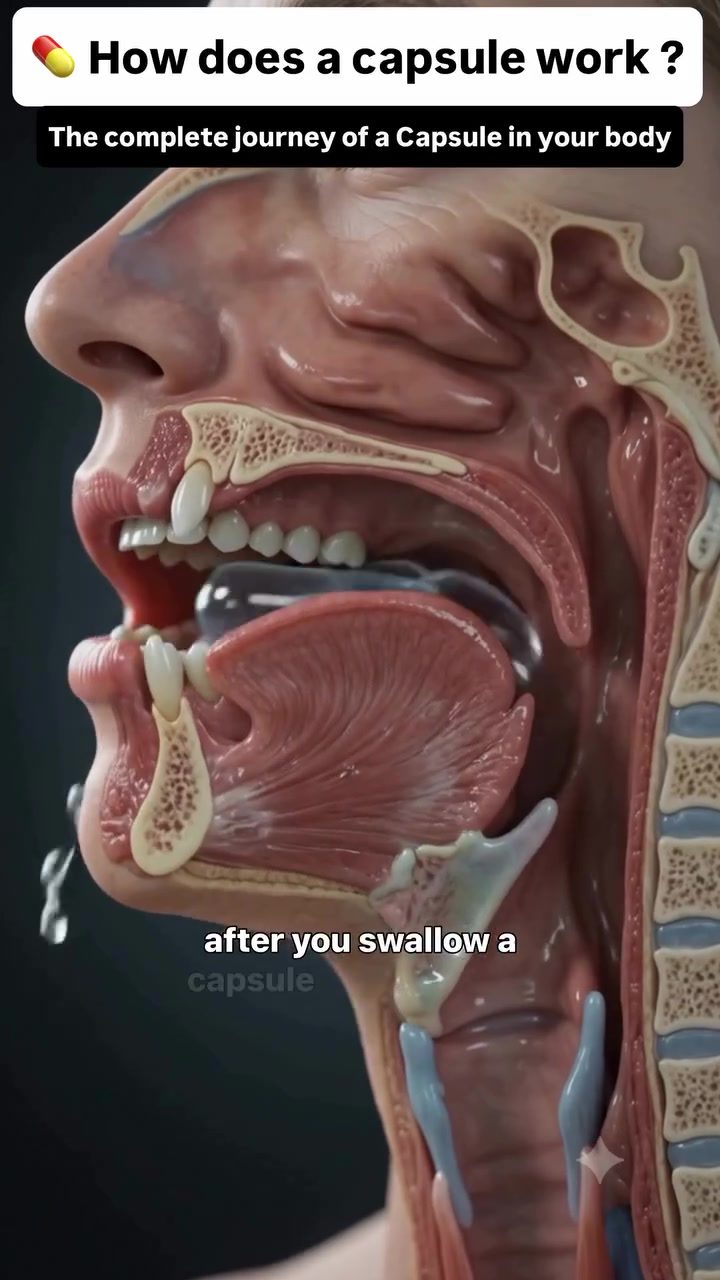
Capsule Journey in the Body
Ever wondered what happens after you swallow a capsule? The journey of a capsule through the body is a fascinating process that involves several key steps. Understanding this journey can provide insights into how medications work and why they are formulated the way they are.
Why This Matters
Capsules are a common form of medication delivery, but many people are unaware of the intricate process that occurs once a capsule is swallowed. Knowing how capsules work can help patients better understand their medications and the importance of following prescribed instructions.
The Journey of a Capsule
Swallowing and Initial Travel
After swallowing a capsule with water, it travels through the esophagus, not the windpipe. Gentle, muscular contractions known as peristalsis carry the capsule safely into the stomach. This process ensures that the capsule does not get stuck or misdirected, making its way to the stomach efficiently.
Dissolving in the Stomach
Most immediate-release capsules dissolve in the stomach. The gelatin shell of the capsule breaks down, releasing the medicine inside. This is a crucial step in the medication delivery process, as it allows the active ingredients to be released and prepared for absorption.
Absorption in the Small Intestine
Although the capsule opens in the stomach, most medicines are absorbed through the tiny villi of the small intestine. These villi are finger-like projections that increase the surface area available for absorption, ensuring that the medication can enter the bloodstream effectively. From the small intestine, the medicine then moves into the bloodstream.
The Role of the Liver
From the small intestine, many medicines first pass through the liver before entering the bloodstream. The liver plays a vital role in metabolizing the drug, breaking it down into components that can be used by the body. This process is known as first-pass metabolism and can affect the bioavailability of the drug, or how much of the drug reaches the bloodstream.
Delivery to the Target
The blood then carries the medicine to its specific target in the body. This could be a particular organ, tissue, or cell where the medication is needed to exert its therapeutic effect. The circulatory system acts as a delivery mechanism, ensuring that the medicine reaches its intended destination.
Different Mechanisms of Action
Every medicine works differently depending on its active ingredient, formulation, and mechanism of action. For example, some medications are designed to be released slowly over time (extended-release formulations), while others are meant to dissolve quickly (immediate-release formulations).
Active Ingredients
The active ingredient in a capsule is the component that produces the therapeutic effect. Different ingredients have different mechanisms of action, such as blocking specific receptors, inhibiting certain enzymes, or altering cellular processes.
Formulation
The formulation of a capsule refers to how the active ingredient is prepared and delivered. This includes the type of excipients used, the coating on the capsule, and the release mechanism. The formulation can affect how quickly the medication is released and how effectively it is absorbed.
Mechanism of Action
The mechanism of action describes how the active ingredient interacts with the body to produce a therapeutic effect. This could involve binding to specific receptors, altering gene expression, or influencing metabolic pathways. Understanding the mechanism of action can help explain why certain medications are effective for specific conditions.
Practical Tips
Follow Prescribed Instructions
Always follow the prescribed instructions for taking your medication. This includes the dosage, frequency, and method of administration. Deviating from these instructions can affect the effectiveness of the medication and may lead to unwanted side effects.
Stay Hydrated
Drinking water with your medication can help ensure that the capsule travels smoothly through the esophagus and into the stomach. This is especially important for larger capsules or if you have difficulty swallowing.
Avoid Crushing or Breaking Capsules
Unless directed by a healthcare professional, do not crush or break capsules. This can alter the intended release mechanism and affect how the medication is absorbed. If you have difficulty swallowing capsules, talk to your healthcare provider about alternative formulations.
Consult Your Healthcare Professional
If you have any questions or concerns about your medication, consult your healthcare professional. They can provide personalized advice and guidance based on your specific health needs and medical history.
Important Takeaways
- Capsules travel through the esophagus and stomach, where the gelatin shell dissolves, releasing the medicine.
- Most medicines are absorbed through the small intestine and then enter the bloodstream.
- The liver plays a crucial role in metabolizing medications before they enter the bloodstream.
- Different medications have different mechanisms of action and formulations, which affect their effectiveness and absorption.
- Always follow the prescribed instructions for taking your medication and consult your healthcare professional if you have any questions or concerns.
Conclusion
The journey of a capsule through the body is a complex process that involves several key steps, from swallowing and initial travel to dissolution in the stomach, absorption in the small intestine, and delivery to the target. Understanding this journey can provide valuable insights into how medications work and why it is important to follow prescribed instructions. By taking your medication as directed and staying informed about its mechanism of action, you can ensure that you are getting the most out of your treatment.
Watch the Reel
Questions readers ask
What happens to a capsule after it is swallowed?
After swallowing, a capsule travels down the esophagus to the stomach, propelled by gentle muscular contractions. This journey typically takes a few seconds to a few minutes, depending on the individual and the size of the capsule. The capsule's gelatin shell begins to dissolve once it reaches the stomach, preparing it for the next stages of digestion and absorption.
How does the stomach play a role in the capsule absorption process?
The stomach's main function is to break down the capsule's outer shell using stomach acid and enzymes. This process is vital as it releases the medicine inside. The stomach's churning motions also help to create smaller particles, which can then pass into the small intestine for further breakdown and absorption.
What happens when a capsule reaches the small intestine?
When the capsule reaches the small intestine, the remaining particles or active ingredients are broken down even further. Here, the small intestine absorbs the medicine into the bloodstream through its walls, making it available for the body's use. This part of the journey is crucial for delivering the medicine to its intended target.
How does the liver contribute to the capsule absorption process?
The liver plays a significant role in processing the absorbed medicines. Once the medicine reaches the bloodstream, it is transported to the liver, where it is metabolized. This means the liver breaks down the medicine into a form that the body can use or prepare it for elimination. This process can affect how quickly and effectively the medicine works.
What is the difference between immediate release and delayed release capsules?
Immediate release capsules are designed to dissolve and release their contents quickly, typically in the stomach. In contrast, delayed release capsules are formulated to pass through the stomach intact and release their contents in the small intestine or further down the gastrointestinal tract. This timing can influence how and when the medicine is absorbed and takes effect.
How long does it take for a capsule to be fully absorbed into the bloodstream?
The time it takes for a capsule to be fully absorbed varies depending on the type of capsule, the individual's digestive system, and the specific medication. Generally, immediate release capsules can start to be absorbed within 30 minutes to an hour, while delayed release capsules may take longer, sometimes up to a few hours. Factors like food intake and digestive health can also influence this process.
Why is it important to follow prescribed instructions for taking capsules?
Following prescribed instructions ensures that the capsule is taken at the right time and in the right way, which is crucial for effective absorption. For instance, some capsules should be taken with food to avoid stomach irritation, while others should be taken on an empty stomach for better absorption. Adhering to these guidelines can optimize the medication's effectiveness and minimize potential side effects.
Related deep dives
Similar reads based on topic and creator.

Recent articles
Fresh deep dives from the latest Reels we unpacked.




Comments
Be the first to comment.