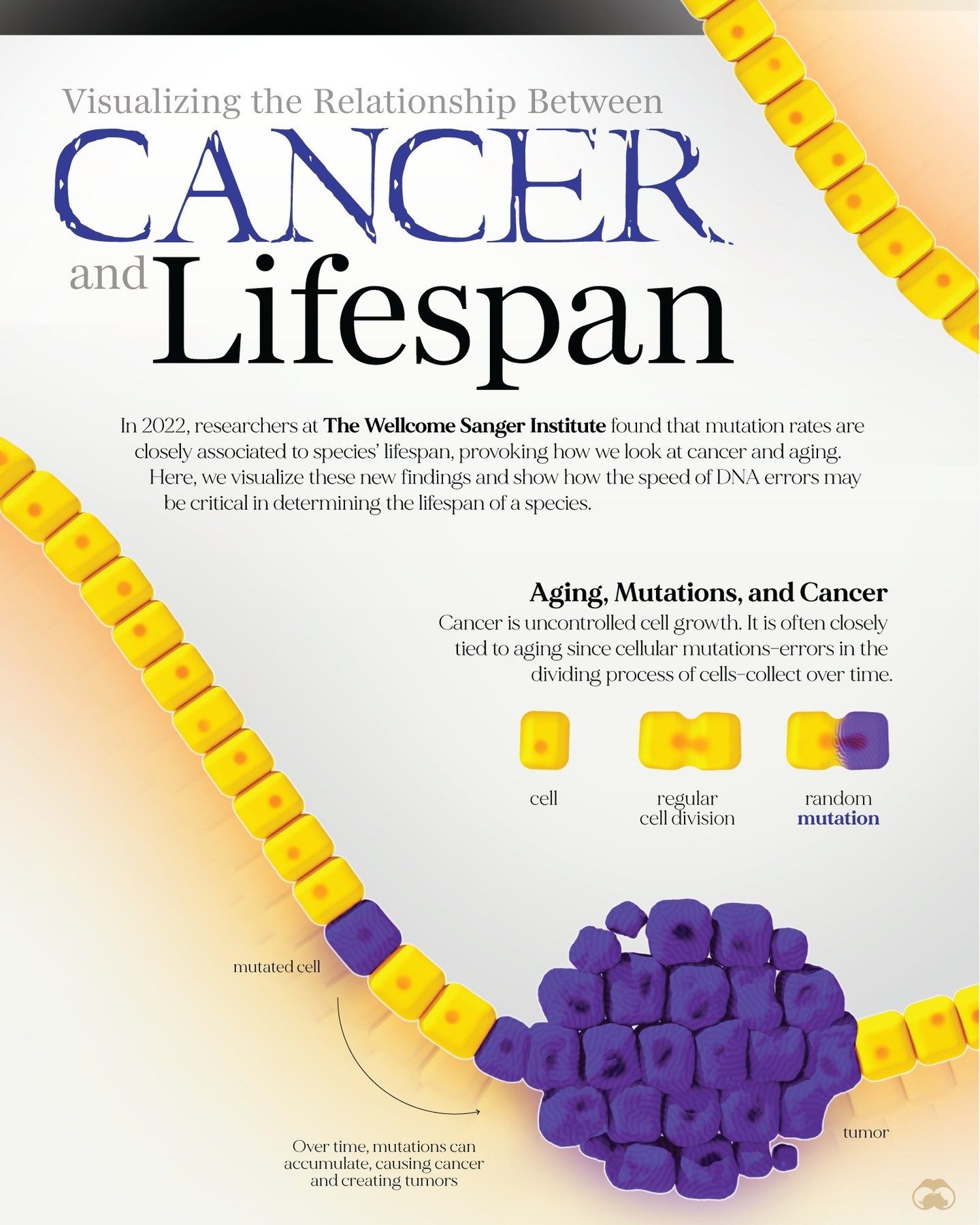
Cancer and Lifespan
The relationship between how long animals live and how quickly their genetic codes mutate has been a subject of scientific inquiry for years. In 2022, researchers at The Wellcome Sanger Institute shed new light on this complex relationship, revealing a thought-provoking correlation between mutation rates, the lifespan of mammals, and their susceptibility to cancer. This research has significant implications for our understanding of aging and cancer development.
Why This Matters
Cancer is fundamentally a product of time and mutations. As cells divide and replicate, there is a cumulative risk of mutations that can lead to cancerous growths. By studying how different species manage these mutations, researchers hope to uncover mechanisms that could potentially control cancer development. This is particularly relevant given the significant impact of cancer on human health and mortality.
Exploring the Relationship: Lifespan and Mutation Rates
At the core of this research is the concept that mutation rates are closely linked to the lifespan of mammals. The study, which involved 16 unique mammals, revealed that larger animals tend to have lower rates of cancer. This finding is intriguing, as larger animals inherently have more cells, which one might expect to increase the risk of cancer due to more opportunities for mutations. However, the data indicate that lifespan and mutation rates are inversely correlated: mammals with shorter lives have higher rates of mutation.
The research team compared variation in mutation rates across different species to identify what might be controlling cancer mortality. The results showed a significant variation in mutation rates, with some species experiencing up to 40,000 times more mutations than others. This variation underscores the complexity of cancer development and the role that evolutionary adaptations might play in mitigating cancer risk.
Mutation Rates Across Different Animal Sizes
The Wellcome Sanger Institute’s findings challenge conventional wisdom, with mutation rates being closely linked to the lifespan of mammals. The key takeaway is that larger animals, despite having more cells, generally have lower cancer rates. This is likely due to enhanced DNA repair mechanisms and longer cellular division times, which reduce the accumulation of harmful mutations.
The study also highlights the importance of understanding the total number of mutations that occur in an organism's lifetime. For instance, smaller animals often have shorter lifespans but higher mutation rates. This suggests that the time factor is crucial in cancer development. The lifespan of a species seems to be a significant determinant of how efficiently their cells can repair mutations, which in turn affects their cancer mortality rates.
Evolutionary Perspectives on Cancer
The study found that the variation in mutation rates across different animal sizes is smaller when considering the total number of mutations. This means that species with shorter lifespans experience a higher frequency of mutations within their cells, which can accelerate the onset of cancer. On the other hand, larger animals, with their longer lifespans, have evolved more robust mechanisms to manage and repair these mutations, leading to lower cancer mortality rates.
Understanding this evolutionary perspective can offer new insights into how cancer develops and how it might be controlled. By studying the mechanisms that larger animals use to manage their mutations, researchers hope to identify potential pathways for preventing or treating cancer in humans.
Practical Tips
For those interested in the implications of this research for human health, several practical tips can be drawn:
- Lifestyle Choices: Adopting lifestyle choices that promote healthy cellular function, such as a balanced diet and regular exercise, can support the body's natural DNA repair mechanisms.
- Preventive Health Checks: Regular health screenings can help detect cancer at an early stage, when it is more treatable.
- Genetic Counseling: For those with a family history of cancer, genetic counseling can provide valuable information about inherited genetic mutations and potential risks.
Important Takeaways
The research at The Wellcome Sanger Institute highlights several key points:
- Mutation rates are closely linked to the lifespan of mammals, with longer-lived species generally having lower cancer rates.
- Larger animals, despite having more cells, often have more efficient DNA repair mechanisms, which reduce the risk of cancer.
- The total number of mutations in an organism's lifetime is a critical factor in cancer development.
- Understanding the evolutionary adaptations of different species can provide insights into potential cancer prevention and treatment strategies.
Conclusion
The thought-provoking relationship between lifespan and mutation rates has significant implications for our understanding of cancer and aging. By studying the mechanisms that larger animals use to manage mutations, researchers hope to uncover new ways to control cancer development. This research not only broadens our understanding of aging and cancer but also opens up new avenues for potential treatments and preventive measures. As we continue to explore these relationships, we move closer to a future where cancer can be better understood and managed.
Watch the Reel
Questions readers ask
How does body size influence cancer rates in mammals, according to the 2022 study?
The 2022 study from the Wellcome Sanger Institute found that larger mammals, despite having more cells, tend to have lower cancer rates. This indicates that body size is not directly proportional to cancer risk and suggests that other factors, such as mutation control, play significant roles.
What is the connection between mutation rates and lifespan in mammals?
The 2022 research highlights a correlation between mutation rates and lifespan in mammals. Animals with slower mutation rates tend to live longer, indicating that efficient mutation control mechanisms may contribute to increased lifespan.
Why is it important to study mutation rates in different mammals?
Studying mutation rates in various mammals helps identify the mechanisms that govern cancer development and aging. By understanding how different species manage mutations, researchers can gain insights into potential strategies to mitigate cancer risk and extend healthy lifespans.
What are the implications of the 2022 cancer research for understanding aging?
The 2022 study suggests that the rate at which mutations accumulate in an organism’s cells can influence both lifespan and cancer risk. This new information can help scientists develop a more comprehensive understanding of the aging process, its relation to cancer, and the role of mutation control in maintaining cellular health over long periods.
How does the 2022 study challenge traditional views on cancer and lifespan?
The 2022 study challenges the traditional view by showing that larger animals, which have more cells, do not necessarily have higher cancer rates. This challenges the notion that cancer risk is solely dependent on the number of cells or the organism’s size, suggesting a more complex interplay of factors, including mutation control and lifespan.
Can insights from animal cancer rates help in understanding human cancer risk?
Yes, the insights from animal cancer rates can provide valuable clues for understanding human cancer risk. By comparing how different species manage mutations and control cancer development, researchers can identify potential biological mechanisms that might be applicable to humans, aiding in the development of new strategies for cancer prevention and treatment.
Recent articles
Fresh deep dives from the latest Reels we unpacked.




Comments
Be the first to comment.