Canada's Trade and Transportation
Canada's robust trade and transportation infrastructure plays a pivotal role in its economy, with a significant portion of its exports being energy products. Let's delve into the key aspects of Canada’s trade and transportation, focusing on the top traded goods, busiest ports, and the resiliency of its air travel industry.
Why This Matters
Understanding Canada's trade and transportation dynamics is crucial for grasping the country's economic landscape. The efficient movement of goods and people is not just about logistics; it's about sustaining economic growth and maintaining a competitive edge in the global market. By examining these key areas, we can gain insights into how Canada's infrastructure supports its economy and how it adapts to changing circumstances, such as global economic fluctuations and technological advancements.
Main Discussion
Canada’s Top Traded Goods
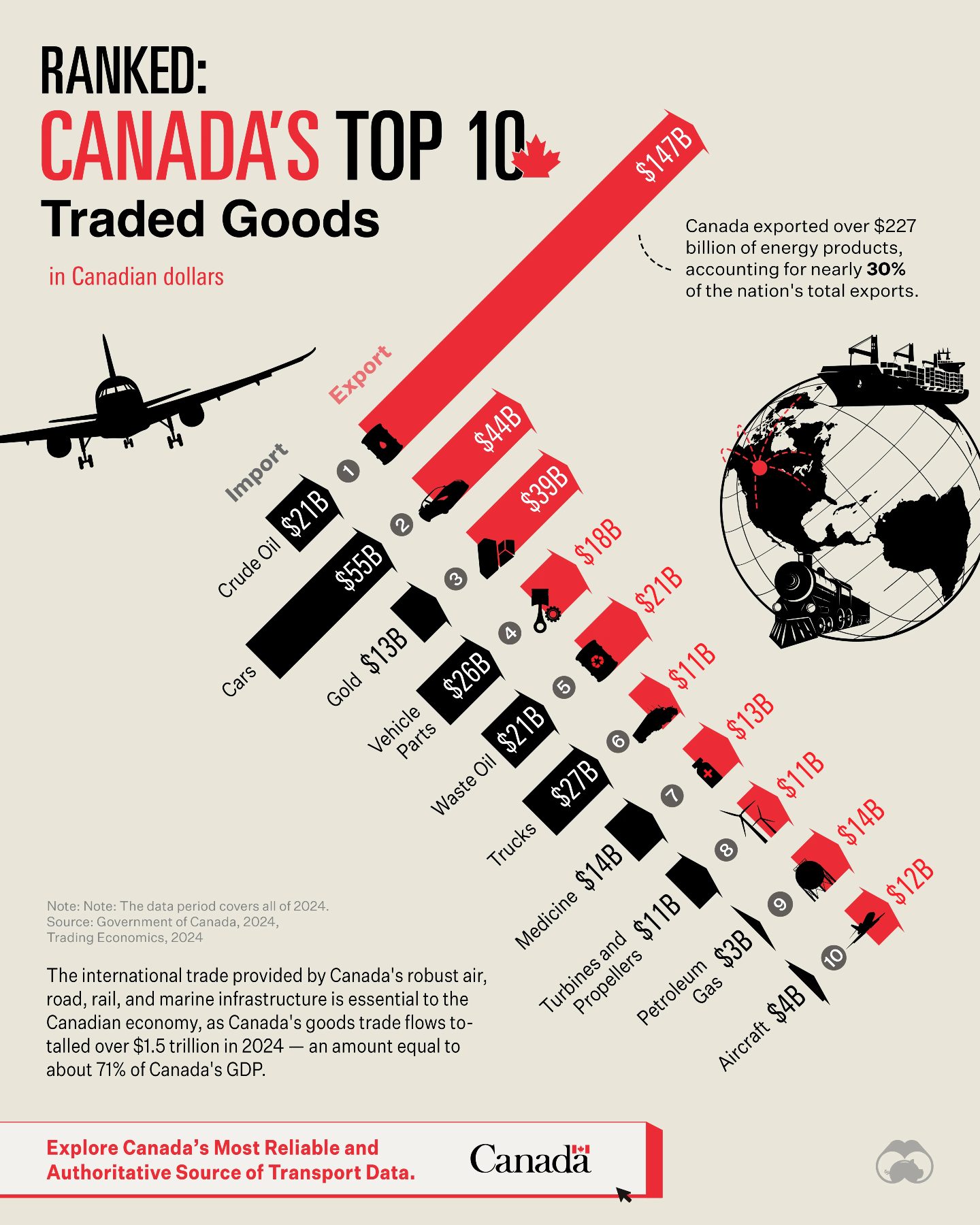
Canada's top 10 traded goods are a testament to the country's diverse and robust economy. These goods, which include crude oil, cars, and medicine, account for nearly $1.5 trillion in 2024, making up about 71% of Canada’s Gross Domestic Product (GDP). This statistic underscores the importance of energy products and industrial goods to Canada's economic stability and growth.
The Role of Energy Products
Energy products, particularly crude oil, are a cornerstone of Canada’s export economy. In 2024, these products accounted for nearly 30% of Canada's total exports, valued at approximately $227 billion. The significant value of these exports highlights the critical role of the energy sector in driving Canada's economic prosperity. The infrastructure that supports this sector, including rail, road, and marine transport, is essential for maintaining efficient export operations and ensuring the global demand for Canadian energy products is met.
Diversification of Traded Goods
Beyond energy, Canada's trade portfolio includes a range of industrial and consumer goods. Cars, for instance, are a significant export, driven by the country's strong automotive manufacturing sector. Additionally, pharmaceuticals and medical supplies, as well as agricultural products, contribute to the diversification of Canada's exports. This diversity is key to economic resilience, as it reduces reliance on a single sector and mitigates risks associated with market fluctuations.
Canada’s Busiest Ports
Canada's maritime infrastructure is another vital component of its trade ecosystem. The country's busiest ports play a critical role in facilitating international trade, handling millions of containers annually. These ports are integral to the movement of goods, ensuring that raw materials and finished products reach their destinations efficiently.
Vancouver-Fraser Port: The Busiest Port
Vancouver-Fraser port is the busiest in Canada, handling 3,130,000 containers in 2024. This port serves as a gateway for both domestic and international trade, connecting Canada to global markets. Its strategic location and advanced infrastructure make it a hub for the movement of goods, particularly those related to the energy, automotive, and agricultural sectors.
Other Major Ports
Other notable ports, such as Montreal, Halifax, and Prince Rupert, also play significant roles in Canada's trade network. Montreal, for instance, handled 1,540,000 containers, making it one of the busiest ports in the country. Halifax, with 550,000 containers, and Prince Rupert, with 700,000 containers, similarly contribute to the efficient movement of goods across Canada and beyond.
Air Travel in Canada
Canada’s air travel industry is remarkably resilient, as shown by its recovery from the downturns experienced during the COVID-19 pandemic. In 2024, 131 million people traveled by air in Canada, demonstrating a strong rebound from the 36 million recorded in 2020.
Key Air Travel Statistics
From 2019 to 2024, Canadian air travel has seen significant fluctuations and recovery. The total number of air travelers in 2019 was 133 million, which dropped to 36 million in 2020 due to travel restrictions. However, by 2024, the number had recovered to 131 million, indicating a robust return to pre-pandemic levels. This resilience is a testament to the importance of air travel to Canada's economy and the efforts to maintain and enhance air travel infrastructure.
Major Air Travel Hubs
Key cities like Toronto, Vancouver, and Montreal are major air travel hubs, facilitating both domestic and international flights. Toronto, in particular, is a significant hub with extensive connections to global destinations. Other cities such as Winnipeg, Calgary, and Edmonton also play crucial roles in regional and national air travel networks.
Practical Tips
To optimize trade and transportation, Canada continues to focus on modernizing its infrastructure and enhancing its logistics capabilities. Here are some practical tips for individuals and businesses to make the most of Canada's trade and transportation networks:
For Businesses
-
Leverage Rail, Road, and Marine Infrastructure: Utilize the robust rail, road, and marine infrastructure to efficiently move goods to domestic and international markets.
-
Choose Strategic Ports: Select the most efficient and reliable ports for shipping goods. Ports like Vancouver-Fraser, Montreal, and Halifax offer advanced facilities and strategic locations.
-
Optimize Air Travel: Take advantage of the resilience and extensive network of air travel to expedite the movement of perishable and high-value goods.
For Travelers
-
Plan Ahead: Be aware of seasonal fluctuations in air travel demand and plan your trips accordingly to avoid peak travel times and potential delays.
-
Explore Domestic Flights: Consider domestic flights for travel within Canada, as key cities offer extensive connections and efficient travel options.
-
Stay Informed: Keep up-to-date with the latest information on port activities and air travel schedules to make informed decisions about your travel or shipping plans.
Important Takeaways
-
Energy Products are Critical: Energy products, including crude oil, form a significant portion of Canada's exports, showcasing the importance of the energy sector.
-
Diversified Trade Goods: Canada’s export portfolio is diverse, encompassing a range of goods from cars to pharmaceuticals, enhancing economic resilience.
-
Maritime Infrastructure: Ports like Vancouver-Fraser, Montreal, and Halifax are crucial for facilitating international trade, contributing to the efficient movement of goods.
-
Resilient Air Travel: Despite fluctuations, Canada’s air travel industry has shown remarkable resilience, with a strong recovery post-pandemic, highlighting its importance to the economy.
Conclusion
Canada's trade and transportation infrastructure is a cornerstone of its economic strength. From the significant value of energy products to the efficiency of its busiest ports and the resilience of its air travel industry, every component plays a vital role in sustaining economic growth and global competitiveness. By leveraging these strengths and staying informed about the latest developments, businesses and travelers alike can navigate Canada's trade and transportation networks more effectively.
Watch the Reel
Questions readers ask
What are Canada's primary exports?
Canada's primary exports include energy products such as crude oil and natural gas, which are crucial for the economy. Industrial goods, including machinery, vehicles, and aircraft parts, are also major contributors to Canada's exports.
Which are the busiest ports in Canada and why are they crucial?
The busiest ports in Canada are the Port of Vancouver, the Port of Montreal, and the Port of Prince Rupert. These ports are crucial because they facilitate the efficient movement of goods, supporting trade and economic growth, particularly in the energy and industrial sectors.
How does air travel contribute to Canada's economy?
Air travel in Canada is essential for both domestic and international trade, enabling the swift transportation of goods and people. The resilience of Canada's air travel industry, particularly during economic fluctuations, highlights its importance in maintaining economic stability.
What role do Canada's ports play in global trade?
Canada's ports serve as vital hubs for global trade, connecting Canadian industries to international markets. They handle a significant volume of imports and exports, making them essential for the country's trade and overall economic health.
Why is the trade of industrial goods important for Canada?
The trade of industrial goods, such as machinery and vehicles, is important for Canada because it contributes significantly to its GDP and supports a wide range of industries and jobs.
How does Canada's trade and transportation infrastructure support economic growth?
Canada's trade and transportation infrastructure supports economic growth by ensuring the efficient movement of goods and people, facilitating trade, and connecting domestic industries to global markets. This infrastructure enables businesses to operate efficiently and stay competitive.
What makes Canada's air travel industry resilient?
Canada's air travel industry is resilient due to its adaptability and robustness, which allows it to withstand economic downturns and maintain stability. This resilience is crucial for sustaining and growing trade and commerce.
Related deep dives
Similar reads based on topic and creator.

Recent articles
Fresh deep dives from the latest Reels we unpacked.




Comments
Be the first to comment.