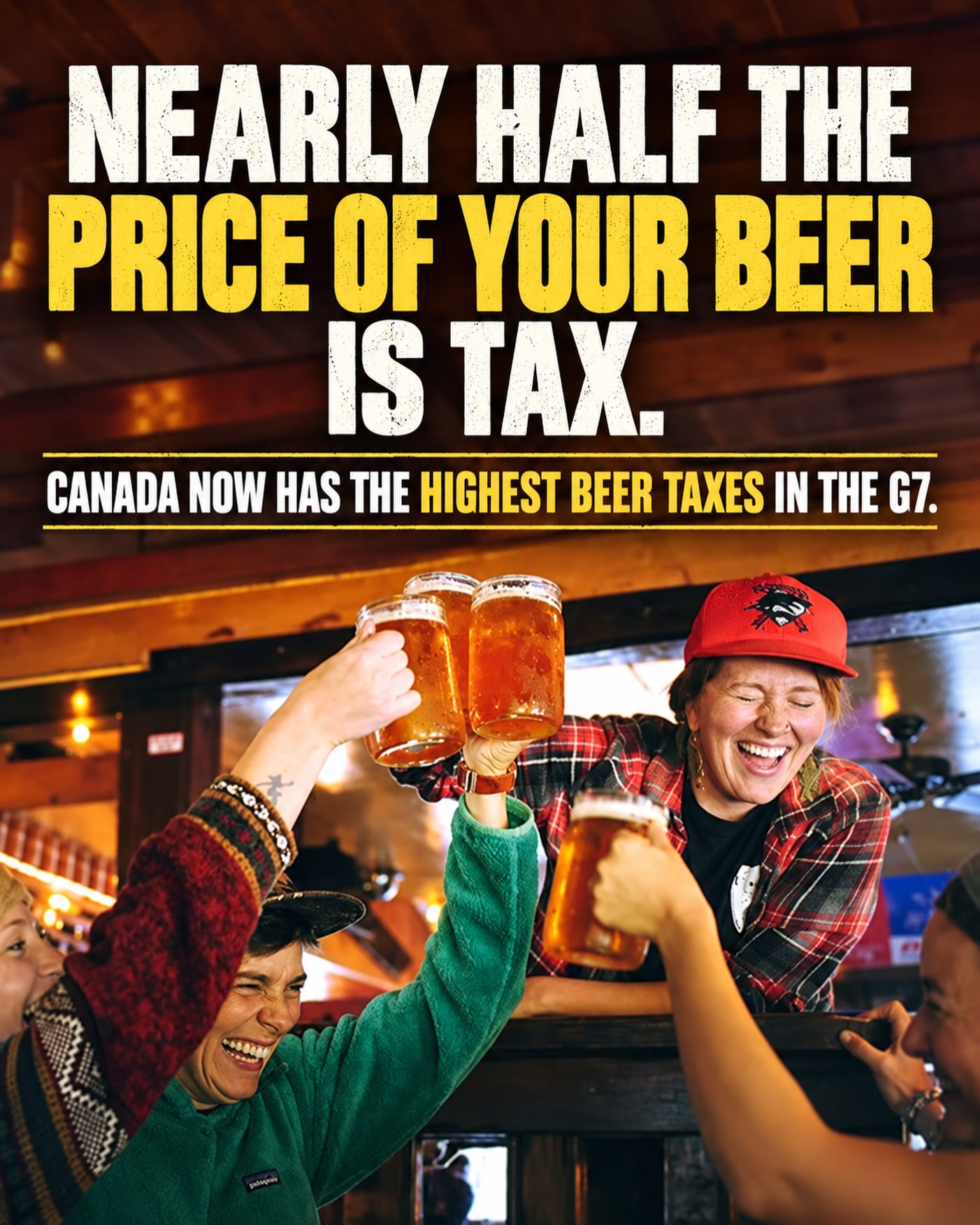
Canada’s beer taxes make a pint a lot more expensive than you might think. Canadians face approximately 45% of beer products’ price as tax, according to the on-screen text. It’s a hidden cost that makes Canada’s pints the most heavily taxed among G7 nations.
The price of a pint, split open
A pint of beer at a Canadian pub is not just a drink, it’s a tax bill masquerading as a beverage. Canada stands out for having a disproportionate volume of alcohol duty. That tax is hefty, but did you notice the weight of the beer tax itself? Canadian taxes on beer are a substantial portion of a beer’s cost: nearly half of the price. These costs are part of the reason Canadian beer costs are higher for beverage. Transferring high taxes to consumers is what happens in Canada. When customers pay for a pint of beer, 45 cents of each dollar is tax. Canada now has the highest beer taxes in the G7. This places Canada notably above other member nations, and makes taxes more than just a percentage — it makes taxes a contributor to higher beer prices.
All eyes on Ottawa — why Canadians are paying the most
In pubs and parlors, Canada’s heavy beer taxes spark conversations about affordability. The cost of beer is more than a drinking game. It’s a political hot potato in a country that prides itself on universal health care. With comparatively high taxes and 80% of the province worth of taxes levied on alcohol consumption, Canadian beer taxes now rank highest in the G7. These factors sit on the shoulders of beer drinkers. What’s the impact of this cost? For instance, Canadian beer drinkers are left paying a higher price — and these aren’t small amounts. That’s why the topic is a gathering topic, and an uncomfortable truth for the people at the pub.
How the bottle share widens
How taxes squeeze the price
High taxes have a direct impact on beer prices. But the impact does not stop at pricing. Beer taxes have a profound impact on the cost of beer production and consumption. David Halsey of the Canadian Chamber of Commerce stated "[Time to] Stop the hassle and hassle Alberta's beer drinkers face." In Alberta alone, the recent changes to the tax regime have shifted the tax burden onto breweries. That’s even though the cost of producing beer has not seen a corresponding decline. Due to the high tax rates, many smaller brewers struggle to compete, thus impacting their entire market share in the beer market. Additionally, both the federal and provincial governments collect a significant portion of revenue from beer sales. A further reducing the cost of beer production. Consequently, the increased cost of production affects the prices of beer. This means that beer drinkers are paying a hefty price for a pint.
How beer taxes, disproportionately affect the poor
The economic consequences of Canada’s beer taxes are not evenly distributed. Low-income individuals are disproportionately impacted by the high taxes. A study discussed by the Star of Vancouver revealed that the overall tax burden is higher for people with lower incomes. A quarter of all federal revenues collected from the beer industry come from the poorest 20% of consumers. As a result, these taxes can make up a substantial portion of their disposable income. Furthermore, the taxes on beer and other alcoholic beverages often affect individuals who are already struggling to make ends meet.
High taxes and the empty booth
It places another piece of the puzzle. High taxes on alcohol can also lead to a rise in black market activity. By making beer more expensive, the high taxes encourage consumers to seek out cheaper, untaxed options — illicit market activity impacts official markets in many ways. This includes the loss of tax revenue for the government, and an increase in the consumption of potentially unsafe products. Illegal imports also severely hamper the local breweries. As a result, brewers lose their market share to imported products. Brewers’ Association of Canada representatives highlights local Canadian breweries are losing out to imports. Whether they’re illicit, or official, these imports are sold to both local and foreigners. Additionally, the cost of alcohol in Canada is considerably higher than in other countries. It’s a sad truth that the current situation puts Canada at a disadvantage in the global market.
The price for public health
But the price paid doesn’t stop at direct tax. Canadians were warned in the past of the potential health risks. Alcohol tax increased in 2017 to make alcohol more expensive and curb consumption. That tax revenue is used to fund public health initiatives to address the health risks associated with excessive alcohol consumption. These funds pay for health care, rehabilitation services, and public awareness campaigns.
What the consumer can do
Investigate the Canadian Beer Tax Index. A good start is evaluating how beer taxes affect you. Government estimates suggest a typical consumer pays between 20% to 40% towards beer. You can compare your current taxes with past or other territories. If you pay more than 20% of your beer price, it’s time to contact the Canadian Chamber of Commerce.
- Understand the impact of taxes: Educate yourself about the individual tax charges in your city. This includes the federal excise duty, provincial taxes, and beer markup.
- Ask questions with politicians: Recognize the tax being paid and ask your local representative to reduce your tax burden. This is a critical step, and you will be able to view public health research on tax rates. It’s important to understand the impact of your taxes. Ask to see studies on the correlation between alcohol consumption and public services. This will help you understand the benefits provided by alcohol taxes.
Watch the Reel
Questions readers ask
How do Canada’s beer taxes compare to other G7 nations?
Canada's beer taxes are notably higher, with approximately 45% of the price of a beer being tax. This makes Canada the most heavily taxed nation in the G7, significantly higher than other member nations.
What specific taxes make up the 45% on a pint of beer in Canada?
The 45% tax on a pint of beer in Canada includes both federal and provincial taxes. These taxes are levied on the production and consumption of beer, making the final price significantly higher for consumers.
How do high beer taxes impact small breweries in Canada?
High beer taxes in Canada have a significant impact on small breweries, making it difficult for them to compete. The increased tax burden means that smaller brewers struggle to maintain their market share, as the cost of production does not see a corresponding decline.
Why are beer taxes considered a political issue in Canada?
Beer taxes are a political issue in Canada because of their significant impact on affordability and the economic burden they place on consumers. With high taxes and a large portion of the province's taxes levied on alcohol consumption, beer drinkers are paying a higher price, sparking conversations about affordability and economic fairness.
How do beer taxes disproportionately affect low-income individuals?
Low-income individuals are disproportionately affected by Canada's high beer taxes. A study revealed that a significant portion of federal revenues from the beer industry comes from the poorest 20% of consumers, highlighting the economic burden placed on those with lower incomes.
What are some of the broader economic implications of high beer taxes in Canada?
High beer taxes in Canada have broader economic implications, including increased production costs and reduced market share for smaller breweries. The tax burden also affects consumer spending and economic distribution, with lower-income individuals bearing a heavier load.
How have recent tax changes in Alberta impacted the beer industry?
Recent tax changes in Alberta have shifted the tax burden onto breweries, even though the cost of producing beer has not declined. This has made it more challenging for breweries to operate, and has led to increased prices for consumers.
Related deep dives
Similar reads based on topic and creator.




Recent articles
Fresh deep dives from the latest Reels we unpacked.




Comments
Be the first to comment.