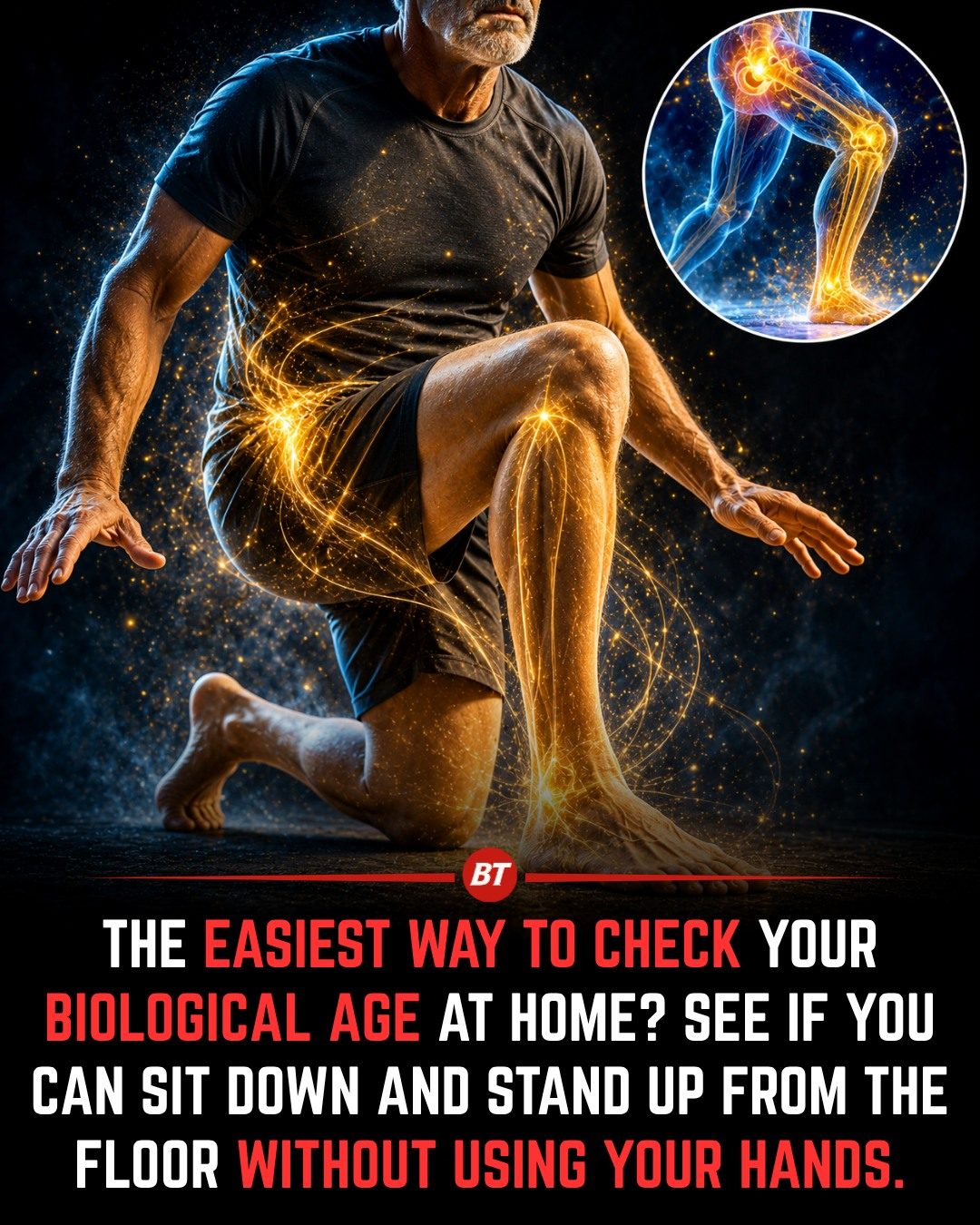
Biological Age Test
A simple yet revealing way to gauge healthy aging involves a fundamental movement: sitting down on the floor and standing back up again. This seemingly basic action requires a combination of key physical health components to work together simultaneously. These components include strength, balance, flexibility, coordination, mobility, and core stability. By examining this movement, researchers can assess overall physical function and identify potential areas of decline associated with aging.
Why This Matters
As people age, it's common to experience a gradual decline in muscle mass, mobility, balance, and coordination. These changes can make everyday tasks more challenging. The ability to sit down and stand up from the floor without using hands, knees, or nearby support provides a practical snapshot of overall physical function. This simple test is closely associated with mobility, independence, fall risk, and healthy aging.
Main Discussion
The Science Behind the Test
The sit-to-stand movement requires your body to generate force through the legs and hips while maintaining balance. This coordinated effort involves multiple muscle groups and systems working in harmony. Researchers have found that performance on sit-to-stand assessments can predict mobility, independence, and fall risk, making it a valuable indicator of overall health and aging.
Components of Physical Health
To perform the sit-to-stand movement effectively, several key components of physical health must be in sync:
- Strength: The ability to generate force through the legs and hips.
- Balance: Maintaining stability throughout the entire motion.
- Flexibility: The range of motion in joints, particularly the hips, knees, and ankles.
- Coordination: The synchronization of movements between different parts of the body.
- Mobility: The ability to move freely and easily.
- Core Stability: The stability and control of the core muscles, which support the spine and pelvis.
Aging and Physical Decline
As people age, these components tend to decline gradually. Loss of muscle mass, reduced mobility, poorer balance, and decreased coordination can all make the sit-to-stand movement more difficult. This test provides a practical and accessible way to monitor these changes and take proactive steps to maintain or improve physical function.
Real-World Fitness Test
Unlike other fitness tests that measure specific strength or speed, the sit-to-stand movement assesses how well your body moves as an integrated system. It doesn't measure how much you can bench press or how fast you can run—it measures how well your body works together to perform a functional and essential movement.
Practical Tips
How to Perform the Test
- Find a Safe, Open Space: Ensure there is enough room to move freely and safely.
- Sit on the Floor: Lower yourself to the floor without using your hands, knees, or nearby support.
- Stand Back Up: Stand up from the floor without using your hands, knees, or nearby support.
Improving Your Performance
If you find the movement challenging, consider incorporating regular activity, strength training, mobility work, and balance exercises into your routine. Every component involved in this movement can be improved through consistent practice.
Exercises to Enhance Performance
- Strength Training: Focus on exercises that target the legs, hips, and core, such as squats, lunges, and planks.
- Mobility Work: Incorporate dynamic stretches and mobility exercises to improve the range of motion in your joints.
- Balance Exercises: Practice balance exercises, such as single-leg stands and heel-to-toe walks, to enhance stability and coordination.
- Flexibility Training: Engage in regular stretching and yoga to improve flexibility in the hips, knees, and ankles.
Important Takeaways
- The sit-to-stand movement is a practical snapshot of overall physical function and a valuable indicator of healthy aging.
- This test assesses strength, balance, flexibility, coordination, mobility, and core stability.
- Performance on sit-to-stand assessments is closely associated with mobility, independence, fall risk, and healthy aging.
- Regular activity, strength training, mobility work, and balance exercises can improve performance and overall physical function.
Conclusion
The ability to sit down and stand up from the floor without using your hands, knees, or nearby support is a simple yet revealing test of healthy aging. By focusing on the key components of physical health involved in this movement, you can take proactive steps to maintain or improve your overall physical function. Incorporating regular activity, strength training, mobility work, and balance exercises into your routine can help you achieve better performance and a healthier, more independent future.
Watch the Reel
Questions readers ask
What is the sit-to-stand test and why is it important?
The sit-to-stand test is a simple assessment where you sit on the floor and stand up without using your hands. It's important because it evaluates overall physical fitness by testing strength, balance, and flexibility, which are crucial for healthy aging and daily tasks.
What physical components are assessed during the floor test no hands?
The floor test no hands assesses several key physical components, including strength, balance, flexibility, coordination, mobility, and core stability. These components work together to perform the movement and indicate overall physical function.
How does the ability to stand from the floor without using hands relate to aging?
The ability to stand from the floor without using hands is a good indicator of healthy aging. As people age, they may experience a decline in muscle mass, mobility, balance, and coordination, which can make this task more challenging. Therefore, maintaining this ability can reflect overall physical fitness and independence.
What are some exercises that can improve mobility with age?
Exercises that focus on balance, flexibility, and strength can help improve mobility with age. Some examples include yoga, tai chi, and specific floor exercises, such as squats, lunges, and hip bridges, which can enhance the ability to perform the sit-to-stand test and other daily activities.
Can the sit-to-stand test be used as a fitness test for seniors?
Yes, the sit-to-stand test can be an effective fitness test for seniors. It is a simple and practical way to evaluate overall physical fitness and identify potential areas of decline associated with aging. Regularly performing this test can help seniors track their progress and maintain their physical abilities.
What are some benefits of incorporating floor exercises for balance into a workout routine?
Incorporating floor exercises for balance into a workout routine can improve stability, coordination, and core strength. These exercises can help enhance the ability to perform the sit-to-stand test and other daily activities, ultimately contributing to better overall physical fitness and independence, especially as we age.
Related deep dives
Similar reads based on topic and creator.




Recent articles
Fresh deep dives from the latest Reels we unpacked.




Comments
Be the first to comment.