The Role of Calories in Nutrition: Balancing Hunger, Energy, and Fitness Goals
Calories are a well-known measure in the health and nutrition world, but understanding their role and context is crucial for making informed diet choices. Calories alone don’t tell the whole story when it comes to hunger, energy, and fitness goals. Different foods, such as sushi rolls, bakery pastries, candy bars, and desserts, can have the same calorie count but affect the body in various ways.
Understanding Calories in Context
Knowing the calorie content of different foods is a good starting point, but it's also essential to consider the nutrients and how the food will satisfy hunger. High-protein foods like sushi can be a great choice for maintaining energy levels and promoting satiety. However, sauces, cream cheese, and tempura can significantly increase the calorie count, making portion control and ingredient awareness important.
Sushi Options
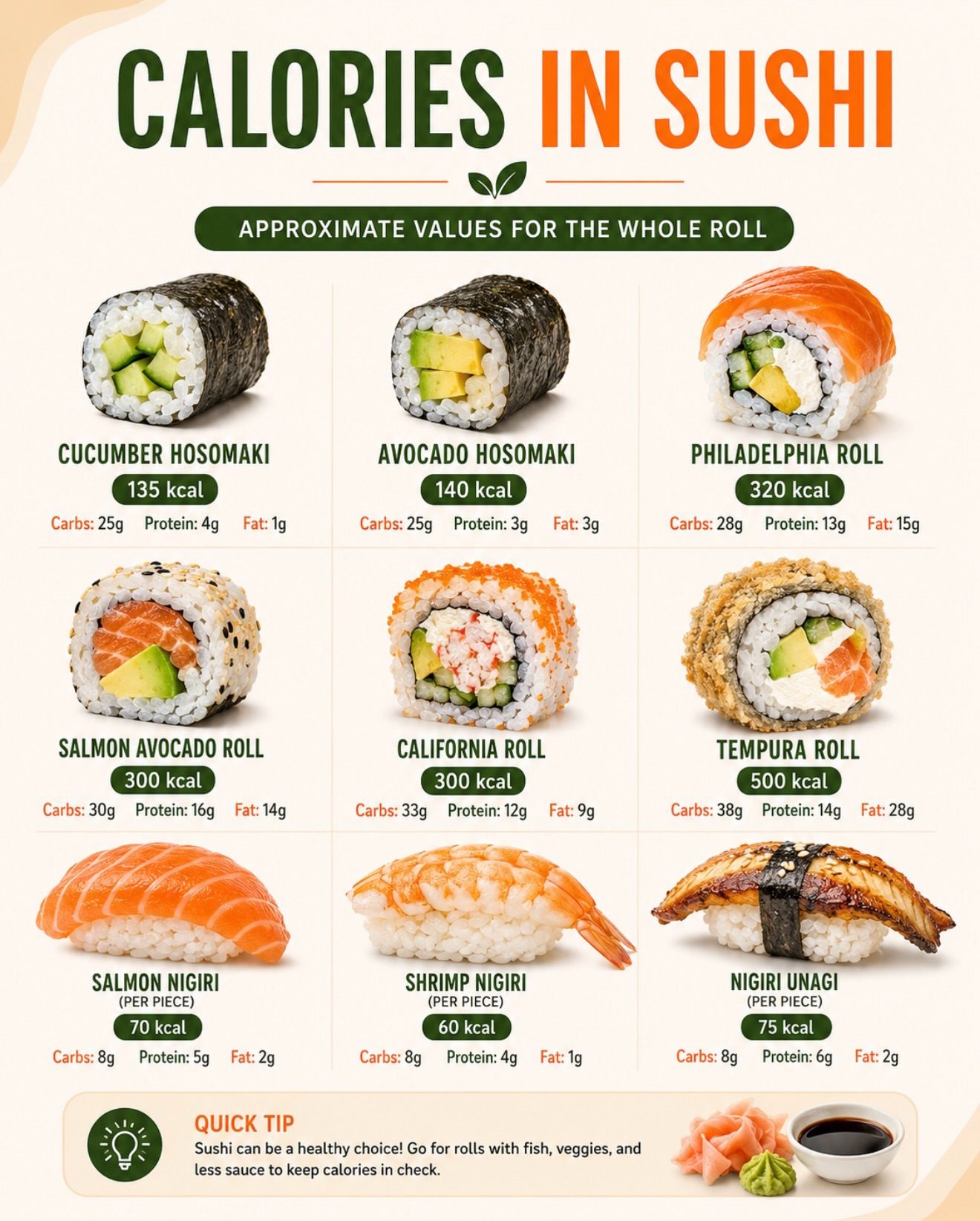
Sushi is a versatile option that can fit into a healthy lifestyle, especially when choosing rolls with plenty of fish and vegetables. Rolls like cucumber hosomaki, with 135 calories, and salmon avocado rolls, with 320 calories, offer a good balance of carbohydrates, protein, and fat. In contrast, tempura rolls (300–500 kcal) are higher in calories due to their fried coating.
- Cucumber Hosomaki: 135 kcal, 33g total, 1g fat, 25g carbs, 4g protein
- Salmon Avocado Roll: 320 kcal, 35g total, 14g fat, 30g carbs, 16g protein
- Tempura Roll: 500 kcal, 63g total, 28g fat, 38g carbs, 14g protein
Bakery Treats
Bakery pastries and treats are often high in fats and refined carbohydrates. This combination can lead to a quick spike in blood sugar and a subsequent crash, which may leave you feeling hungry soon after eating. Opt for smaller portions or pair pastries with a protein or healthy fat to balance out the meal and extend satiety.
Candy Bars
Candy bars can be a tasty treat, but they generally provide fewer nutrients and less satiety compared to whole-food snacks. Treats like Snickers, Reese’s Peanut Butter Cups, and Kinder Bueno White are popular choices, but consuming them mindfully and in moderation is key. A single candy bar can range from 210 to 245 calories, making portion control essential for those aiming to manage their calorie intake.
- Snickers: 245 kcal, 29g total, 11g fat, 30g carbs, 3g protein
- Reese’s Peanut Butter Cups: 210kcal, 31g total, 14g fat, 24g carbs, 5g protein
- Kinder Bueno White: 222 kcal, 31g total, 12g fat, 27g carbs, 3g protein
Incorporating Treats into a Healthy Lifestyle
Mindful Consumption
The key to enjoying treats without compromising health goals is mindful consumption. Choose treats that you genuinely enjoy and savor them. This approach helps in appreciating the experience and prevents overeating. Pairing treats with a balanced meal can also help manage overall calorie intake and ensure you get the nutrients your body needs.
Portion Control and Awareness
Portion control is a vital aspect of maintaining a healthy lifestyle. Knowing the approximate calorie content of various treats can help you make informed decisions. However, it’s essential to remember that these values are approximate and can vary by brand and size. For example, Kinder candies range from 112 to 226 calories per serving, making it important to check the nutrition label or be aware of the serving size.
Balance and Consistency
Consistency is key when it comes to maintaining a balanced diet. A single high-calorie meal or snack won’t ruin your progress, but consistent choices will. Aim for a balanced approach that includes a variety of nutrient-dense foods and allows for occasional treats. Remember, the goal is to build sustainable habits that support your overall fitness and wellness.
Practical Tips for Managing Calorie Intake
- Choose Nutrient-Dense Foods: Opt for foods that provide a good balance of protein, healthy fats, and complex carbohydrates. These foods will keep you fuller for longer and provide the necessary nutrients.
- Read Nutrition Labels: Familiarize yourself with the calorie and nutrient content of the foods you consume regularly. This knowledge can help you make informed choices and avoid hidden calories.
- Plan Your Meals: Planning your meals in advance can help you stay on track and avoid impulsive, high-calorie choices. Include a variety of foods to ensure you get a balanced intake of nutrients.
- Stay Hydrated: Drinking enough water can help manage hunger and promote satiety. Sometimes, the body confuses thirst for hunger, leading to unnecessary calorie consumption.
- Monitor Portion Sizes: Use smaller plates or bowls to control portion sizes. This strategy can help you feel satisfied without overeating.
- Track Your Progress: Use tools like workit to track your nutrition, workouts, and overall progress. Monitoring your habits can help you stay on track and make adjustments as needed.
Important Takeaways
Calories are just one piece of the puzzle when it comes to nutrition. Understanding the nutritional content of the foods you consume and making informed choices can help you achieve your hunger, energy, and fitness goals. Remember to:
- Choose nutrient-dense foods that provide a good balance of protein, healthy fats, and complex carbohydrates.
- Practice portion control and mindful consumption to avoid overeating.
- Enjoy treats in moderation and balance them with a nutrient-dense diet.
- Stay consistent and build sustainable habits that support your overall fitness and wellness.
Conclusion
Maintaining a balanced diet involves understanding the calorie content and nutritional value of the foods you consume. By making informed choices and practicing portion control, you can enjoy a variety of foods, including treats, and still achieve your fitness and wellness goals.
Watch the Reel
Questions readers ask
How do the calories in sushi compare to those in candy and desserts?
Sushi generally has fewer calories than candy and desserts. For instance, a typical sushi roll contains around 200-300 calories, while a candy bar or a piece of bakery pastry can range from 200 to 500 calories. However, sushi often provides more protein and fiber, helping to maintain satiety. Vegetables and fish can also add to the nutrient value.
Does a low-calorie dessert mean it's a healthy choice?
Not necessarily. Low-calorie desserts may be lower in calories than traditional desserts, but the ingredients can still be high in sugars and fats. It's essential to check the ingredients and nutritional content. Opt for healthier dessert options that include fruits or whole grains for better overall health benefits.
Why is portion control crucial when considering calories in sushi?
Portion control is essential because even low-calorie foods like sushi can add up quickly. A single sushi roll might be relatively low in calories, but eating multiple rolls or other side dishes can significantly increase your calorie intake. Pay attention to portion sizes to maintain a balanced diet.
What are some low-calorie dessert options?
Some low-calorie desserts include fruit salads, Greek yogurt with berries, or a small portion of dark chocolate. These options are often lower in calories and provide essential vitamins and antioxidants. They can also offer a healthier way to satisfy your sweet tooth without sabotaging your fitness goals.
How do the carbohydrates in a sushi roll affect my fitness goals?
The carbohydrates in a sushi roll can vary, but a typical roll contains around 20-30 grams of carbs, primarily from the rice. Choosing sushi rolls with more vegetables and lean proteins like fish can help maintain a balanced diet. Opting for brown rice over white rice can also provide more fiber and nutrients, which can support better fitness outcomes.
How do I balance hunger and energy through calorie control for fitness?
Balancing hunger and energy requires more than just calorie control. Choose foods high in protein and fiber to keep you full and satisfied. Foods such as sushi rolls with lean protein and vegetables can be a great option. Pair this with regular physical activity and portion control to help reach your fitness goals.
Recent articles
Fresh deep dives from the latest Reels we unpacked.




Comments
Be the first to comment.