Cooking Oils and Calories
Cooking oils are essential in many kitchens, but their calorie content can be deceiving. Even small amounts can add up quickly, impacting your daily calorie intake. Understanding the calorie content of common cooking oils is crucial for managing weight and maintaining a balanced diet.
Why This Matters
People often focus on the major components of their meals, such as proteins, carbohydrates, and vegetables, while overlooking the calories hidden in cooking oils and fats. These hidden calories can significantly affect weight loss or maintenance goals. By being mindful of the types and amounts of oils used in cooking, you can make better choices that support your health and fitness objectives.
The Calorie Breakdown
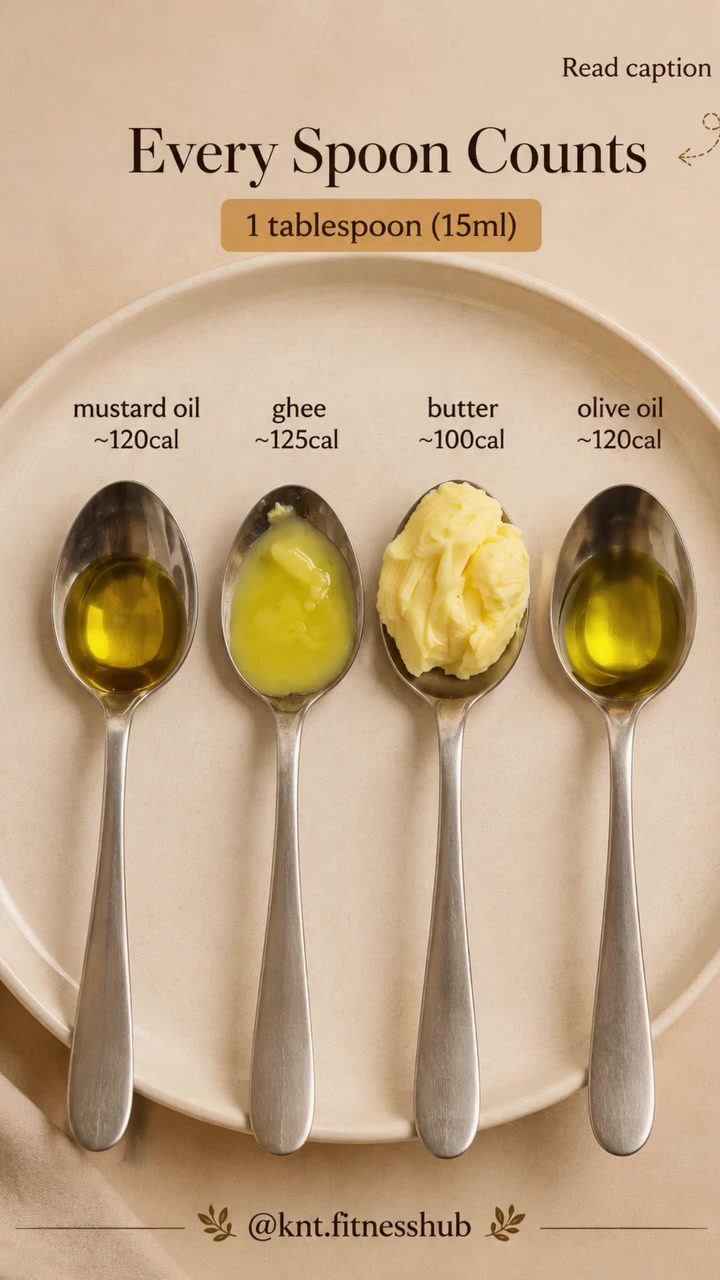
A single tablespoon (15 ml) of cooking oil can provide around 100–125 calories. Here’s a quick comparison of some common cooking oils and their approximate calorie counts per tablespoon:
- Olive Oil: ~120 kcal
- Mustard Oil: ~120 kcal
- Ghee: ~125 kcal
- Butter: ~100 kcal
These numbers highlight the importance of measuring your oil intake carefully. Even small amounts can add up, especially if you use multiple tablespoons throughout the day.
The Role of Healthy Fats
Healthy fats are an essential part of a balanced diet. They support various bodily functions, including:
- Hormone Production: Fats are crucial for the production of hormones that regulate various bodily functions.
- Vitamin Absorption: They help absorb fat-soluble vitamins A, D, E, and K.
- Skin and Hair Health: Healthy fats keep your skin and hair healthy and nourished.
- Brain Function: Fats support brain function and cognitive health.
- Satiety: They improve satiety, helping you feel fuller for longer.
However, it’s important to remember that even healthy fats contain calories. The key is to use them in moderation and be mindful of your overall calorie intake.
Practical Tips for Managing Oil Intake
Measure Your Oil
Instead of pouring oil directly from the bottle, use a spoon to measure the exact amount you need. This small step can help you avoid overusing oil and consuming extra calories.
Use Non-Stick Cookware
Non-stick cookware requires less oil for cooking, allowing you to reduce the amount of oil needed without compromising the flavor or texture of your food.
Be Mindful of Hidden Oils
Hidden oils in fried foods, restaurant meals, and sauces can significantly increase your calorie intake. Be mindful of these hidden sources and opt for healthier cooking methods when possible.
Choose Healthy Fats
Opt for healthier oils like olive oil, mustard oil, or ghee, which offer additional health benefits. However, remember that even healthy fats contain calories, so use them in moderation.
Focus on Total Calorie Intake
Rather than labeling foods as “good” or “bad,” focus on your total daily calorie intake. Aim for a balanced, nutritious diet that supports your weight loss or maintenance goals.
Important Takeaways
- A single tablespoon of cooking oil can contain around 100–125 calories.
- Healthy fats are essential for various bodily functions, but they still contribute to your daily calorie intake.
- Measuring oil with a spoon, using non-stick cookware, and being mindful of hidden oils can help manage your intake.
- Focus on a balanced diet and a consistent calorie deficit for sustainable weight loss.
Conclusion
Healthy fats are essential for a balanced diet, but it's crucial to be mindful of their calorie content. By understanding the calorie breakdown of common cooking oils and implementing practical tips for managing your intake, you can support your weight loss or maintenance goals effectively. Small changes repeated every day can create big results, so start by being mindful of your oil usage and enjoy the benefits of a healthier lifestyle.
Watch the Reel
Questions readers ask
How many calories are in a tablespoon of olive oil?
A tablespoon of olive oil contains approximately 119 calories. This is slightly lower than some other cooking oils, making it a popular choice for those looking to manage their calorie intake while still enjoying the health benefits of olive oil, such as its monounsaturated fats.
Is ghee higher in calories than butter?
Yes, ghee is slightly higher in calories than butter. A tablespoon of ghee contains around 120 calories, while a tablespoon of butter has about 102 calories. This difference is relatively small, but it can be important for those closely monitoring their calorie intake.
How do mustard oil and olive oil compare in terms of calories?
A tablespoon of mustard oil contains around 124 calories. This is slightly higher than olive oil, which contains approximately 119 calories per tablespoon. Both oils have a similar range of calories, so the choice between them may depend on other factors such as taste and cooking preferences.
What are some low-calorie oil alternatives for cooking?
If you're looking to reduce calories, consider using oils with lower calorie content, such as avocado oil and sunflower oil, which have around 120 calories per tablespoon. Alternatively, you can use cooking sprays or reduce the amount of oil used in cooking and baking to lower the overall calorie count.
Why is it important to be mindful of oil calories in cooking?
Being mindful of oil calories is crucial because oils are high in calories and can significantly impact your daily total. Even small amounts can add up quickly, affecting weight management goals. By understanding the calorie content of different oils, you can make informed choices about which oils to use and how much to use in your cooking.
How do butter and olive oil compare in terms of calories?
Butter has approximately 102 calories per tablespoon, while olive oil has about 119 calories. Despite the difference, both are high in calories, and it is essential to be aware of the quantity used in cooking. For those focused on health, olive oil is often preferred due to its unsaturated fat content.
What is the calorie content in a tablespoon of coconut oil?
A tablespoon of coconut oil contains around 117 calories. It is similar to other oils, like olive oil and mustard oil, and is slightly different from ghee and butter. This makes it important to consider the amount used for cooking and baking to manage calorie intake effectively.
Related deep dives
Similar reads based on topic and creator.


Recent articles
Fresh deep dives from the latest Reels we unpacked.




Comments
Be the first to comment.