Economic Largest Economies: A Global Comparison
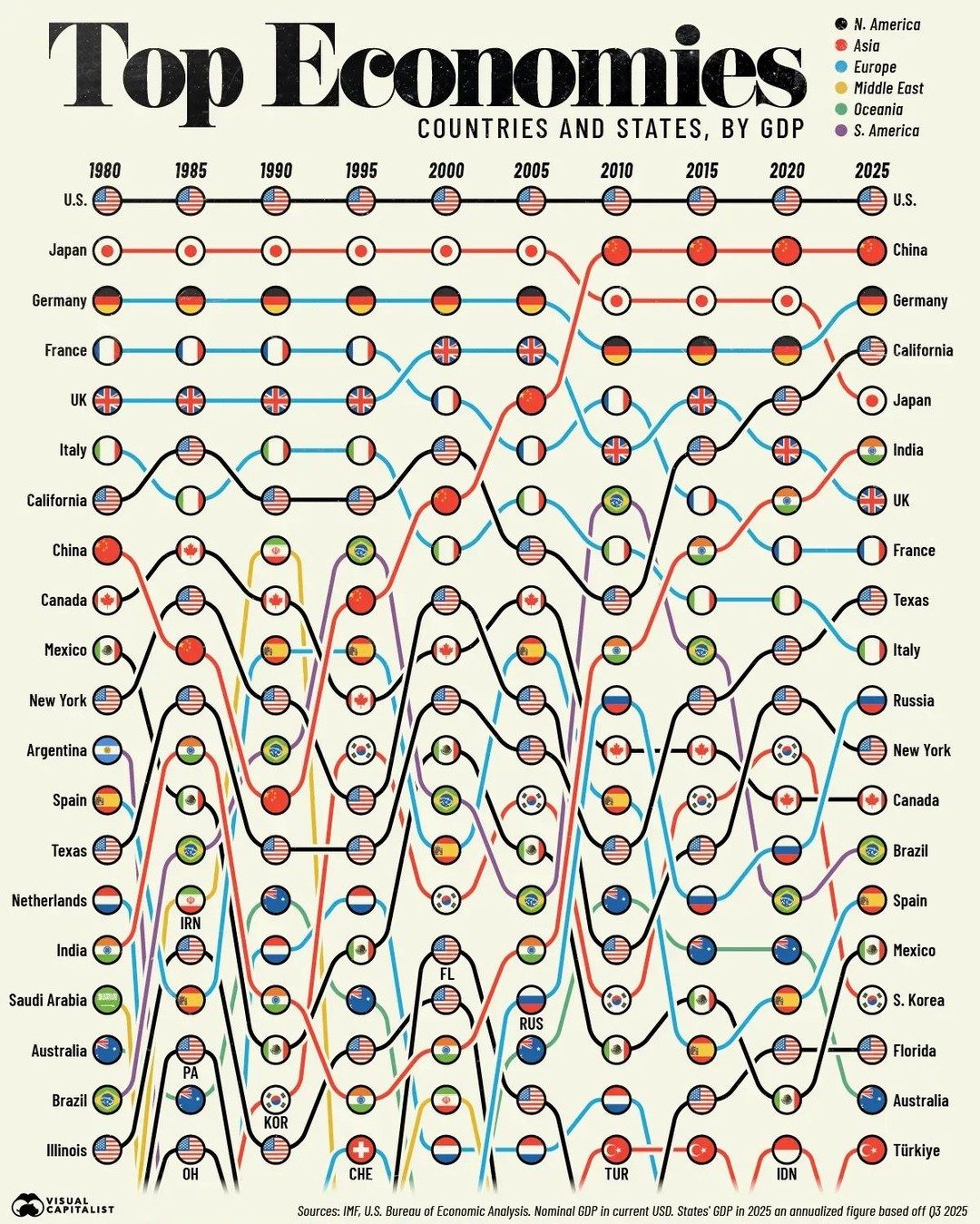
California's economic ascent to the world's 4th-largest economy is a significant development, surpassing Japan in 2025. Texas and New York also stand out, ranking among the top 15 globally. However, the most striking shift comes from China, which has climbed from the 13th position in 1990 to the 2nd place today. This dramatic rise underscores a major redistribution of global economic power. To understand these changes, let's delve into the economic rankings of the world's largest economies from 1980 to 2025, comparing countries and U.S. states using data from the IMF and the U.S. Bureau of Economic Analysis.
Context / Why this matters
The global economic landscape is in a state of flux, with traditional powerhouses being challenged by rapidly growing economies. Understanding these shifts is crucial for investors, policymakers, and businesses alike. Whether you're considering international investments, assessing market opportunities, or planning for future economic trends, gaining insight into the world's largest economies provides a valuable perspective. California's rise and the ascent of China, among other changes, highlight the importance of staying informed about global economic dynamics.
Main discussion
The Rise of California
California's economic growth has been nothing short of remarkable. By 2025, it is projected to surpass Japan, making it the world's 4th-largest economy. This achievement is driven by several factors, including a robust tech industry, strong agricultural sector, and a diverse economy. The state's strategic position and innovative spirit have propelled it to new economic heights, making it a global economic powerhouse.
Key Drivers of California's Growth
Several key industries have contributed to California's economic rise:
- Tech Industry: Silicon Valley remains the epicenter of technological innovation, home to major companies like Apple, Google, and Facebook. The tech sector has been a significant driver of economic growth, attracting talent and investment from around the world.
- Agriculture: California's agricultural sector is one of the most productive in the world, contributing billions to the state's economy. The state's diverse climate and fertile lands support a wide range of crops, from almonds to wine.
- Entertainment: Hollywood and the broader entertainment industry continue to be a major economic force, generating revenue through film, television, and digital media.
- Trade and Logistics: California's extensive port infrastructure and strategic location make it a hub for international trade, facilitating the movement of goods and people across the globe.
The Surge of China
China's economic ascent from the 13th largest economy in 1990 to the 2nd largest today is one of the most dramatic shifts in global economic power. This transformation has been driven by a combination of rapid industrialization, urbanization, and strategic economic policies.
Factors Behind China's Economic Boom
Several factors have contributed to China's economic rise:
- Industrialization: China's focus on manufacturing and industrial development has been a key driver of its economic growth. The country has become the world's largest manufacturer, producing a wide range of goods from electronics to automobiles.
- Urbanization: China's rapid urbanization has led to the development of megacities like Shanghai and Beijing, which have become major economic centers. This urban growth has driven demand for goods and services, fueling economic expansion.
- Infrastructure Investment: China's significant investments in infrastructure, including highways, railways, and ports, have facilitated economic growth by improving connectivity and efficiency.
- Trade and Investment: China's integration into the global economy through trade and investment has been a critical factor in its economic rise. The country has become a major player in global trade, exporting a wide range of goods and attracting significant foreign investment.
The Performance of U.S. States
Texas and New York stand out among U.S. states, ranking among the top 15 globally. Their economic performance highlights the significance of state economies in the global landscape.
Texas: An Economic Powerhouse
Texas is the second-largest state economy in the U.S. and ranks among the top 15 globally. Key sectors driving Texas's economy include:
- Energy: Texas is a leading producer of oil and natural gas, with a significant portion of U.S. energy production occurring in the state.
- Technology and Innovation: The Texas tech sector, particularly in Houston and Austin, is a growing force in the state's economy. Companies like Dell and IBM have significant operations in Texas, driving innovation and job growth.
- Manufacturing: Texas is a major manufacturing hub, with a diverse range of industries, including aerospace, automobiles, and electronics.
New York: A Financial and Cultural Hub
New York is the largest state economy in the U.S. and ranks among the top 15 globally. Key sectors driving New York's economy include:
- Finance: New York City is the financial capital of the world, home to the New York Stock Exchange and major financial institutions.
- Cultural and Media: New York's entertainment, media, and cultural industries are global leaders, generating significant revenue and attracting talent from around the world.
- Technology and Innovation: New York's tech sector, particularly in Manhattan and Brooklyn, is a growing force in the state's economy. Companies like Google and Facebook have significant operations in New York, driving innovation and job growth.
Practical tips
Investing in Diverse Economies
When considering investment opportunities, it's essential to look beyond traditional powerhouses and explore the potential of diverse economies. States like California, Texas, and New York, as well as countries like China, offer promising investment opportunities across various sectors.
Monitoring Global Economic Trends
Staying informed about global economic trends can help you make informed decisions. Keeping an eye on key economic indicators, such as GDP growth rates, inflation, and unemployment rates, can provide valuable insights into emerging opportunities and risks.
Leveraging Infrastructure Investments
Countries and states are continuously investing in infrastructure to drive economic growth. Identifying regions with significant infrastructure investments can provide a competitive advantage in terms of logistics, connectivity, and efficiency.
Important takeaways
- California's Economic Strength: California's rise to the 4th largest economy highlights the state's economic strength and diversity, driven by sectors like tech, agriculture, and entertainment.
- China's Global Impact: China's economic surge from the 13th to the 2nd largest economy underscores its increasing global influence and the importance of monitoring its economic trends.
- U.S. State Economies: Texas and New York's positions among the top 15 global economies highlight the significance of state-level economic performance in the global landscape.
- Data-Driven Insights: Using data from sources like the IMF and the U.S. Bureau of Economic Analysis provides a reliable foundation for understanding global economic trends and making informed decisions.
Conclusion
Exploring the world's largest economies from 1980 to 2025 reveals a dynamic and evolving global economic landscape. From California's ascent to the 4th-largest economy to China's dramatic rise, and the performance of U.S. states like Texas and New York, there are significant shifts in economic power. Understanding these trends is crucial for investors, policymakers, and businesses seeking to navigate the global economy. By leveraging infrastructure investments, investing in diverse economies, and monitoring global economic trends, you can position yourself for success in this ever-changing economic environment.
Watch the Reel
Questions readers ask
Why is California's economic growth significant in the global context?
California's economic growth is significant because it is projected to become the world's 4th-largest economy by 2025, surpassing Japan. This places California as one of the most influential economic entities globally, rivaling many countries. Its rapid ascent underscores a broader shift in global economic power.
How has China's economic growth impacted global economic rankings?
Since 1990, China has risen from the 13th to the 2nd-largest economy worldwide, demonstrating an unprecedented rate of growth. This shift has led to a significant redistribution of wealth and influence, challenging traditional economic powerhouses.
Which U.S. states are among the top economic entities globally?
California, Texas, and New York are notable examples. By 2025, California is expected to be the 4th-largest economy globally. Texas and New York are also significant, ranking among the top 15 largest economies.
What data sources are used to analyze the economic rankings of the world's largest economies?
The analysis draws on data from the International Monetary Fund (IMF) and the U.S. Bureau of Economic Analysis. These sources provide comprehensive insights into the economic performance and rankings of countries and U.S. states from 1980 to 2025.
Why is the comparison between California and Japan's economies notable?
California's projected economic growth, which will surpass Japan by 2025, is notable because Japan has traditionally been a major economic power. This shift highlights the changing dynamics in global economic influence, with regional powers like California gaining prominence.
How does the economic growth of California compare to China's over the past few decades?
While both California and China have experienced significant economic growth, China's rise has been more dramatic. China has climbed from the 13th to the 2nd-largest economy since 1990, whereas California's growth, though substantial, has been at a different pace, though it still is the fourth largest economy in the world.
What are the implications of California's economic growth for the global economy by 2025?
Californias economic growth will have significant implications for the global economy by 2025. It will influence trade patterns, investment flows, and technological innovation. As the 4th-largest economy, California will have greater sway in shaping global economic policies and standards.
Related deep dives
Similar reads based on topic and creator.


Recent articles
Fresh deep dives from the latest Reels we unpacked.




Comments
Be the first to comment.