Bulking vs. Cutting: Understanding Nutritional Strategies for Fitness Goals
The concepts of bulking and cutting are central to many fitness journeys, but often misunderstood. These strategies are not about specific foods but about calorie management and consistency. Let's delve into what these terms really mean and how to apply them effectively.
Why This Matters
Mastering the basics of bulking and cutting can significantly impact your fitness goals. Bulking focuses on building muscle mass, while cutting aims to reduce body fat. Understanding these phases and how to implement them correctly can help you achieve a leaner, more muscular physique without the confusion that often surrounds these terms. The key to success lies in calories and consistency, not in the specific foods you choose.
Understanding Bulking
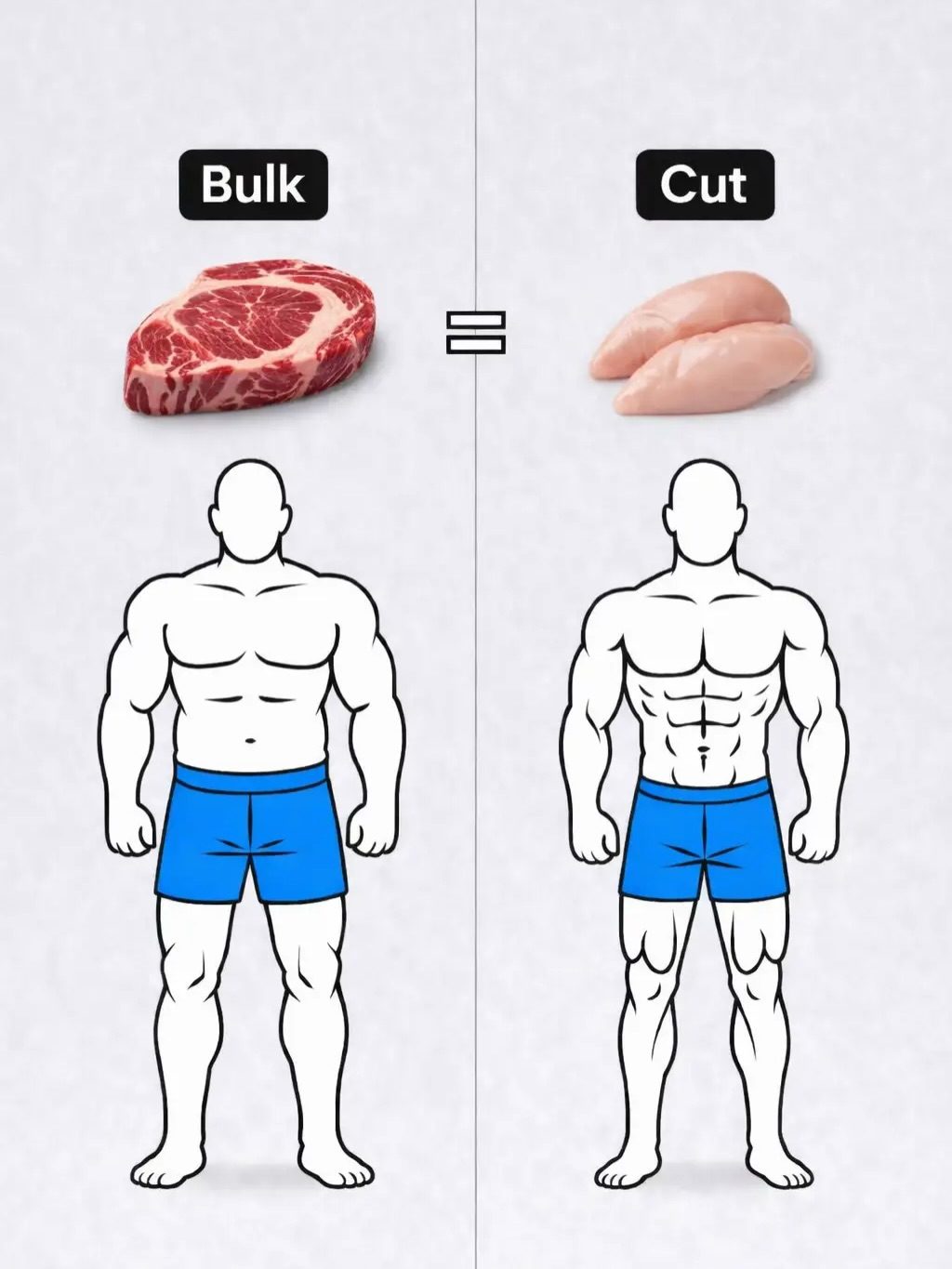
Bulking is the phase where you aim to build muscle mass. During this period, you need to consume more calories than your body burns, creating a caloric surplus. This surplus provides the energy and nutrients necessary for muscle growth. Foods that are higher in calories and more dense, such as steak, rice, and bread, can make it easier to achieve this surplus.
Understanding Cutting
Cutting, on the other hand, is the phase where you focus on reducing body fat. During this phase, you need to consume fewer calories than your body burns, creating a caloric deficit. This deficit forces your body to use stored fat for energy. Prioritizing lower-calorie, higher-volume foods like chicken, potatoes, and berries can help you feel full while maintaining the deficit.
The Misconception About 'Bulking' and 'Cutting' Foods
One common misconception is that there are specific "bulking foods" and "cutting foods." In reality, all foods can fit into either phase. The difference lies in how you use them. For example, steak and chicken are both protein sources, but steak is higher in calories, making it a better choice for bulking, while chicken is lower in calories and more suitable for cutting. The same applies to carbs; rice is denser and higher in calories compared to potatoes, making potatoes a better choice for cutting.
Practical Tips for Bulking
- Calorie Surplus: Ensure you're consuming more calories than you burn. This can be achieved by increasing portion sizes and incorporating higher-calorie foods.
- Macronutrient Balance: Focus on a balanced diet with adequate protein, carbs, and fats. Protein is essential for muscle repair and growth, while carbs provide the energy needed for workouts, and fats support overall health.
- Consistency: Stick to your plan. Consistency is key in seeing results.
Practical Tips for Cutting
- Calorie Deficit: Consume fewer calories than you burn. This can be achieved by reducing portion sizes and choosing lower-calorie foods.
- Macronutrient Balance: Maintain a balanced diet with adequate protein to preserve muscle mass, while reducing carbs and fats.
- Consistency: Stay consistent with your diet and workout plan. Cutting requires discipline and patience.
The Role of a Fitness App
A fitness app like Flat Belly can be a valuable tool in your fitness journey. It offers personalized workout and nutrition plans tailored to your goals, whether you're bulking or cutting. The app provides features like:
- Personalized Meal Plans: Get tailored meal plans that fit your goals and dietary preferences, making it easier to stay on track.
- Workout Tracking: Track your workouts to monitor your progress and ensure you're making gains.
- Nutrition Tracking: Track your calorie and macronutrient intake to stay within your desired range.
- Reward System: Earn rewards for staying consistent with your workouts, adding an extra layer of motivation.
Important Takeaways
- Calories Matter: Results come from managing your caloric intake, not from the specific foods you eat.
- Consistency is Key: Stick to your plan and make adjustments as needed. Progress takes time and dedication.
- Tools, Not Rules: Foods are tools. Use them wisely to achieve your goals.
- Personalize Your Plan: Everyone's body responds differently to diet and exercise. Use a fitness app to tailor your plan to your specific needs.
Conclusion
Bulking and cutting are essential phases in any fitness journey. Understanding how to manage your caloric intake and make smart food choices can help you achieve your goals more effectively. By focusing on calories and consistency, and using tools like a fitness app to track your progress, you can master these phases and transform your body.
Watch the Reel
Questions readers ask
What is the primary goal of the bulking phase?
The primary goal of the bulking phase is to build muscle mass. This is achieved by consuming a caloric surplus, where you intake more calories than your body needs, and engaging in strength-training exercises. The focus is on providing your body with the necessary nutrients to support muscle growth.
How does calorie management differ between bulking and cutting?
During the bulking phase, you consume more calories than your body burns to support muscle growth. Conversely, during the cutting phase, you create a caloric deficit by consuming fewer calories than your body needs, aiming to burn fat while preserving muscle mass. The key is to adjust your calorie intake based on your specific goals and monitor your progress closely.
Are there specific foods that should be included in a bulking phase diet?
While there are no strict rules about specific foods for bulking, high-protein and high-calorie foods can help support muscle growth. Foods like rice and bread can be useful as they provide a good balance of carbohydrates and calories. Focus on whole foods like lean proteins, fruits, and vegetables that can provide nutrients to support muscle building.
What types of workouts are best for the cutting phase?
For the cutting phase, workouts should focus on maintaining muscle mass while burning fat. This typically involves a combination of high-intensity interval training (HIIT) and strength training exercises. These workouts help increase your body's metabolic rate, allowing you to burn more calories and maintain muscle while losing fat.
How do I determine my calorie needs for bulking or cutting?
To determine your calorie needs, start by calculating your Total Daily Energy Expenditure (TDEE). For bulking, add 300-500 calories to your TDEE to create a surplus. For cutting, subtract 300-500 calories to create a deficit. Adjust these numbers based on your progress and how your body responds.
Recent articles
Fresh deep dives from the latest Reels we unpacked.




Comments
Be the first to comment.