Balanced Meals for Steadier Energy and Blood Sugar Control
Healthy eating does not need to be complicated. Building balanced meals that support steadier energy, better fullness, and a more balanced blood sugar response involves combining foods from several key categories. The goal is to create meals that promote satiety and sustained energy levels without overcomplicating the process. This approach helps reduce energy crashes, improve fullness, and make meals feel more satisfying overall.
Context / Why This Matters
When planning meals, it's essential to understand how different food categories affect the body. By including a mix of protein, healthy fats, fiber-rich carbs, non-starchy vegetables, and lower GI fruits, you can create meals that support overall health and well-being. This balanced approach helps manage blood sugar levels, promotes satiety, and provides the body with essential nutrients.
Main Discussion
The Role of Protein in Meals
Protein is crucial for slowing down digestion and supporting fullness. Incorporating protein into meals helps maintain stable blood sugar levels by slowing glucose spikes. Some excellent sources of protein include:
- Eggs
- Chicken
- Turkey
- Tofu
- Fish
- Cottage cheese
Building meals around these protein sources ensures that you feel full for longer and experience steadier energy levels throughout the day.
Incorporating Healthy Fats
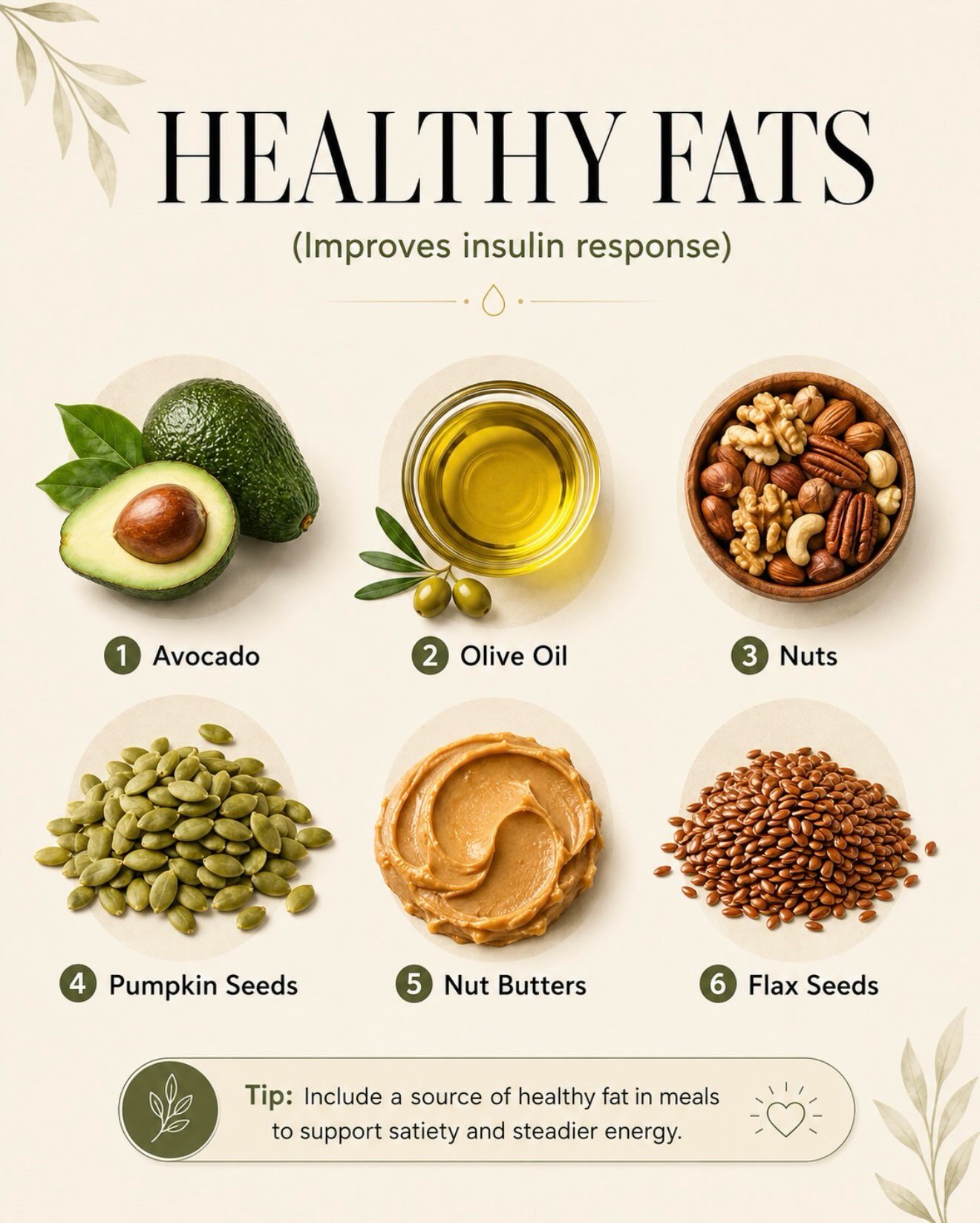
Healthy fats play a significant role in promoting satiety and providing sustained energy. They improve insulin response, which helps regulate blood sugar levels. Examples of healthy fats include:
- Avocado
- Olive oil
- Nuts
- Pumpkin seeds
- Nut butters
- Flax seeds
Including a source of healthy fat in your meals can support overall wellness and help you feel more satisfied after eating.
Fiber-Rich Carbs for Slower Digestion
Fiber-rich carbohydrates are essential for supporting slower digestion and promoting fullness. These carbs help maintain stable energy levels by slowing down the digestion process. Some examples of fiber-rich carbs are:
- Whole grain bread
- Quinoa
- Oats
- Sweet potatoes
- Legumes
- Brown rice
Choosing fiber-rich carbs over refined options can significantly improve your overall health and energy levels.
Non-Starchy Vegetables for Volume and Nutrients
Non-starchy vegetables provide volume, fiber, and essential micronutrients, making them an excellent addition to any meal. These vegetables are low in calories and high in nutrients, which helps support overall health. Some popular non-starchy vegetables include:
- Spinach
- Broccoli
- Bell peppers
- Carrots
- Cucumbers
- Zucchini
Including a variety of non-starchy vegetables in your meals ensures that you get a wide range of nutrients and helps promote satiety.
Lower GI Fruits for Gentler Blood Sugar Impact
Lower GI (glycemic index) fruits have a gentler effect on blood sugar levels, making them a better choice for maintaining stable energy levels. Pairing these fruits with protein or fats can enhance their staying power. Some examples of lower GI fruits include:
- Berries
- Apples
- Pears
- Oranges
- Kiwi
- Grapefruit
Including lower GI fruits in your diet can help manage blood sugar levels and provide essential vitamins and fiber.
Practical Tips
Meal Planning and Prep
- Plan Ahead: Create a meal plan for the week, focusing on a balance of protein, healthy fats, fiber-rich carbs, non-starchy vegetables, and lower GI fruits.
- Grocery List: Make a grocery list based on your meal plan to ensure you have all the necessary ingredients.
- Prep in Advance: Prep meals or meal components in advance to save time during the week. Chop vegetables, cook protein sources, and portion out snacks.
Meal Combination Ideas
- Eggs + avocado + whole grain toast: This combination provides a balanced mix of protein, healthy fats, and fiber-rich carbs.
- Chicken + brown rice + broccoli: This meal offers protein, fiber, and essential nutrients from non-starchy vegetables.
- Greek yogurt or cottage cheese + berries + seeds: This snack or light meal provides protein, lower GI fruits, and healthy fats.
- Salmon + sweet potato + greens: This meal is rich in protein, healthy fats, and fiber-rich carbs, along with essential nutrients from greens.
- Apple + nut butter: Pairing a lower GI fruit with a healthy fat source can enhance staying power and promote satiety.
Important Takeaways
Building balanced meals that support steadier energy and better fullness does not have to be complicated. By combining foods from key categories like protein, healthy fats, fiber-rich carbs, non-starchy vegetables, and lower GI fruits, you can create meals that promote overall health and well-being.
Conclusion
Balanced eating is about creating meals that support steady energy, promote fullness, and maintain stable blood sugar levels. By focusing on a mix of protein, healthy fats, fiber-rich carbs, non-starchy vegetables, and lower GI fruits, you can build meals that are satisfying and nutritious. The key is to plan ahead, prep in advance, and choose a variety of nutrient-dense foods to support overall health and wellness.
Watch the Reel
Questions readers ask
What are the key components of a balanced meal for steady energy?
A balanced meal for steady energy should include a combination of protein, healthy fats, and fiber-rich carbohydrates. This mix helps to slow down the digestion process, promoting fullness and preventing rapid spikes and crashes in blood sugar levels.
How do healthy fats contribute to balanced meals?
Healthy fats, such as those found in avocados, nuts, and olive oil, are essential for creating balanced meals. They promote satiety and slow down the release of glucose into the bloodstream, which helps to maintain stable energy levels and supports overall health.
What are some examples of fiber-rich carbohydrates?
Fiber-rich carbohydrates include whole grains like brown rice and quinoa, as well as fruits and vegetables. These foods are beneficial for balanced meals because they help regulate blood sugar levels, promote feelings of fullness and support a healthy digestive system.
Why is protein important for blood sugar management?
Protein is crucial for managing blood sugar levels, as it helps slow down the absorption of carbohydrates, preventing sudden spikes in blood sugar. This balance also aids in improving overall energy levels.
How can a meal planning app help in creating balanced meals?
A meal planning app can assist in creating balanced meals by offering recipes and meal ideas that include the key components of protein, healthy fats, and fiber-rich carbohydrates. It can also help ensure a variety of nutrient-rich foods in daily meals for better blood sugar management and sustained energy.
What are some nutritious meal ideas for steady energy levels?
For steady energy levels, consider meals like grilled chicken with quinoa and steamed broccoli, or a salad with mixed greens, avocado, chickpeas, and a lean protein source. These meal ideas combine all the key components for balanced nutrition and sustained energy.
Recent articles
Fresh deep dives from the latest Reels we unpacked.




Comments
Be the first to comment.