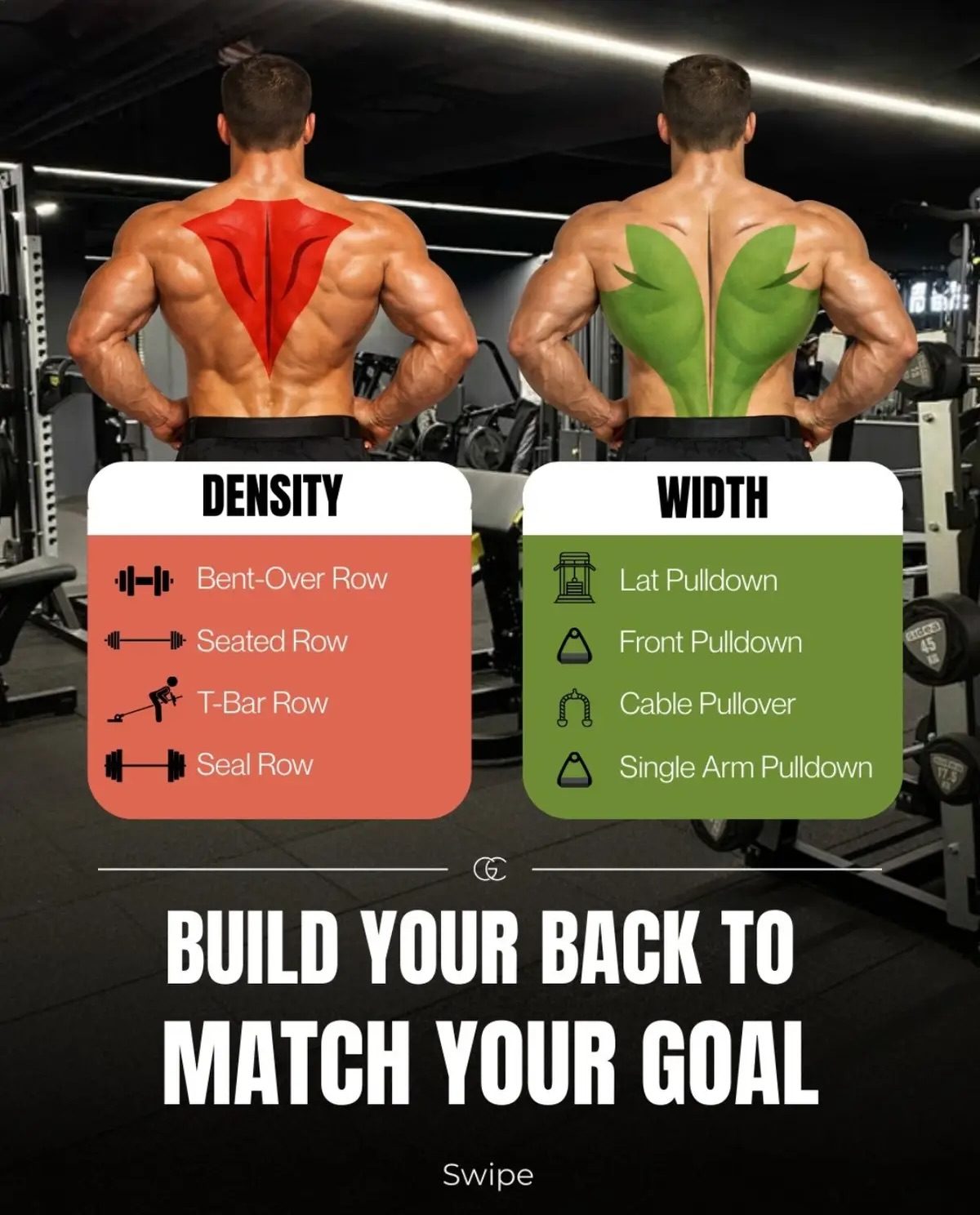
Back Muscles: Building Density vs. Width
Back workouts are a crucial component of any fitness routine, but simply going through the motions won't cut it. To see real results, you need to train with intention, focusing on specific goals like building density or width. Understanding the difference between these two objectives can help you structure your workouts more effectively.
Context / Why this matters
The back is a complex muscle group composed of various muscles, including the latissimus dorsi, rhomboids, trapezius, and erector spinae. Each of these muscles plays a different role in posture, movement, and overall strength. By targeting specific muscles and using the right exercises, you can achieve your desired back development—whether it's thickness (density) or width (V-taper).
Exercises for Building Density
Density refers to the thickness and overall mass of the back muscles. To build density, focus on exercises that engage the mid-back, particularly the rhomboids and middle traps. Here are some key exercises and tips for maximizing density:
Bent-Over Row
The bent-over row is a staple exercise for building mid-back density. To perform this exercise effectively:
- Form: Stand with your feet shoulder-width apart, hinge forward at the hips, and keep your back straight.
- Movement: Pull the barbell or dumbbells towards your torso by retracting your shoulder blades and driving your elbows back and slightly in.
- Tension: Control the eccentric movement (lowering the weight) to maintain tension on the mid-back.
Seated Row
The seated row is another excellent exercise for building mid-back density. Here's how to do it right:
- Form: Sit at a rowing station with your knees slightly bent and your back straight.
- Movement: Pull the handle towards your torso by squeezing your shoulder blades together and driving your elbows back.
- Control: Avoid using momentum and focus on a slow, controlled movement.
Other effective exercises for building density include T-bar rows and seal rows. These movements all emphasize the mid-back contraction and help load the rhomboids and middle traps, not just the lats.
Exercises for Building Width
Building width, or achieving a V-taper, involves targeting the outer and lower fibers of the latissimus dorsi. Here are some key exercises and tips for maximizing width:
Lat Pulldown
The lat pulldown is a go-to exercise for building back width. To maximize its effectiveness:
- Form: Sit at the lat pulldown station with a wide grip, lean slightly back, and keep your elbows pointed down.
- Movement: Pull the bar down towards your hips by driving your elbows down and in.
- Control: Avoid pulling the bar down to your chest; instead, focus on lengthening the lats under load.
Front Pulldown
The front pulldown is similar to the lat pulldown but targets the width differently.
- Form: Sit at the front pulldown station with a wide grip and your back straight.
- Movement: Pull the bar down towards your thighs by driving your elbows down and in.
- Control: Maintain a slow, controlled movement and avoid using momentum.
Other effective exercises for building width include cable pullovers and single-arm pulldowns. These movements emphasize pulling through the lats and create the visual V-taper.
What to Avoid
To maximize your back development, avoid common mistakes that can hinder your progress. Here are some tips to keep in mind:
- Mixing Exercises Randomly: Avoid mixing density and width exercises randomly. Instead, choose exercises that match your specific goals and focus on progressing them consistently.
- Using Momentum: Avoid using momentum during exercises, as it can reduce the effectiveness of the movement and increase the risk of injury.
- Ignoring Muscle Engagement: Always focus on engaging the target muscles and using proper form to maximize the benefits of each exercise.
Practical Tips
Here are some practical tips to help you get the most out of your back workouts:
- Train with a Goal: Before starting your workout, decide whether you want to focus on density or width. This will help you choose the right exercises and structure your workout effectively.
- Progress Consistently: Track your progress over time and gradually increase the weight or resistance to continue challenging your muscles.
- Use Proper Form: Always prioritize proper form over lifting heavier weights. Proper form ensures that you're targeting the right muscles and reduces the risk of injury.
- Mix It Up: While consistency is key, mixing up your exercises and routines can help prevent plateaus and keep your workouts interesting.
- Focus on Eccentric Movements: Control the eccentric (lowering) phase of each exercise to maintain tension on the target muscles and maximize muscle growth.
Important Takeaways
Before wrapping up, here are some important takeaways to remember:
- Train with Intention: Simply going through the motions won't cut it. Train with a specific goal in mind and choose exercises that match your objectives.
- Density vs. Width: Understand the difference between building density and width, and structure your workouts accordingly.
- Proper Form: Always prioritize proper form over lifting heavier weights. Proper form ensures that you're targeting the right muscles and reduces the risk of injury.
- Progress Consistently: Track your progress and gradually increase the weight or resistance to continue challenging your muscles.
- Focus on Muscle Engagement: Engage the target muscles and avoid using momentum during exercises.
Conclusion
Building a strong, well-defined back requires intention, proper exercise selection, and consistent progress. By focusing on specific goals like building density or width, and using the right exercises and techniques, you can achieve the back development you desire. Always prioritize proper form, progressive overload, and muscle engagement to maximize your results and minimize the risk of injury.
Watch the Reel
Questions readers ask
What are the best exercises to build back density?
To build back density, focus on exercises that target the thickness of your back muscles. Compound movements like deadlifts, barbell rows, and T-bar rows are excellent for this purpose. Additionally, incorporating heavy weight and lower reps (around 6-8) into your back workout routine can help maximize muscle growth and density.
How can I effectively target back width?
To target back width, concentrate on exercises that emphasize the outer range of motion and engage the lateral aspect of your back. Exercises like lat pulldowns, wide grip pull-ups, and rear delt flys are particularly effective. Incorporating these into your back workout routine will help you achieve a broader, more defined back.
What is the difference between back density and back width training?
Back density training focuses on increasing the thickness and overall size of your back muscles, particularly the latissimus dorsi and rhomboids. In contrast, back width training aims to widen your back by targeting the outer range of motion and engaging the lateral muscles. Both are important for a well-rounded back development but require different exercises and techniques.
How should I structure my back workout to include both density and width exercises?
To include both density and width exercises in your back workout, consider organizing your routine by splitting your exercises. For example, you could start with compound movements like deadlifts or barbell rows for density, and then move on to exercises like lat pulldowns and rear delt flys for width. This ensures you're targeting all the necessary muscle groups effectively.
What are some advanced techniques for enhancing back width?
Advanced techniques for enhancing back width can include drop sets, partial reps, and eccentric training. These techniques can help increase the time under tension and push your muscles to their limits. Additionally, incorporating exercises like close grip pull-downs and wide grip pull-ups can help focus on the lateral muscles.
Can I build both density and width at the same time?
While it is possible to build both density and width simultaneously, it's important to prioritize one goal at a time. Focusing on one objective allows you to tailor your exercises and training techniques more effectively. For example, if you're prioritizing density, you might focus on heavier weights and lower reps, while if you're prioritizing width, you might focus on exercises that emphasize the outer range of motion.
What role do rows play in building back density and width?
Rows are a versatile exercise that can help build both density and width, depending on your grip and technique. For density, using a close grip and focusing on the mid-back will help. For width, using a wide grip and emphasizing the outer range of motion can be more effective. Incorporating both styles of rows into your routine can ensure a balanced approach to back development.
Recent articles
Fresh deep dives from the latest Reels we unpacked.




Comments
Be the first to comment.