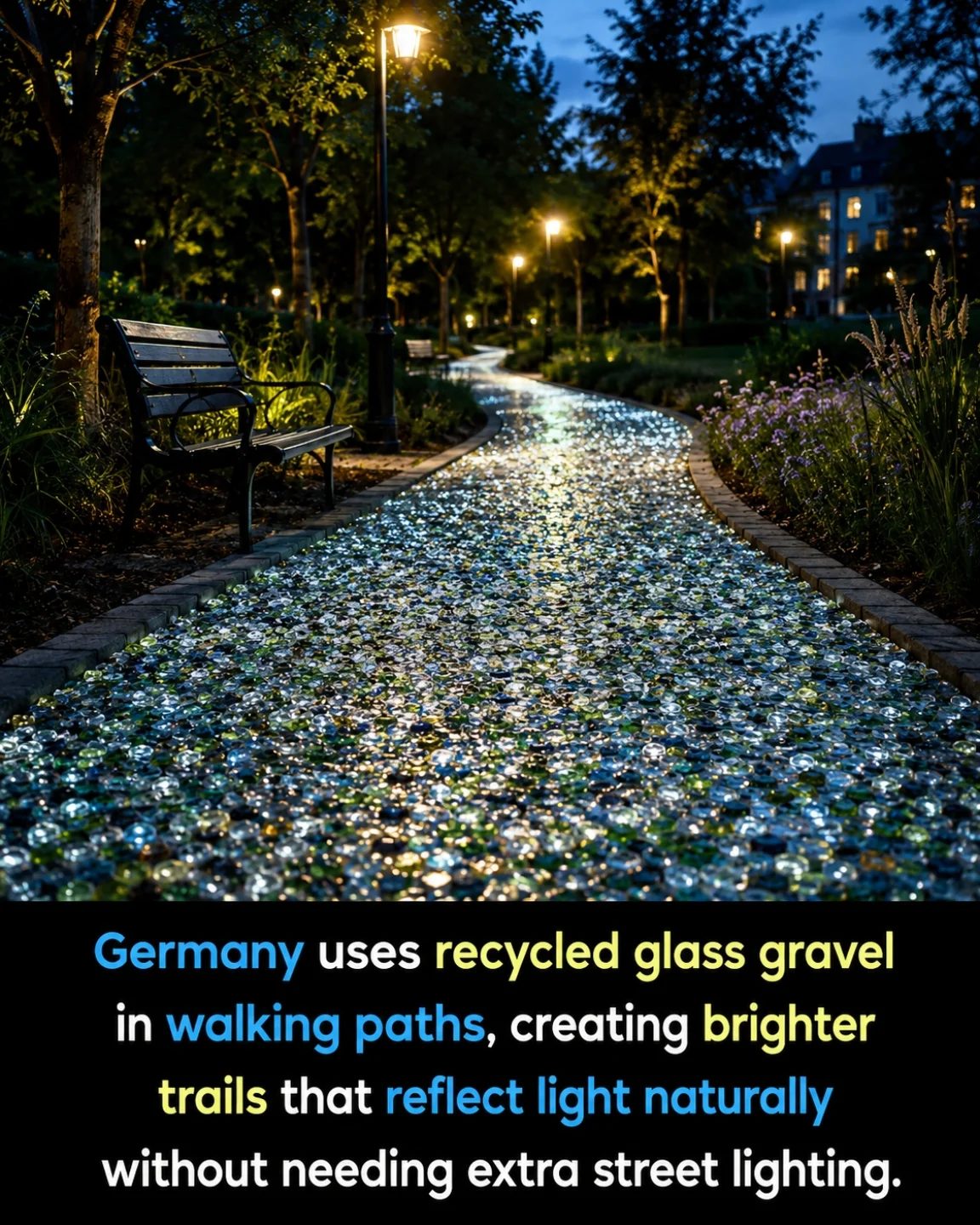
Recycled Glass Walking Paths
Germany has developed an innovative approach to urban design by incorporating recycled glass gravel into walking paths. This solution not only helps manage glass waste but also improves the functionality and aesthetics of public spaces. Let's dive into the benefits and practical aspects of this unique design.
Why This Matters
Recycling glass for walking paths offers both environmental and practical benefits. By repurposing glass waste, Germany reduces the volume of materials sent to landfills and decreases the need for new resources. The reflective properties of glass gravel enhance visibility without relying on additional lighting, making these paths safer for pedestrians, especially at night.
Furthermore, this design encourages walkability by creating visually appealing and well-lit trails, thereby promoting healthier lifestyles and community engagement. The reflective nature of the gravel also helps to reduce energy consumption, contributing to a more sustainable environment.
Main Discussion
Environmental Impact
The production and disposal of glass generate significant environmental concerns. Recycling glass reduces the need for raw materials and energy-intensive manufacturing processes. By integrating recycled glass into walking paths, Germany takes a proactive step towards sustainability.
The reflective nature of glass gravel enhances visibility by reflecting light from street lamps, reducing the need for additional street lighting. This not only saves energy but also reduces light pollution, which is beneficial for both people and wildlife.
Design and Practicality
The walking paths made with recycled glass gravel are not just a sustainable solution but also a practical one. The gravel is durable and resistant to wear and tear, ensuring longevity. The reflective properties of the glass make the paths brighter and more visually appealing, enhancing the overall pedestrian experience.
The design also improves safety by making the paths more visible, especially in dimly lit areas. This is particularly beneficial for areas with high pedestrian traffic or where visibility is a concern.
Cost Efficiency
Cost-efficiency is a significant advantage of using recycled glass gravel in walking paths. By reducing the need for additional street lighting, municipalities can save on energy and maintenance costs. This makes the design a cost-effective solution for urban planners and developers.
Aesthetic Appeal
The reflective properties of glass gravel create a visually appealing trail. The light reflection can add a unique and captivating element to public spaces, making them more inviting for walkers and runners. This aesthetic appeal can also enhance the overall character and vibrancy of urban areas.
Practical Tips
Installation and Maintenance
Installing glass gravel paths requires careful planning and execution. Properly compacting the gravel and ensuring it is free of debris are crucial steps. Regular maintenance, including removing any debris and checking for wear and tear, can prolong the lifespan of the paths.
Safety Measures
Ensure that the glass gravel is smooth and free of sharp edges to prevent injury. Additionally, install reflective markers along the path for added safety, especially in areas with low visibility.
Design Considerations
Consider the surrounding landscape and architectural features when designing the paths. The reflective properties of the glass gravel can enhance the overall aesthetic appeal and create a cohesive and inviting environment.
Important Takeaways
- Sustainability: Recycled glass gravel reduces the need for raw materials and energy-intensive manufacturing processes.
- Energy Efficiency: The reflective properties of glass gravel reduce the need for additional street lighting, saving energy and reducing light pollution.
- Aesthetic Appeal: The reflective nature of the glass gravel creates visually appealing trails, enhancing the overall character and vibrancy of urban areas.
- Cost Efficiency: Reducing the need for additional lighting can save municipalities on energy and maintenance costs.
- Safety: The reflective properties of the glass gravel improve visibility, making the paths safer for pedestrians, especially at night.
Conclusion
Recycled glass walking paths offer a sustainable, cost-effective, and aesthetically pleasing solution for urban design. By repurposing glass waste, Germany has created a functional and visually appealing public space that promotes sustainability and safety. Whether you are an urban planner, a community activist, or simply someone who appreciates innovative design, exploring this concept could lead to significant benefits for your community.
Watch the Reel
Questions readers ask
How does recycled glass gravel improve the safety of urban walking paths?
Recycled glass gravel enhances safety by reflecting light, making paths brighter and more visible. This is particularly useful at night, reducing the need for additional street lighting and minimizing the risk of tripping or accidents.
What are the environmental benefits of using recycled glass gravel in trails?
Recycled glass gravel helps the environment by reducing waste sent to landfills and decreasing the demand for new materials. It also minimizes the energy consumption associated with traditional street lighting, promoting a more sustainable urban landscape.
How does recycled glass gravel contribute to community engagement?
By illuminating walking paths and enhancing their appeal, recycled glass gravel makes public spaces more inviting. This encourages residents to spend more time outdoors, fosters a sense of community, and supports active lifestyles.
How does Germany's use of recycled glass gravel reduce the need for street lighting?
The reflective properties of glass gravel allow the paths to glow softly at night, reducing the requirement for additional street lighting. This can significantly lower energy usage and maintenance costs associated with traditional lighting.
Can recycled glass gravel be used in all types of urban environments?
Recycled glass gravel is versatile and can be integrated into various urban settings, from bustling city centers to quiet suburban neighborhoods. Its benefits, such as improved safety and enhanced aesthetics, make it suitable for diverse locations.
Is the installation of glass gravel trails a complex process?
The installation process involves laying down a base material, followed by the glass gravel. This is typically straightforward and can be done by local authorities or landscaping professionals, making it a feasible solution for many urban areas.
Related deep dives
Similar reads based on topic and creator.



Recent articles
Fresh deep dives from the latest Reels we unpacked.




Comments
Be the first to comment.