Investment Portfolio Breakdown
Americans distribute their wealth across various accounts, with a significant portion managed by advisors. Understanding the typical allocation of funds in different account types provides valuable insights into financial management and investment strategies. This breakdown helps individuals and financial advisors make informed decisions about portfolio diversification and retirement planning.
Why This Matters
The allocation of funds in different investment accounts reflects broader trends in financial planning and wealth management. By examining the average distribution, individuals can gain a clearer picture of where their money should be invested to achieve long-term financial goals. For advisors, this information is crucial for guiding clients through effective financial planning.
Main Discussion
Employer Retirement Plans
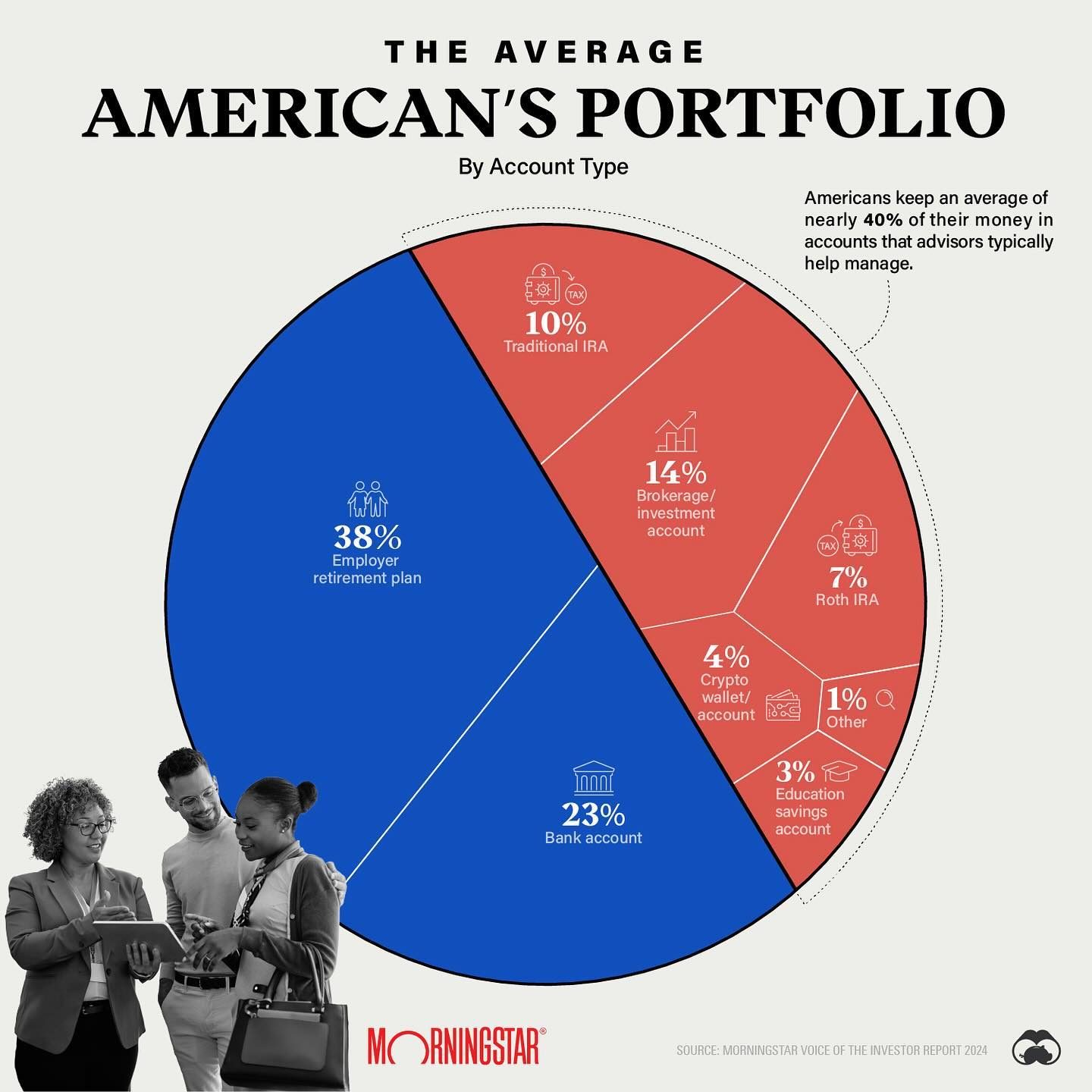
Employer retirement plans dominate the average American's portfolio, comprising nearly 40% of total investments. These plans often include 401(k)s, 403(b)s, and other employer-sponsored retirement accounts. They offer tax advantages and sometimes employer matching contributions, making them a cornerstone of retirement savings.
Brokerage and Investment Accounts
Brokerage and investment accounts account for approximately 14% of the average portfolio. These accounts are used for a variety of investment strategies, including stocks, bonds, mutual funds, and ETFs. They provide flexibility and the opportunity to diversify investments beyond employer-sponsored plans.
Crypto Wallets and Accounts
Cryptocurrency has gained traction in recent years, representing about 4% of the average portfolio. While volatile, crypto assets offer potential for significant returns and are increasingly integrated into diversified investment strategies.
Bank Accounts
Traditional bank accounts, including savings and checking accounts, make up 23% of the average portfolio. These accounts are essential for liquidity and everyday financial transactions, ensuring that individuals have ready access to funds for immediate needs.
Education Savings Accounts
Education savings accounts, comprising 10% of the portfolio, are crucial for funding educational expenses. These accounts, such as 529 plans, offer tax advantages and are designed to help families save for future education costs.
Roth IRAs
Roth IRAs, which constitute 7% of the typical portfolio, are popular for their tax-free growth and withdrawals. They are particularly appealing for individuals who expect their tax rates to be higher in retirement.
Other Accounts
The remaining 1% of the portfolio often includes various other specialized accounts, such as Health Savings Accounts (HSAs) or taxable investment accounts. These accounts serve specific purposes and can complement a well-rounded financial strategy.
Practical Tips
To optimize your portfolio, consider the following tips:
- Diversify Your Investments: Spread your assets across multiple account types to manage risk and maximize growth potential. Diversification helps mitigate the impact of market volatility on your overall portfolio.
- Maximize Employer Contributions: Take full advantage of employer matching contributions in retirement plans. This is essentially free money that can significantly boost your savings.
- Explore Tax-Advantaged Accounts: Utilize accounts like Roth IRAs and 529 plans to benefit from tax advantages. These accounts can help grow your wealth more efficiently.
- Maintain Liquidity: Ensure you have a sufficient amount in bank accounts for emergency funds and immediate financial needs. Liquid assets provide financial security and flexibility.
- Stay Informed: Keep up with financial trends and seek advice from financial advisors to make informed decisions about your investments. Regularly reviewing and adjusting your portfolio can help align it with your long-term goals.
Important Takeaways
Understanding the typical allocation of assets in various investment accounts provides a roadmap for effective financial planning. Employer retirement plans and brokerage accounts offer robust avenues for long-term savings and investment. Diversifying your portfolio across these and other account types, such as bank accounts, education savings, and cryptocurrency, can help achieve a balanced financial strategy.
Conclusion
The breakdown of the average American's investment portfolio highlights the importance of diversification and strategic financial planning. By understanding the distribution of funds across different account types, individuals can make more informed decisions about their investments and retirement savings. Employer retirement plans, brokerage accounts, and other specialized accounts each play a unique role in achieving long-term financial goals. Staying informed and seeking professional advice can further enhance your financial strategy and ensure a secure future.
Watch the Reel
Questions readers ask
What are the most common types of accounts in an average American investment portfolio?
The average American investment portfolio typically includes employer retirement plans like 401(k)s, individual retirement accounts (IRAs), taxable brokerage accounts, and traditional bank savings or checking accounts. These accounts are used to hold various investment types, including stocks, bonds, and mutual funds.
How significant is the role of cryptocurrency in the average American investment portfolio?
Cryptocurrency has gained traction but still represents a relatively small portion of the average American investment portfolio. Many investors view cryptocurrency as a high-risk, high-reward asset and allocate only a small percentage of their total portfolio to it, while others may choose to avoid it altogether.
Why is it important to diversify investments across different account types?
Diversifying investments across different account types, such as retirement plans, brokerage accounts, and bank accounts, helps to spread risk. This diversification strategy can protect investors from market volatility and ensure that their financial goals are met, even if certain investments underperform.
What are some key considerations for Americans when allocating funds in their investment portfolio?
When allocating funds, Americans should consider their risk tolerance, investment horizon, and financial goals. It is also important to look at the tax implications of different account types and investment strategies to optimize returns and ensure that investments are aligned with long-term objectives.
How can understanding the average American investment portfolio benefit financial advisors?
By understanding the average American investment portfolio, financial advisors can provide tailored guidance to their clients. This knowledge allows advisors to offer insights on portfolio diversification, retirement planning, and investment allocation, helping clients make informed decisions that align with their financial goals.
What trends have emerged in American investment strategies in recent years?
In recent years, American investment strategies have seen a shift towards more passive investment approaches, such as index funds and exchange-traded funds (ETFs). Additionally, there has been an increase in the use of robo-advisors and online investment platforms, which offer automated, low-cost investment management services.
Why is it important to review the allocation of funds in investment accounts regularly?
Reviewing the allocation of funds in investment accounts regularly is crucial for maintaining a balanced and diversified portfolio. Market conditions, personal financial situations, and investment goals can change over time, so periodic reviews help ensure that the portfolio remains aligned with these changes and continues to support long-term financial objectives.
Recent articles
Fresh deep dives from the latest Reels we unpacked.




Comments
Be the first to comment.