Global Food Supply and Potash
The global food supply faces significant challenges as the world's population grows and arable land shrinks. This dynamic creates a pressing need for efficient farming practices and reliable nutrient sources. Potash, a critical nutrient for crop growth, plays a pivotal role in addressing these challenges. Let's delve into the intricacies of global potash supply, its regional projections, and how emerging suppliers like Brazil Potash could shape the future of agriculture.
Why This Matters
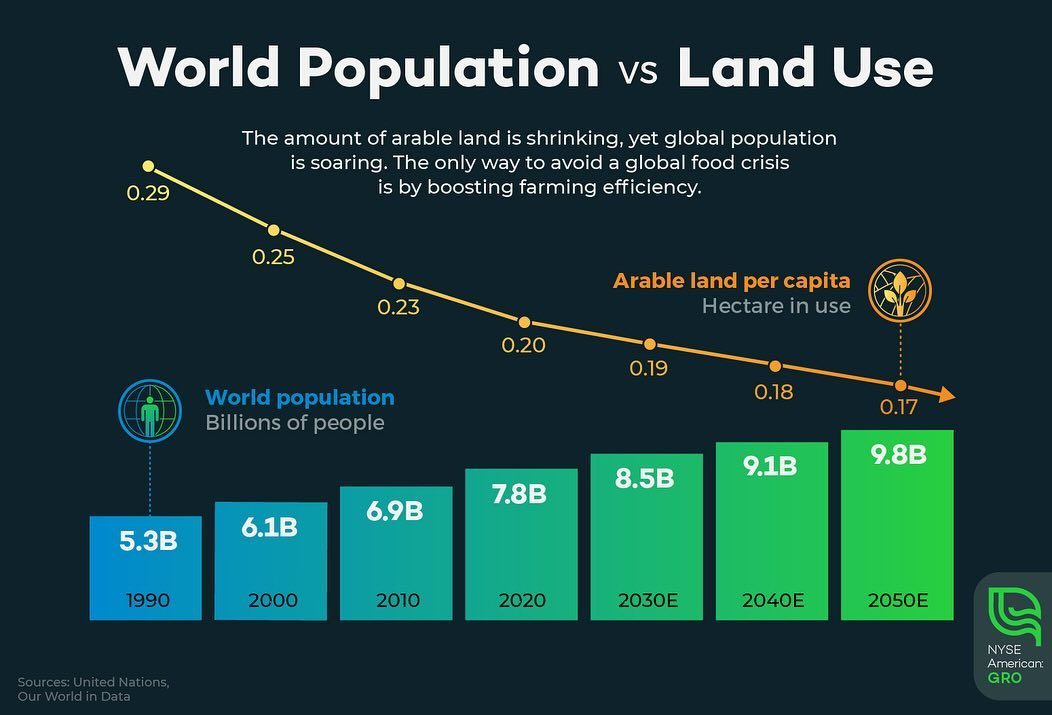
Understanding the dynamics of global food supply and potash is crucial for several reasons. Firstly, the world's population is projected to reach 9.8 billion by 2050, while arable land is decreasing. This imbalance poses significant challenges for food security and agricultural sustainability. Potash, a vital nutrient for crops, is essential for meeting these demands. Its supply and distribution significantly impact global food production and agricultural efficiency.
Main Discussion
Global Food Supply and Arable Land
As the global population continues to rise, the demand for food surges. According to the visuals, the world population is expected to reach 9.8 billion by 2050. Simultaneously, arable land per capita is decreasing. This shrinking land availability, coupled with increasing population, creates a significant challenge for meeting global food demands.
The Role of Potash in Agriculture
Potash is an essential nutrient for crop growth. It enhances crop yield, improves crop quality, and helps plants resist diseases and pests. The demand for potash is projected to grow, with varying Compound Annual Growth Rates (CAGR) across different regions. For instance, Africa is expected to see a 4.2% CAGR from 2020 to 2045, while East Asia is projected to have a 0.5% CAGR during the same period. Understanding these regional projections is critical for optimizing potash distribution and addressing supply chain vulnerabilities.
Global Potash Supply Profile
The global potash supply is dominated by a few key players. Chile, Canada, Russia, and Belarus account for a significant portion of global potash exports. For example, Canada exports 39% of the global potash, while Russia and Belarus together account for 42%. This concentrated supply profile creates vulnerabilities in the global potash market, as disruptions in any of these regions can have widespread impacts on global food production.
Introducing Brazil Potash
Brazil Potash emerges as a potential solution to the global potash supply challenges. With the potential to supply approximately 20% of Brazil’s current potash demand, Brazil Potash could significantly impact the regional and global agricultural landscape. It is estimated that the produced potash from Brazil will be approximately half the average cost of potash imported into Brazil, making it a more cost-efficient option. Furthermore, Brazil Potash aims to achieve profitability at prices where approximately 70% of existing potash producers outside of Brazil would not be profitable, highlighting its competitive edge.
Practical Tips
For farmers and agricultural stakeholders, several practical steps can be taken to enhance efficiency and sustainability in the face of these challenges:
- Invest in Potash: Given its critical role in crop growth, investing in high-quality potash fertilizers can significantly improve crop yield and quality.
- Diversify Nutrient Sourcing: Diversifying nutrient sources, including exploring local suppliers like Brazil Potash, can mitigate supply chain risks and reduce costs.
- Optimize Land Use: Implementing sustainable farming practices and optimizing land use can help maximize crop production on available arable land.
- Stay Informed: Keeping up-to-date with regional potash projections and global supply profiles can inform better decision-making and resource allocation.
Important Takeaways
- The global food supply is under pressure due to increasing population and decreasing arable land.
- Potash is a critical nutrient for enhancing crop growth and meeting food demand.
- The global potash supply is concentrated in a few countries, creating vulnerabilities in the supply chain.
- Brazil Potash presents a potential solution to regional and global potash supply challenges, offering a more secure, timely, and cost-efficient option.
Conclusion
The global food supply and potash landscape are complex and dynamic. Understanding the interplay between population growth, arable land, and nutrient supply is essential for addressing current and future agricultural challenges. Emerging suppliers like Brazil Potash offer promising solutions to enhance farming efficiency and meet the rising demand for food. By staying informed and taking practical steps, stakeholders can navigate these challenges and contribute to a more sustainable and food-secure future.
Watch the Reel
Questions readers ask
What is potash and why is it crucial for agriculture?
Potash is a vital nutrient for plants, composed of potassium and other minerals. It enhances crop yields, improves crop quality, and increases resistance to pests and diseases. As global food demand rises, maintaining an adequate supply of potash is essential for sustaining agricultural productivity.
How does Brazil Potash contribute to global food supply?
Brazil Potash, with its significant reserves, can help meet the increasing demand for potash as the world's population grows and arable land declines. By providing a reliable source of this critical nutrient, Brazil Potash can enhance crop yields and improve food security on a global scale.
What are the main challenges facing the global food supply?
The primary challenges include a growing population, which is expected to reach 9.8 billion by 2050, and a diminishing amount of arable land. These factors create a urgent need for more efficient farming practices and sufficient nutrient supplies to ensure global food security.
Why is Brazil Potash considered a game-changer in agriculture?
Brazil Potash is seen as a game-changer due to its substantial potash reserves, which can significantly boost crop yields and improve agricultural efficiency. By providing a new, reliable source of potash, Brazil can help address the global demand for this essential nutrient and support sustainable farming practices.
How does potash impact crop growth and quality?
Potash plays a crucial role in various plant functions, including photosynthesis, water uptake, and nutrient transportation. It enhances root development, improves drought resistance, and increases crop yields and quality, making it indispensable for modern agriculture.
What role does Brazil Potash play in global agriculture sustainability?
Brazil Potash can contribute to global agriculture sustainability by providing a local, abundant source of potash. This can reduce the need for long-distance transportation of fertilizer, lowering carbon emissions and promoting more environmentally friendly farming practices.
What regions are likely to benefit most from Brazil Potash?
Regions with significant agricultural activity and a high demand for potash are likely to benefit most. This includes major agricultural hubs in South America, as well as countries that rely heavily on imported fertilizers, such as those in Asia, Africa, and parts of Europe.
Related deep dives
Similar reads based on topic and creator.

Recent articles
Fresh deep dives from the latest Reels we unpacked.




Comments
Be the first to comment.