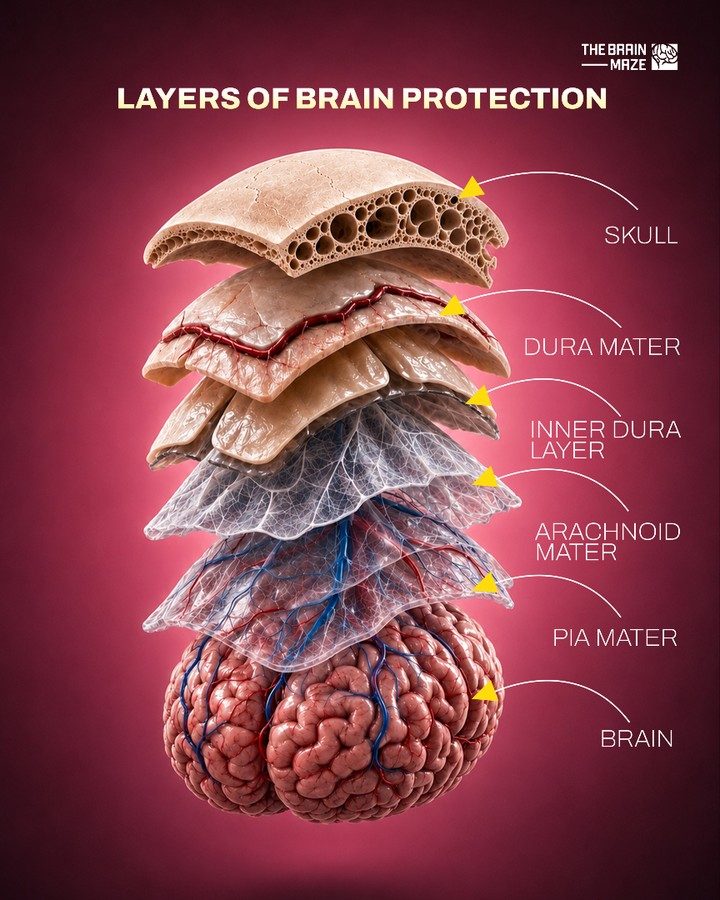
Brain Protection Layers
The brain is protected by a sophisticated system of layers that work together to absorb impacts, prevent infections, and support vital functions. Understanding these layers provides insight into the intricate defense mechanisms that safeguard one of the body's most delicate organs. Here we will explore the skull, dura mater, arachnoid mater, and pia mater.
Understanding the Importance of Brain Layers
The brain’s protection is crucial for maintaining cognitive functions and overall health. These layers are not just passive barriers; they actively contribute to the brain's safety and functionality. By absorbing shocks, preventing infections, and providing structural support, these layers ensure that the brain can perform its complex tasks without interference.
The Skull: The Outer Shield
The skull is the first and most visible layer of brain protection. Formed by a series of bones, it provides a rigid, protective outer shield. The skull encompasses the brain, protecting it from external impacts and physical trauma. Its hard structure is designed to withstand significant force, making it an essential component of the brain's defense system. The skull also provides attachment points for muscles and houses the sensory organs, such as the eyes and ears.
The Dura Mater: A Tough Protective Covering
Immediately beneath the skull lies the dura mater, a tough, fibrous membrane that serves as a protective covering. The dura mater is the outermost of the three meninges, the membranes that envelop the brain and spinal cord. It forms a protective barrier against infection and provides support to the brain. The dura mater also creates compartments within the skull, which help maintain the brain's stability and prevent it from shifting excessively.
The Inner Dura Layer: Additional Support
The inner dura layer, also known as the periosteal layer, is a thin membrane that lines the inner surface of the skull. It is continuous with the outer dura mater and provides additional support to the brain. This layer helps anchor the brain within the skull, preventing excessive movement that could lead to injuries. The inner dura layer's primary function is to ensure that the brain remains securely positioned, reducing the risk of damage from sudden impacts.
The Arachnoid Mater: A Cushioning Layer
The arachnoid mater is the middle layer of the meninges, situated between the dura mater and the pia mater. It is a delicate, spider-web-like membrane that forms a cushioning layer around the brain. The arachnoid mater is filled with cerebrospinal fluid, which acts as a shock absorber, protecting the brain from impacts. This layer also helps to distribute nutrients and waste products, ensuring that the brain receives the necessary support for optimal function.
The Pia Mater: Nourishing and Protecting the Brain
The pia mater is the innermost layer of the meninges, closely adhering to the surface of the brain. It is a thin, delicate membrane that provides direct nourishment and protection to the brain. The pia mater is responsible for supplying blood vessels to the brain, ensuring a steady flow of oxygen and nutrients. This layer also helps in maintaining the brain's structural integrity, providing a protective barrier against minor injuries.
Practical Tips for Brain Health
Maintaining the health of these protective layers is essential for overall brain health. Here are some practical tips to support the brain's protective structures:
- Wear Protective Gear: Engage in activities that require protective headgear, such as wearing a helmet while cycling or playing contact sports. This helps prevent external impacts that could damage the skull and underlying layers.
- Avoid Infections: Maintain good hygiene and get regular vaccinations to prevent infections that could affect the brain's protective layers.
- Nutritious Diet: Consume a balanced diet rich in vitamins and minerals to support the health of the meninges. Foods high in omega-3 fatty acids, antioxidants, and vitamins B and E are particularly beneficial.
- Regular Exercise: Physical activity promotes blood flow to the brain, which can help maintain the health of the pia mater and its associated blood vessels.
- Adequate Sleep: Ensure you get enough rest to allow the brain to repair and regenerate. Adequate sleep supports the overall health of the brain and its protective layers.
Important Takeaways
Understanding the layers of brain protection highlights the importance of each component in maintaining the brain's health and functionality. The skull, dura mater, arachnoid mater, and pia mater work in harmony to absorb impacts, prevent infections, and support vital functions. By taking practical steps to protect and nourish these layers, you can contribute to the overall well-being of your brain.
Conclusion
The brain's remarkable layers of protection are a testament to the body's intricate defense mechanisms. From the rigid skull to the delicate pia mater, each layer plays a critical role in safeguarding the brain. By appreciating and supporting these protective structures, you can ensure that one of the body's most vital organs remains healthy and functional.
Watch the Reel
Questions readers ask
Which layers protect the brain from the outside in?
The brain is protected by several layers, from the skull, dura mater, arachnoid mater, and pia mater. This sequence goes from the outer to the inner protective layers.
How does the skull contribute to brain protection?
The skull is the outermost protective layer and serves as a hard, bony shield that absorbs and distributes impacts to prevent direct trauma to the brain.
What is the function of the dura mater in brain protection?
The dura mater is a thick, tough membrane that lies just beneath the skull. It provides additional shock absorption and helps to contain and protect the brain by preventing it from moving around inside the skull.
What is the role of the arachnoid mater in the brain’s protective system?
The arachnoid mater is a delicate membrane that helps to cushion the brain. It is filled with cerebrospinal fluid (CSF), which acts as a further shock absorber and helps to distribute the force of impacts.
How does the pia mater support the brain?
The pia mater is the innermost layer, it is a thin, delicate membrane that closely follows the contours of the brain. The pia mater provides structural support and protection to the brain's surface, helping to maintain its stability and functionality.
How do these layers work together to prevent brain infections?
The layers work together to create a barrier that prevents pathogens from entering the brain. The skull and the meninges (dura, arachnoid, and pia maters) help to isolate the brain from potential sources of infection, while cerebrospinal fluid also plays a role in removing waste and potential toxins.
Related deep dives
Similar reads based on topic and creator.


Recent articles
Fresh deep dives from the latest Reels we unpacked.




Comments
Be the first to comment.