Robot Parkour: Atlas Demonstrates Advanced Agility
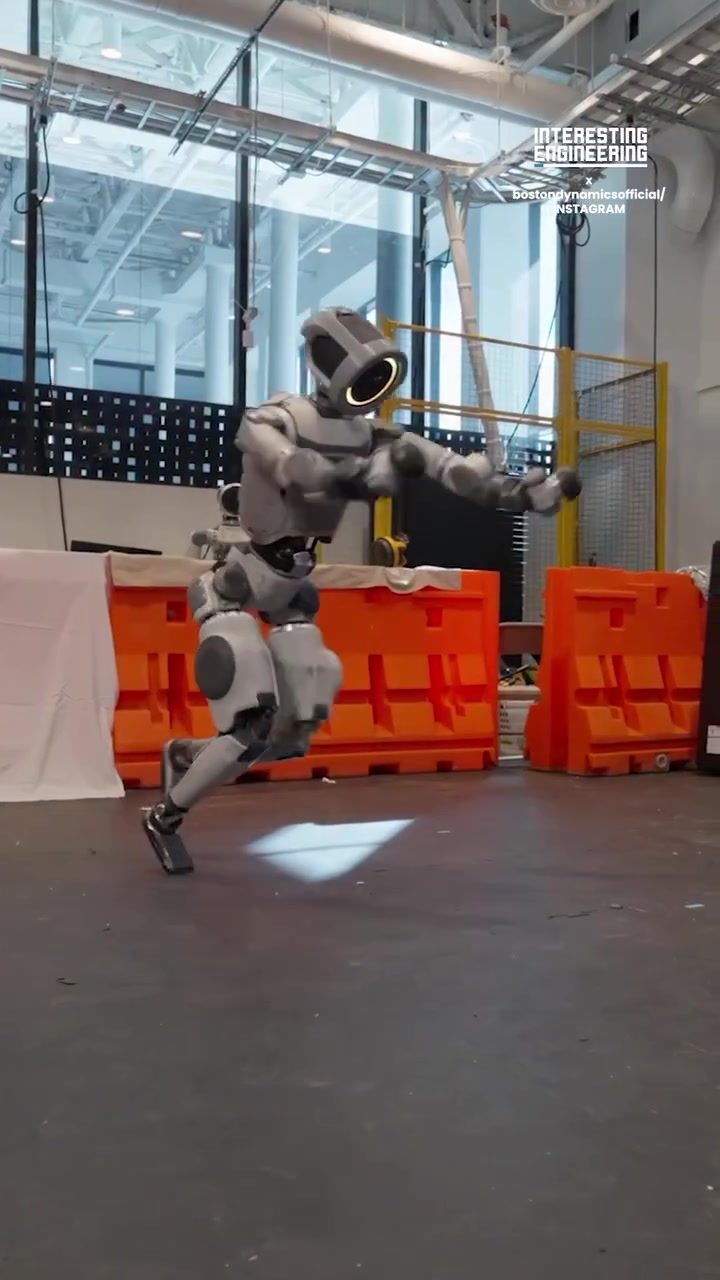
Boston Dynamics' Atlas robot showcases extraordinary agility and mobility in a recent parkour routine. This showcase highlights the robot's capabilities as it prepares to transition from a research model to enterprise deployment.
Context: Advanced Robotics and Enterprise Deployment
Robotics has made significant strides in recent years, with companies like Boston Dynamics pushing the boundaries of what machines can accomplish. Atlas, a humanoid robot developed by Boston Dynamics, exemplifies this progress. As Atlas moves toward enterprise deployment, its final testing phase focuses on full-body control, agility, and mobility. This shift from research to practical application underscores the importance of rigorous testing and lesson capturing to enhance performance.
The Atlas Parkour Routine
Full-Body Control and Balance
The parkour routine showcases Atlas' full-body control and balance. Navigating through a series of obstacles, including jumping over and onto stacks of orange barriers, the robot demonstrates its ability to handle complex movements with precision. This level of control is crucial for robots operating in dynamic environments, where stability and agility are key.
Agility and Mobility
Agility and mobility are at the core of Atlas' performance. The routine highlights how the robot can swiftly change direction, jump, and land on various surfaces. These skills are essential for robots that need to operate in unpredictable settings, such as disaster response or industrial sites.
Technical Collaboration
The showcase is a collaborative effort involving engineers from Boston Dynamics and the RAI Institute. This partnership ensures that the lessons learned during the testing phase are comprehensively captured, contributing to the development of future models. The technical support provided by the RAI Institute plays a pivotal role in pushing the performance limits of the Atlas robot.
The RAI Institute and Collaboration
RAI Institute's Role
The RAI Institute has been instrumental in supporting the technical aspects of Atlas' development. Their collaboration with Boston Dynamics ensures that the research model is thoroughly tested, and valuable lessons are captured. This includes everything from full-body control to mobility, ensuring that Atlas is ready for enterprise deployment.
Technical Support and Lessons Learned
The technical support from the RAI Institute allows for a deeper understanding of the robot's capabilities and limitations. This collaborative effort ensures that the final showcase not only highlights what Atlas can do but also identifies areas for improvement in future models.
The Future of Robotics in Enterprise Deployment
Enhancing Performance
As Atlas prepares for enterprise deployment, the lessons learned during this final showcase will be critical. By rigorously testing full-body control, agility, and mobility, engineers can enhance the robot's performance, making it more reliable and efficient in real-world applications.
Applications in Dynamic Environments
The agility and balance demonstrated by Atlas in the parkour routine have significant implications for its future applications. Robots like Atlas could be deployed in disaster response scenarios, industrial sites, and other dynamic environments where adaptability and stability are crucial.
Enterprise Deployment and Beyond
The transition from a research model to enterprise deployment marks a significant milestone for Atlas and robotics in general. The rigorous testing and collaboration with the RAI Institute ensure that Atlas is well-prepared to meet the challenges of real-world applications.
Practical Tips for Robot Development
Testing and Collaboration
For companies developing robots, collaboration and rigorous testing are essential. Partnering with technical experts and thoroughly testing the robot's capabilities can significantly enhance its performance and reliability. This approach ensures that the robot is ready for real-world applications.
Capturing Lessons Learned
Capture and document lessons learned during the development and testing phases. This documentation can provide valuable insights for future development and improve the overall performance of the robots.
Pushing Performance Limits
Continuously push the performance limits of the robot during testing. This approach allows for a comprehensive understanding of the robot's capabilities and identifies areas for improvement.
Important Takeaways
Agility and Balance
The parkour routine showcases the importance of agility and balance in robotics. These skills are crucial for robots operating in dynamic environments, ensuring they can navigate obstacles and change direction swiftly.
Full-Body Control
Full-body control is essential for robots to perform complex tasks with precision. This capability ensures that the robot can handle a variety of movements and environments with ease.
Collaboration and Testing
Collaboration with technical experts and rigorous testing are critical for the successful development of robots. These efforts ensure that the robot is well-prepared for real-world applications and can meet the challenges of dynamic environments.
Enterprise Deployment
The transition from a research model to enterprise deployment highlights the importance of thorough testing and capturing lessons learned. This approach ensures that the robot is reliable and efficient in real-world applications.
Conclusion
Atlas' parkour routine is a testament to the advancements in robotics and the potential for robots in dynamic environments. By rigorously testing full-body control, agility, and mobility, engineers can enhance the robot's performance, making it more reliable and efficient in real-world applications. As Atlas prepares for enterprise deployment, the lessons learned during this final showcase will be critical for its future success.
Watch the Reel
Questions readers ask
What is the significance of the Boston Dynamics Atlas robot's parkour routine?
The parkour routine demonstrates the Atlas robot's advanced agility, mobility, and full-body control, showcasing its readiness to move from research to practical use in enterprises. This performance highlights the robot's ability to handle complex movements and navigate challenging environments with precision.
How does Boston Dynamics' latest demonstration indicate the readiness of the Atlas?
The Atlas robot's demonstration in advanced parkour routines shows that it has mastered full-body control and mobility. This proficiency indicates that the Atlas is ready for enterprise deployment. It is ready to transition from a solely research-focused project to performing in real-world, practical applications.
What are the key benefits of rigorous testing for the Atlas robot?
Rigorous testing allows the Atlas robot to refine its agility control and mobility, ensuring it can handle a wide range of tasks and environments. This process is crucial for capturing lessons, improving performance, and validating the robot's capabilities before deployment in practical scenarios.
What makes the Atlas robot's agility and mobility stand out in the field of robotics?
The Atlas robot's agility and mobility stand out due to its ability to perform complex movements with precision and control. This level of performance is achieved through advanced robotics technology and rigorous testing, setting new standards in the industry.
How does the transition from research to enterprise deployment benefit the Atlas robot's development?
The transition allows the Atlas robot to move from a controlled research environment to real-world applications. This shift ensures that the robot can handle practical tasks effectively, increasing its reliability and efficiency in enterprise settings.
What does the parkour demonstration reveal about Boston Dynamics' technology and innovation?
The parkour demonstration showcases Boston Dynamics' cutting-edge technology and innovation in robotics. It highlights the company's ability to develop robots with exceptional agility, mobility, and control, pushing the boundaries of what robots can achieve in various industries.
Recent articles
Fresh deep dives from the latest Reels we unpacked.




Comments
Be the first to comment.