Reducing Portfolio Downside Risk: The Role of Bonds in Bear Markets
Bear markets are periods of significant stock market decline, typically defined as a drop of 20% or more from recent highs. During these times, investors often look for strategies to mitigate portfolio losses. One proven approach is allocating a portion of the portfolio to bonds. Bonds, with their lower risk profile compared to stocks, have historically sheltered portfolios from severe losses during bear markets.
Why This Matters
Understanding how to manage risk during bear markets is crucial for long-term investment success. Bonds, as a safer asset class, can provide stability and reduce the overall volatility of a portfolio. This makes them an essential component for investors aiming to preserve capital during market downturns.
The Role of Bonds in Bear Markets
Historical Performance
Historical data since World War II shows that bonds have often performed well during bear markets. When stock markets decline, the demand for safer assets like bonds tends to increase, driving up their prices. This inverse relationship between bonds and stocks can be a valuable tool for investors looking to hedge against market downturns.
Portfolio Allocation
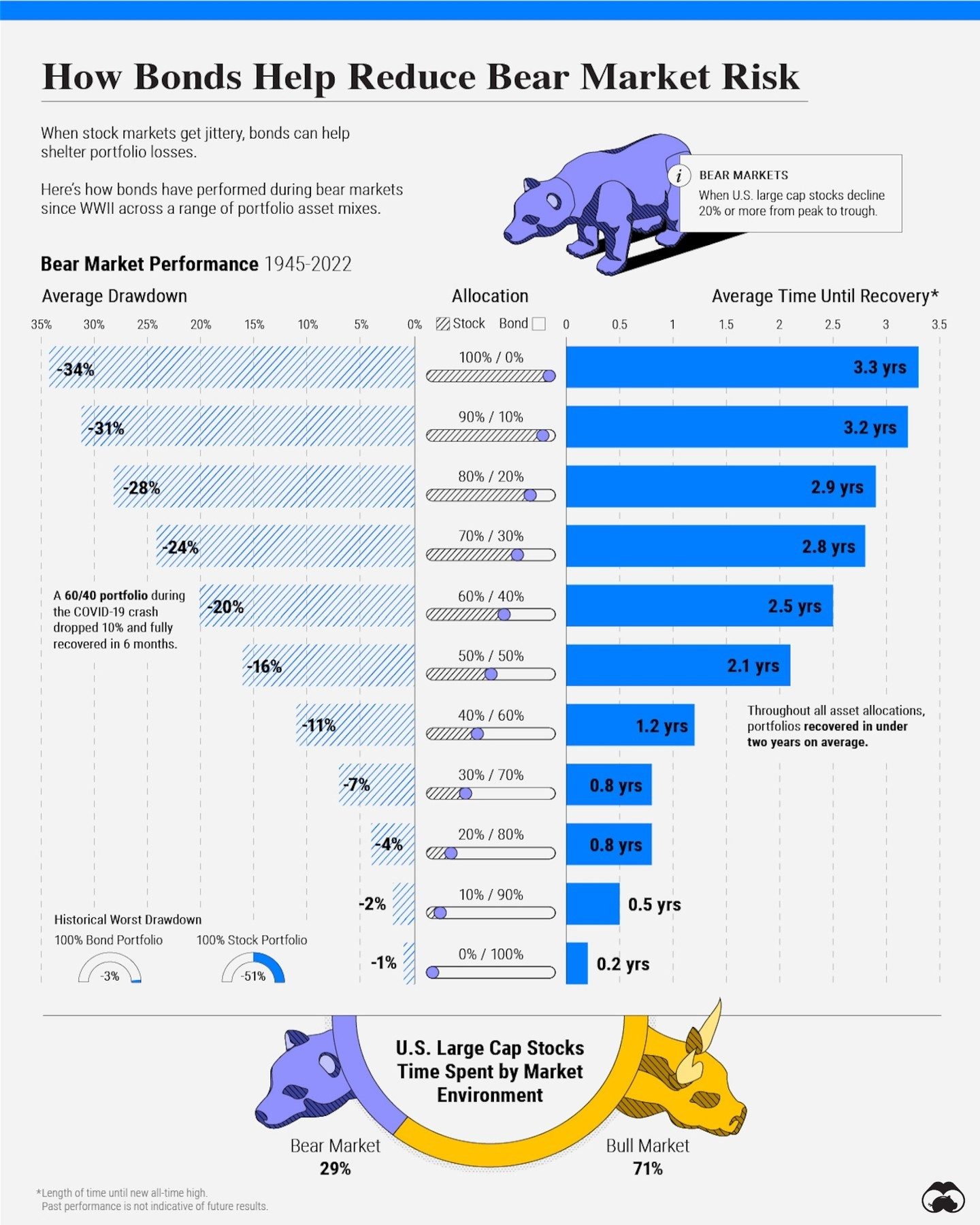
The performance of bonds and stocks varies significantly depending on the mix of assets in a portfolio. Historical data from 1945 to 2022 highlights the impact of different portfolio allocations on recovery times and losses during bear markets. Portfolios with a higher allocation to bonds have generally recovered faster from bear markets, experiencing shorter drawdown periods and lower maximum losses.
For example, a portfolio with a 70% allocation to bonds and a 30% allocation to stocks has historically recovered faster than a portfolio with a 100% stock allocation. This is evident in the average time until recovery, which is significantly shorter for portfolios with a higher bond allocation.
Key Allocations and Recovery Times
The visuals presented show that portfolios with a 35% allocation to stocks and a 65% allocation to bonds have an average recovery time of 2.1 years, whereas a 100% stock portfolio can take 3.3 years to recover. The worst drawdown time spent by the market for a 35% stock and 65% bond portfolio is 2.5 years, compared to 3.2 years for a 100% stock portfolio. This data underscores the importance of bond allocation in reducing the impact of bear markets on investment portfolios.
Drawdowns and Recovery
Drawdowns refer to the peak-to-trough decline in a portfolio's value before a new peak is attained. Historical data shows that during bear markets, portfolios with higher bond allocations experience less severe drawdowns. For instance, a portfolio with 100% stocks might see a 34% drawdown, while a 35% stock and 65% bond allocation might see a drawdown of only 29%.
The historical worst drawdown time spent by the market, indicates that portfolios with more bonds spend less time in negative territory compared to those with more stocks.
Practical Tips for Investors
Diversification
Diversification is key to managing risk. By allocating a portion of your portfolio to bonds, you can reduce the overall volatility and potential losses during bear markets. A balanced portfolio with a mix of stocks and bonds can provide a safety net during market downturns.
Asset Allocation
Determine your risk tolerance and investment goals before deciding on your asset allocation. Younger investors with a longer investment horizon might opt for a higher stock allocation, while those nearing retirement might prefer a more conservative approach with a higher bond allocation.
Regular Rebalancing
Regularly rebalancing your portfolio ensures that your asset allocation stays aligned with your investment goals. During bull markets, stocks may outperform bonds, leading to a higher stock allocation. Rebalancing helps maintain the desired risk level by selling off some stocks and buying bonds.
Dollar-Cost Averaging
Investing a fixed amount of money regularly, regardless of market conditions, can help smooth out the impact of market volatility. This strategy, known as dollar-cost averaging, can be particularly useful in bear markets, as it allows investors to buy more shares when prices are low.
Important Takeaways
- Bonds can help reduce portfolio losses during bear markets due to their lower risk profile.
- Historical data shows that portfolios with a higher allocation to bonds generally recover faster from bear markets.
- Diversification and regular rebalancing are essential for managing risk during market downturns.
- Investors should determine their risk tolerance and investment goals to decide on the appropriate asset allocation.
Conclusion
Bonds play a critical role in mitigating portfolio losses during bear markets. By understanding the historical performance of bonds and stocks, investors can make informed decisions about their asset allocation. Incorporating bonds into a diversified portfolio can provide a hedge against market volatility and help investors weather bear markets more effectively. Regularly reviewing and rebalancing your portfolio can ensure that your investment strategy remains aligned with your financial goals.
Watch the Reel
Questions readers ask
What are bonds and why do they offer protection during bear markets?
Bonds are fixed-income investments where you lend money to an entity in exchange for periodic interest payments. They offer protection during bear markets because they have a lower risk profile compared to stocks. This means they are less likely to experience significant price declines, helping to stabilize a portfolio when stock prices fall.
What is the typical duration of a bear market, and how do bonds perform during this period?
The average duration of a bear market is about 14 months. Historically, bonds have performed well during bear markets, often experiencing price increases as investors seek safer havens. This inverse relationship with stocks makes bonds a useful tool for protecting a portfolio during these challenging times.
How can investors incorporate bonds into their portfolios for bear market protection?
Investors can allocate a portion of their portfolio to bonds to reduce overall risk. A common strategy is to have a mix of stocks and bonds, with the bond allocation increasing as investors approach retirement or become more risk-averse. This approach can help mitigate potential losses during bear markets.
What types of bonds are best for bear market protection?
Government bonds, such as U.S. Treasury bonds, and high-quality corporate bonds are often considered the best for bear market protection due to their lower risk. These bonds are less likely to default and can provide a steady income stream, which can help offset losses in the stock market. Treasury Inflation-Protected Securities (TIPS) are also an option to consider.
Why do bonds tend to perform better than stocks during bear markets?
Bonds tend to perform better than stocks during bear markets because they are less sensitive to economic downturns. When stock prices fall, investors often move their money into bonds, increasing demand and driving up bond prices. Additionally, bonds provide regular income payments, which can help cushion the impact of stock market declines.
How do bonds help in risk management during a bear market?
Bonds help in risk management during a bear market by providing a buffer against significant losses. Their lower volatility and steady income can help smooth out the overall performance of a portfolio. By including bonds, investors can better manage their portfolios during market downturns, helping to preserve capital and reduce the emotional impact of market fluctuations.
What is the usual recovery time for a bear market, and how can bonds support this process?
The average recovery time for a bear market is around 18 months. Bonds can support this process by providing a stable source of returns, which can help investors avoid the temptation to sell stocks at a loss. This stability allows investors to stay invested in the market, positioning them to benefit from the eventual recovery.
Recent articles
Fresh deep dives from the latest Reels we unpacked.




Comments
Be the first to comment.