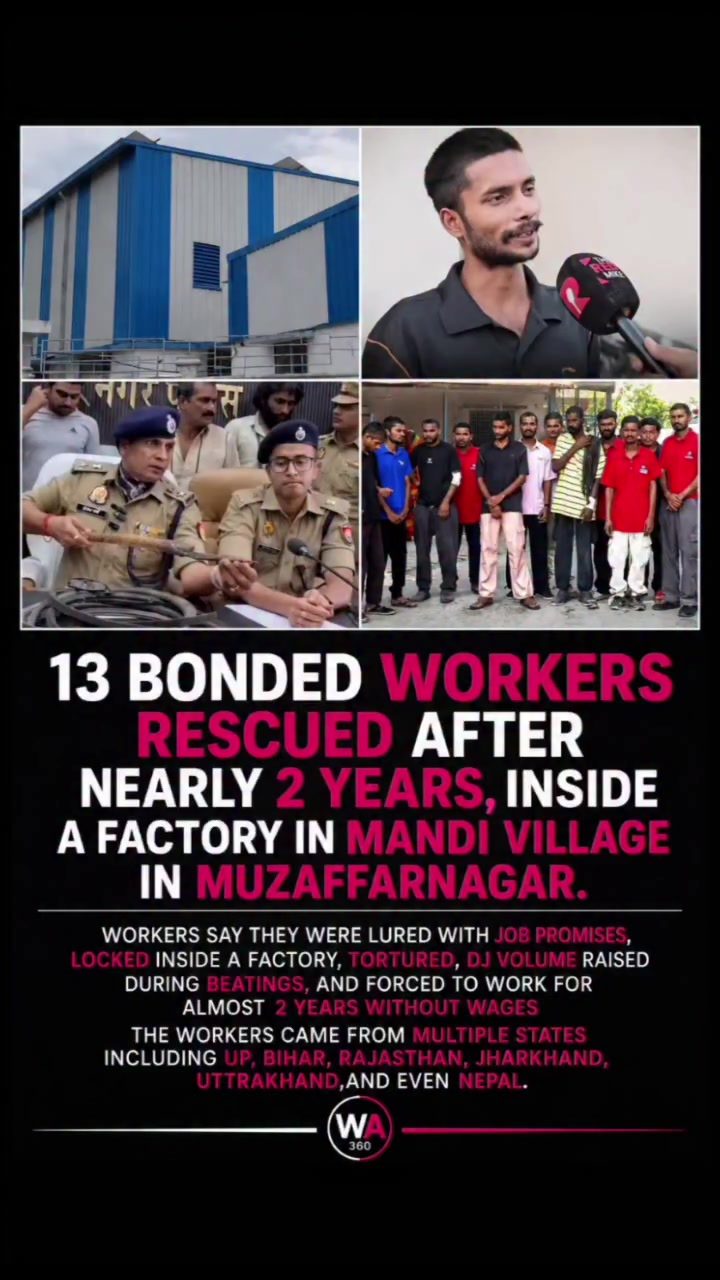
The Shocking Case of Bonded Labor in Muzaffarnagar
The recent rescue of 13 bonded laborers from a factory in Mandi village, Muzaffarnagar, has brought to light a horrifying case of modern-day slavery and extreme exploitation. These workers, hailing from various states and Nepal, were lured with false promises of good jobs and subsequently held captive for nearly two years. The details of their ordeal paint a grim picture of human rights abuses and labor exploitation.
Why This Matters
The case in Muzaffarnagar serves as a stark reminder of the persistent issue of bonded labor in India. It highlights the desperation of workers who are often from marginalized communities, willing to take risks in search of better opportunities. This case also underscores the need for stringent enforcement of labor laws and better monitoring mechanisms to prevent such atrocities.
The Disturbing Details
Deception and Kidnapping
The workers were lured from multiple states, including Uttar Pradesh, Bihar, Rajasthan, Jharkhand, Uttarakhand, and even Nepal, with the promise of well-paying jobs. However, upon arrival, their hopes were shattered. They were immediately locked inside a factory, and their phones and identity documents were confiscated to prevent any contact with the outside world. This complete isolation ensured that they had no means to escape or seek help.
Brutal Torture
The workers were subjected to regular beatings with rods and belts. The perpetrators allegedly blasted loud DJ music during these torture sessions to drown out the victims' screams, ensuring that the horrifying acts remained hidden from nearby residents. This tactic was used to prevent anyone from hearing the cries for help and intervening.
Forced Labor
Forced to work without wages for nearly two years, the workers endured unimaginable suffering. They were denied proper food and subjected to harsh working conditions. The psychological and physical trauma they endured during this period is unimaginable.
Alleged Fatality
There are serious claims that at least one worker lost their life while attempting to escape the compound. This tragic loss further highlights the dire situation and the extreme measures taken by the perpetrators to maintain control over the workers.
The Investigation
Police have arrested suspects and registered multiple offenses in connection with the case. The investigation is ongoing, and more details are expected to surface as authorities delve deeper into the matter. The rescue of these workers has also brought to light the need for stricter enforcement of labor laws and better support systems for workers who are often exploited in such situations.
Practical Tips for Preventing Such Cases
Awareness and Vigilance
One of the most effective ways to combat bonded labor is to raise awareness among communities. Workers and their families need to be informed about the risks of false job offers and the importance of verifying job opportunities before traveling to unknown places.
Legal Support
Workers should be aware of their legal rights and the support systems available to them. Organizations that provide legal aid and support to workers can play a crucial role in preventing such cases. Workers should be encouraged to seek legal help if they find themselves in similar situations.
Community Involvement
Local communities can play a vital role in preventing bonded labor. Neighbors and residents should be vigilant and report any suspicious activities that may indicate the presence of bonded labor in their areas.
Important Takeaways
The case of bonded labor in Muzaffarnagar highlights the urgent need for action to protect workers and prevent such atrocities. It is crucial to:
- Raise awareness about the risks of bonded labor and the importance of verifying job opportunities.
- Strengthen legal support systems for workers and provide them with the necessary tools to seek help.
- Encourage community involvement and vigilance to prevent bonded labor and support law enforcement efforts.
Conclusion
The rescue of 13 bonded laborers from a factory in Mandi village, Muzaffarnagar, serves as a grim reminder of the ongoing issue of bonded labor in India. The disturbing details of their ordeal underscore the need for stricter enforcement of labor laws, better support for workers, and increased community vigilance. It is a call to action for all stakeholders to work together to eradicate such practices and ensure the safety and dignity of all workers.
Watch the Reel
Questions readers ask
What is bonded labor and how does it occur?
Bonded labor is a form of forced labor where workers are exploited and often held captive, unable to leave due to imposed debt or threats. In the case of the Muzaffarnagar factory, victims from India and Nepal were lured with false job promises and subsequently trapped, forced to work without pay for nearly two years.
How common is bonded labor in India?
Bonded labor is more common than many realize. The Muzaffarnagar case highlights a persistent issue, particularly affecting marginalized communities. Victims are often drawn in by the promise of better opportunities, only to find themselves exploited and trapped in deplorable conditions.
What are the signs of labor trafficking and exploitation?
Signs of labor trafficking and exploitation can include workers living in poor conditions, being unable to leave their workplace, and having no control over their earnings. In the case of the Muzaffarnagar factory, victims were forced to work without pay and endure severe abuses, clear indicators of modern-day slavery.
What actions can be taken to prevent bonded labor?
Preventing bonded labor requires a multi-faceted approach, including stringent enforcement of labor laws, raising awareness about the risks of deceptive job offers, and supporting organizations that combat human trafficking. Community engagement and support for marginalized workers can also help reduce their vulnerability to exploitation.
What happens to the rescued laborers after a rescue operation?
After a rescue operation, victims of bonded labor are typically provided with immediate support, such as medical care and counseling. Long-term assistance may include legal aid, vocational training, and rehabilitation to help them reintegrate into society. It is crucial to ensure their safety and prevent them from being re-exploited.
Recent articles
Fresh deep dives from the latest Reels we unpacked.




Comments
Be the first to comment.