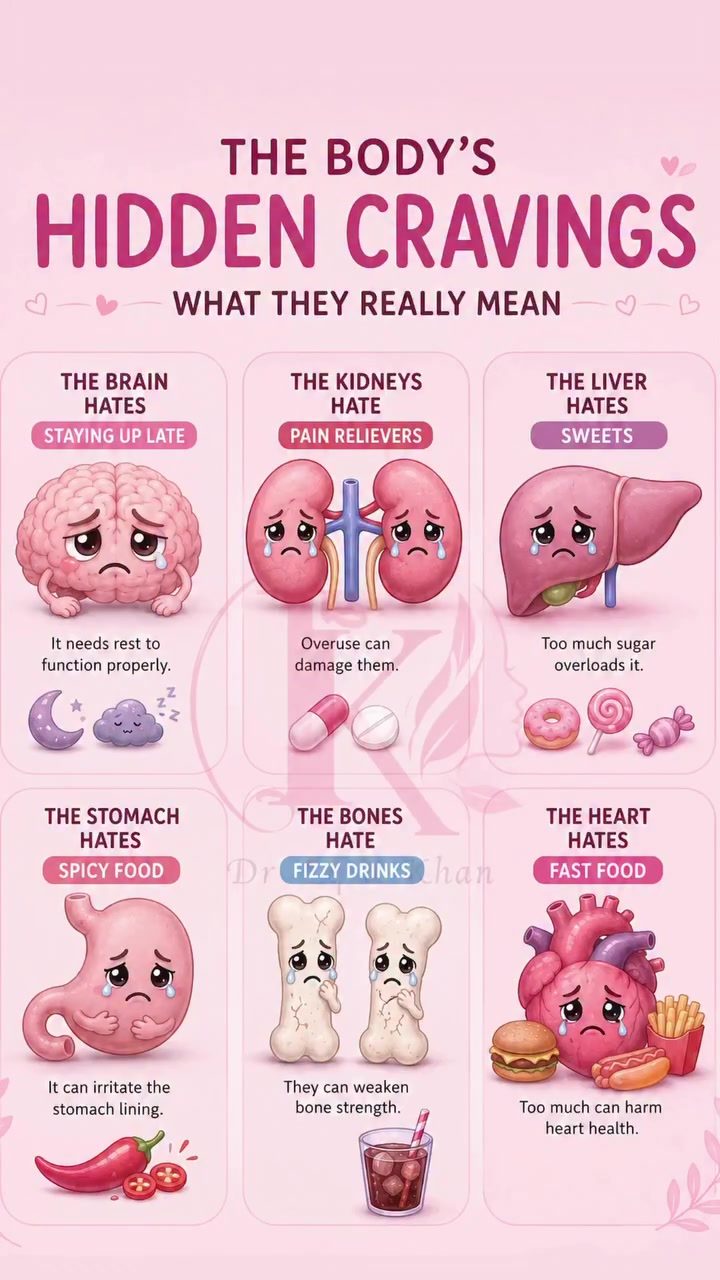
Body's Hidden Cravings
The body's hidden cravings offer insights into how daily habits can affect different organs. By paying attention to these clues, individuals can make small changes today that protect their health tomorrow.
Why This Matters
Understanding your body's cravings and dislikes is crucial for maintaining overall health. Different organs can provide signals about what they need or dislike. Recognizing and responding to these signals can help prevent future health issues.
Key Organs and Their Dislikes
The Brain
The brain needs adequate rest to function properly. Staying up late and not getting enough sleep can lead to cognitive impairment, mood swings, and reduced productivity. Prioritizing quality sleep is essential for the brain to function optimally.
The Kidneys
The kidneys are vital for filtering waste and maintaining fluid balance in the body. Pain relievers, especially when overused, can damage the kidneys. Reducing unnecessary painkiller use and staying hydrated are essential for kidney health.
The Liver
The liver processes nutrients and detoxifies the body. Excessive sugar consumption can overload the liver, leading to conditions such as non-alcoholic fatty liver disease. Cutting back on added sugars in your diet can help maintain liver health.
The Stomach
Spicy foods can irritate the stomach lining, causing discomfort and digestive issues. If spicy foods trigger symptoms, reducing their intake can help alleviate these issues and promote better digestive health.
The Bones
Bones require a balanced intake of calcium and vitamin D to maintain strength. Sugary and fizzy drinks can weaken bone strength, increasing the risk of fractures and osteoporosis. Limiting these beverages and ensuring adequate calcium and vitamin D intake is crucial for bone health.
The Heart
The heart is responsible for pumping blood throughout the body. Consuming ultra-processed fast foods high in sodium, saturated fats, and unhealthy sugars can harm heart health. Reducing fast food intake and choosing heart-friendly meals can lower the risk of heart disease.
Practical Tips
Prioritize Quality Sleep
Ensure you get seven to nine hours of quality sleep each night. Maintain a consistent sleep schedule and create a relaxing bedtime routine.
Avoid Overuse of Pain Relievers
Use pain relievers sparingly and only when necessary. Consult a healthcare provider if you experience frequent pain, as it may indicate an underlying issue.
Reduce Added Sugars
Limit your intake of foods and beverages high in added sugars. Opt for natural sweeteners and whole foods to satisfy your sweet tooth.
Manage Spicy Food Intake
If spicy foods cause discomfort, limit their intake or avoid them altogether. Explore alternative seasonings and herbs to enhance your meals.
Limit Sugary and Fizzy Drinks
Opt for water, herbal teas, or other low-sugar beverages. Ensure you get enough calcium and vitamin D through a balanced diet and supplements if needed.
Choose Heart-Friendly Meals
Include plenty of fruits, vegetables, lean proteins, and whole grains in your diet. Limit your intake of processed and fast foods to promote heart health.
Important Takeaways
Recognizing your body's hidden cravings and dislikes can provide valuable insights into your overall health. By making small, consistent changes, you can protect your health and prevent future issues.
Conclusion
Your body's hidden cravings offer clues about what it needs and dislikes. By understanding and responding to these signals, you can take proactive steps to protect your health. Prioritize quality sleep, avoid overuse of pain relievers, reduce added sugars, manage spicy food intake, limit sugary and fizzy drinks, and choose heart-friendly meals. Consistency is key in maintaining overall health and wellness.
Watch the Reel
Questions readers ask
How can understanding organ cravings improve my overall health?
Understanding organ cravings can help you identify what your body needs. For example, if you crave fatty foods, your body might be signaling a need for more healthy fats, or if you crave sweets, it might be a sign of stress or fatigue. By paying attention to these signals, you can make informed choices about your diet and lifestyle to support your health.
What are some common signals from the brain, and how can I respond to them?
The brain often signals its needs through food cravings and mood changes. If you're craving carbohydrates, it might indicate a need for more energy or comfort. Respond by choosing whole grains and balancing them with proteins. If you're experiencing mood swings or brain fog, it could be a sign of dehydration or lack of sleep. Prioritize hydration and aim for 7-9 hours of quality sleep per night.
Why is it important to reduce fizzy drinks for kidney health?
Fizzy drinks are often high in sugar and phosphates, which can put a strain on your kidneys. Excessive sugar intake can lead to weight gain and increased risk of kidney stones, while phosphates can interfere with calcium absorption. Reducing these drinks and opting for water or herbal tea supports your kidneys' ability to filter waste and maintain overall health.
What are some heart-healthy foods that can support my cardiovascular system?
Foods rich in omega-3 fatty acids, such as salmon and walnuts, are excellent for heart health. Additionally, incorporating fruits and vegetables high in antioxidants, like berries and leafy greens, can help reduce inflammation and support heart health. Whole grains and lean proteins, such as chicken and tofu, also contribute to a balanced diet that promotes a healthy cardiovascular system.
What are some foods and habits to avoid for optimal stomach health?
Spicy and fried foods can cause discomfort and inflammation in the stomach. Additionally, high-fat and processed foods can lead to indigestion and bloating. Limiting caffeine and alcohol intake, as well as managing stress levels, can also support stomach health. Opt for whole, unprocessed foods and smaller, frequent meals to maintain a healthy digestive system.
How can I support my liver's health through diet?
The liver benefits from a diet rich in antioxidants, which can help protect against damage from toxins. Foods high in antioxidants include berries, colorful fruits and vegetables, and leafy greens. Additionally, limiting processed foods and sugars, as well as staying hydrated, can help support your liver's ability to detoxify and maintain overall health.
What are some dietary tips for maintaining strong and healthy bones?
To support bone health, focus on a diet rich in calcium and vitamin D. Foods like dairy products, leafy greens, and fortified plant-based milks are excellent sources of calcium. Vitamin D can be obtained through sunlight exposure or by consuming foods like fatty fish and fortified cereals. Additionally, regular exercise and maintaining a healthy weight can contribute to strong, healthy bones.
Recent articles
Fresh deep dives from the latest Reels we unpacked.




Comments
Be the first to comment.