Understanding Blood Donation Compatibility: A Comprehensive Guide
Blood donation is a critical process that helps save lives by ensuring that patients in need have access to the right type of blood. Understanding blood donation compatibility is essential for both donors and recipients. This guide will walk you through the basics of blood types, who can donate to whom, and the importance of this knowledge in medical settings.
Context / Why This Matters
Blood types are determined by the presence or absence of specific antigens on the surface of red blood cells. There are four main blood types: A, B, AB, and O, each of which can be either RhD positive or RhD negative. Knowing which blood types can donate to and receive from each other is crucial for ensuring safe and effective transfusions.
Blood Types and Compatibility
Universal Donors and Recipients
-
O- Blood Type: Often referred to as the universal donor, O-negative blood can be given to recipients with any blood type. This makes O-negative blood highly valuable in emergency situations where the recipient's blood type is unknown.
-
AB+ Blood Type: Known as the universal recipient, AB-positive blood can receive blood from any other type. This means that individuals with AB+ blood have the most flexibility in receiving transfusions.
Compatibility Chart
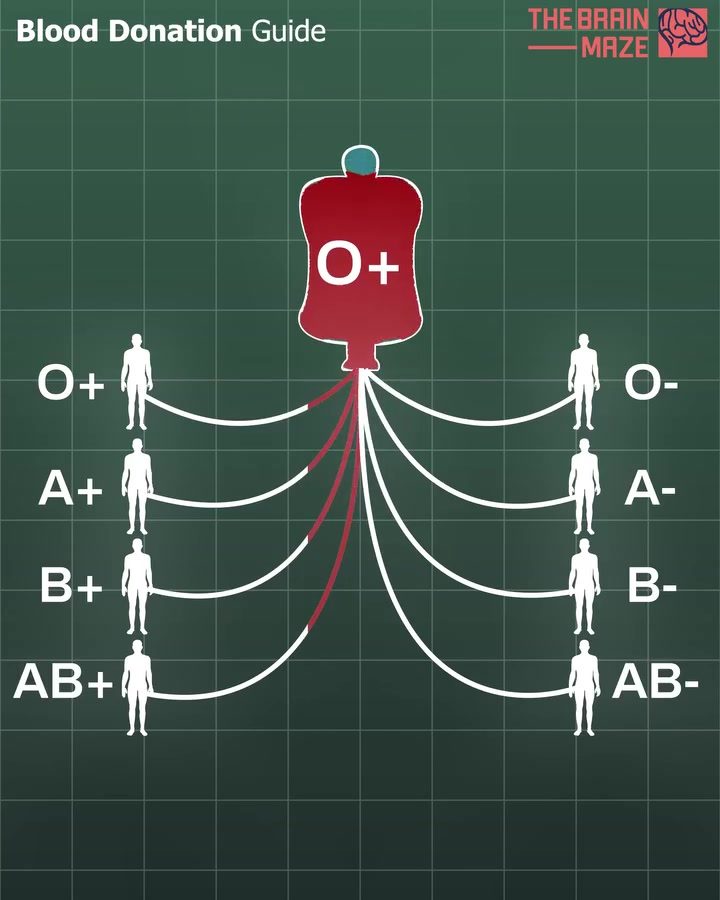
Here is a quick guide on which blood types can donate to and receive from each other:
Donors
| Donor Blood Type | Can Donate To |
|---|---|
| O- | O-, O+, A-, A+, B-, B+, AB-, AB+ |
| O+ | O+, A+, B+, AB+ |
| A- | A-, A+, AB-, AB+ |
| A+ | A+, AB+, AB- |
| B- | B-, B+, AB-, AB+ |
| B+ | B+, AB+ |
| AB- | AB-, AB+ |
| AB+ | AB+ |
Recipients
| Recipient Blood Type | Can Receive From |
|---|---|
| O- | O- |
| O+ | O+, O- |
| A- | A-, O- |
| A+ | A+, A-, O+, O- |
| B- | B-, O- |
| B+ | B+, B-, O+, O- |
| AB- | AB-, A-, B-, O- |
| AB+ | AB+, AB-, A+, A-, B+, B-, O+, O- |
Unique Considerations
-
Rh Factor: The Rh factor (positive or negative) also plays a significant role in blood compatibility. Rh-negative blood can only be given to Rh-negative recipients, while Rh-positive blood can be given to both Rh-positive and Rh-negative recipients in most cases.
-
Rare Blood Types: Some blood types, such as Rh-null or Bombay phenotype, are extremely rare and can only be donated to or received by individuals with the same rare type.
The Importance of Accurate Blood Typing
Accurate blood typing is crucial for ensuring safe transfusions. Mistakes in blood typing can lead to severe reactions, including hemolytic reactions, which can be life-threatening. Therefore, it is essential for healthcare providers to follow strict protocols when determining blood types and ensuring compatibility.
Practical Tips for Donors and Recipients
For Donors
-
Know Your Blood Type: If you are a potential donor, knowing your blood type can help you understand who can benefit from your donation. Regular donations can be scheduled to maintain a steady supply of different blood types.
-
Stay Hydrated and Healthy: Maintaining good health and hydration can make the donation process more comfortable and ensure that your blood is in optimal condition for use.
-
Donate Regularly: Regular donations are crucial for maintaining a stable blood supply. Most blood types can be donated every 56 days, while plasma can be donated more frequently.
For Recipients
-
Understand Your Blood Type: Knowing your blood type can help you understand the options available for transfusions and the potential risks involved.
-
Informed Consent: Before receiving a transfusion, it is essential to understand the risks and benefits. Ask your healthcare provider any questions you may have and ensure that you are fully informed about the procedure.
-
Regular Check-Ups: Regular medical check-ups can help monitor your blood type and overall health, ensuring that any necessary transfusions are administered safely and effectively.
Important Takeaways
-
Universal Donors and Recipients: O- is the universal donor, and AB+ is the universal recipient. Knowing these distinctions can be life-saving in emergency situations.
-
Rh Factor: The Rh factor is crucial in determining blood compatibility. Rh-negative blood can only be given to Rh-negative recipients, while Rh-positive blood can be given to both.
-
Accurate Blood Typing: Accurate blood typing is essential for safe transfusions. Mistakes can lead to severe reactions, so strict protocols must be followed.
-
Donor and Recipient Awareness: Both donors and recipients should be aware of their blood types and the implications for compatibility. Regular donations and check-ups can help maintain a stable blood supply and ensure safe transfusions.
Conclusion
Blood donation compatibility is a vital aspect of modern medicine. Understanding which blood types can donate to and receive from each other can help save lives and ensure the safety of transfusions. Whether you are a donor or a recipient, knowing your blood type and the basics of compatibility is essential. By following the guidelines and tips outlined in this guide, you can contribute to a healthier and safer blood donation process.
Watch the Reel
Questions readers ask
What are the four main blood types and how do they differ?
The four main blood types are A, B, AB, and O. They differ based on the presence or absence of specific antigens on the surface of red blood cells. These antigens are A and/or B, with type O having neither. Each of these types can also have a positive or negative Rh factor, which further determines compatibility.
Why is it crucial to match blood types in transfusions?
Matching blood types in transfusions is essential to prevent adverse reactions. If incompatible blood types are mixed, the recipient's immune system may attack the donor's blood cells, leading to potentially severe complications such as hemolytic reactions.
Can a person with type AB blood donate to recipients with other blood types?
Yes, individuals with type AB blood can donate to recipients of any blood type, making them universal recipients. However, they can only receive blood from donors who are also type AB, limiting their options for receiving blood.
What are the Rh factor and how does it affect blood donation compatibility?
The Rh factor is an antigen present on the surface of red blood cells. Individuals are either RhD positive (Rh+) or RhD negative (Rh-). Rh compatibility is crucial because Rh- recipients can develop antibodies against Rh+ blood, leading to severe reactions. Therefore, Rh- recipients should receive Rh- blood, while Rh+ recipients can receive either Rh+ or Rh-.
Who can donate blood to a recipient with type O negative blood?
Type O negative blood is considered the universal donor type. This means that individuals with type O negative blood can donate to recipients of any blood type. This makes O negative blood particularly valuable in emergency situations where the recipient's blood type is unknown.
How does knowing blood type compatibility benefit the blood donation process?
Knowing blood type compatibility ensures that transfusions are safe and effective. It helps medical professionals match donors and recipients correctly, reducing the risk of complications. This knowledge also aids in managing blood supplies, ensuring that the right types are available for patients in need.
What should I do if I want to donate blood but am unsure about my blood type?
If you are unsure about your blood type, you can typically find out during the blood donation process. Before donating, you'll undergo a screening that includes a blood type test. This information is then used to determine your eligibility and ensure the safe donation of your blood to suitable recipients.
Related deep dives
Similar reads based on topic and creator.

Recent articles
Fresh deep dives from the latest Reels we unpacked.




Comments
Be the first to comment.