Blood Composition: A Detailed Breakdown
Blood is a complex fluid that plays a crucial role in the human body. It circulates oxygen, transports nutrients, and helps protect against infections. But what exactly is blood made of? This article delves into the composition of blood, breaking down its components and exploring the significance of each part.
Context / Why This Matters
Understanding the composition of blood is essential for comprehending how the body functions at a microscopic level. Blood is not just a simple red liquid; it is a dynamic mixture of various elements that work together to maintain life. By examining its components, we can gain insights into health and disease, making this knowledge invaluable in medical diagnostics and treatments.
Main Discussion
The Two Main Components of Blood
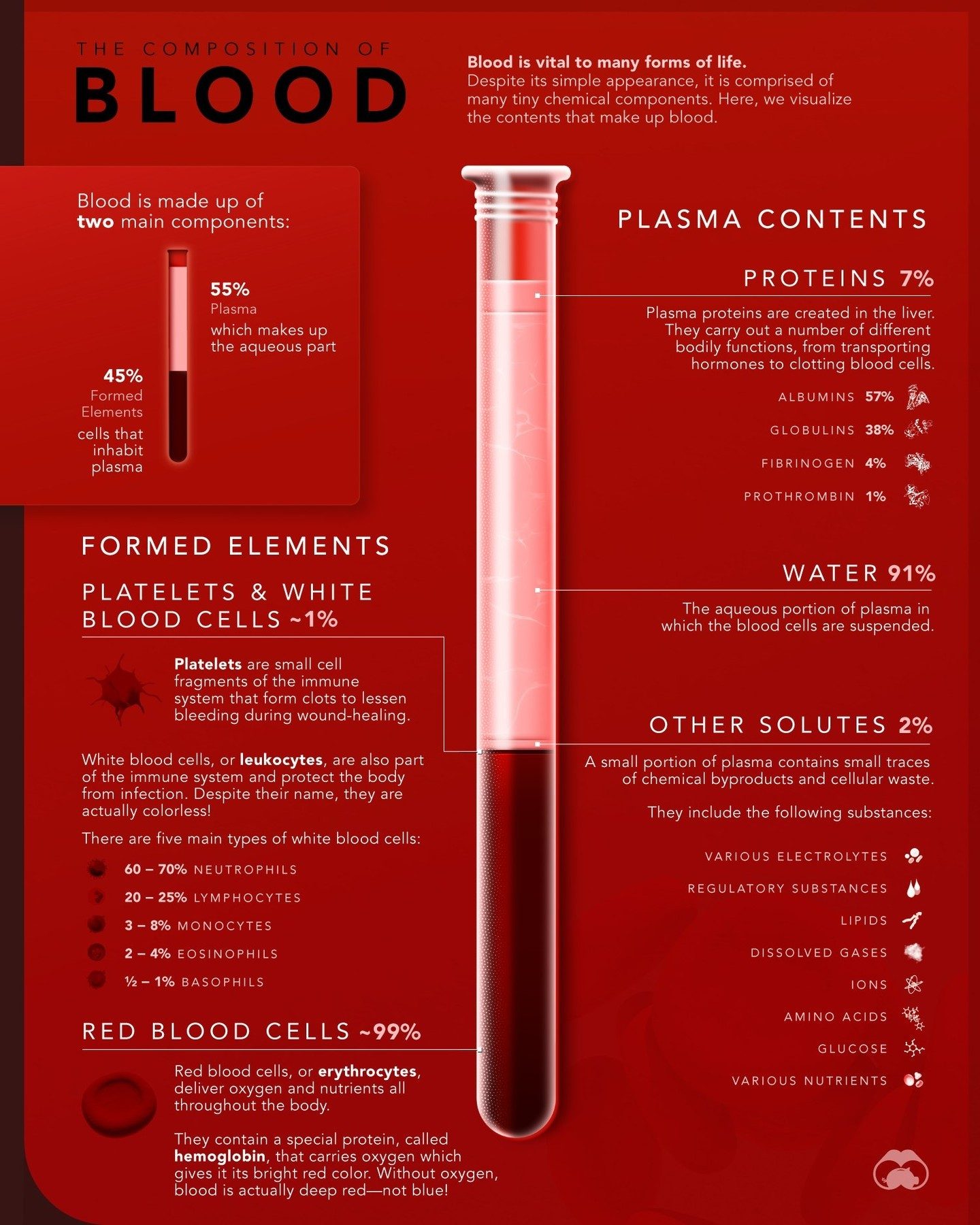
Blood is primarily composed of two main components: formed elements and plasma. Formed elements make up 55% of blood, while plasma accounts for the remaining 45%. This balance is crucial for blood to perform its various functions effectively.
Formed Elements
Formed elements include red blood cells, white blood cells, and platelets.
-
Red Blood Cells (Erythrocytes): These are the most abundant cells in blood, making up about 99% of the formed elements. Their primary function is to transport oxygen from the lungs to the body's tissues and remove carbon dioxide. Red blood cells are unique because they do not have a nucleus, allowing them to carry more oxygen.
-
White Blood Cells (Leukocytes): White blood cells are part of the immune system and help fight infections. They make up a small percentage of the formed elements, around 19%. There are several types, including:
- Lymphocytes (20-25% of white blood cells): These are key players in the immune response, helping to recognize and target foreign invaders.
- Monocytes (3-8% of white blood cells): These cells help fight infections and also play a role in inflammation.
- Eosinophils (2-4% of white blood cells): These are involved in combating parasitic infections and modulating inflammation.
- Basophils (1% of white blood cells): These cells release histamine and other substances during allergic reactions.
-
Platelets (Thrombocytes): Platelets are essential for blood clotting. They help stop bleeding by forming a plug at the site of an injury. Platelets also play a role in wound healing and immune response.
Plasma
Plasma is the liquid portion of blood and is primarily composed of water (91%). It also contains various proteins, including:
-
Albumins (57% of plasma proteins): These proteins help regulate blood volume and maintain the osmotic pressure of blood.
-
Globulins (38% of plasma proteins): Globulins are a group of proteins that includes antibodies, which help fight infections.
-
Fibrinogen (4% of plasma proteins): This protein plays a crucial role in blood clotting by forming a mesh that traps blood cells and platelets to form a clot.
-
Prothrombin (1% of plasma proteins): Prothrombin is a precursor to thrombin, which is essential for the blood clotting process.
The remaining 2% of plasma is made up of other solutes, such as electrolytes, hormones, and nutrients.
Abnormal Red Blood Cell Shapes and Associated Diseases
The shape of red blood cells can provide valuable insights into various health conditions. Abnormal red blood cell shapes can indicate underlying diseases. Some of these shapes and their associated conditions include:
-
Sphere Cell (Spherocyte): These cells are spherical due to a deficiency in the cell membrane. This condition is often associated with hereditary spherocytosis, a genetic disorder that can lead to anemia.
-
Target Cell (Codocyte): These cells have a raised central area, resembling a target. This shape is often seen in liver diseases, thalassemia, and certain types of anemia.
-
Coin Purse Cell (Dacryocyte): These cells have a teardrop shape, often indicative of myelofibrosis, a bone marrow disorder.
-
Fragmented Cell (Schistocyte): These are irregularly shaped fragments of red blood cells, commonly found in conditions like thrombotic thrombocytopenic purpura (TTP) and disseminated intravascular coagulation (DIC).
-
Teardrop Cell (Dacryocyte): These cells resemble a teardrop and are associated with conditions like myelofibrosis, where the bone marrow is replaced by fibrous tissue.
-
Burr Cell (Acanthocyte): These cells have spiky projections and are often seen in conditions like liver disease and abetalipoproteinemia.
-
Oval Cell (Elliptocyte): These cells are oval-shaped and can indicate hereditary elliptocytosis or other types of anemia.
-
Bowl Cell (Sickle Cell): These cells have a sickle or crescent shape, characteristic of sickle cell anemia, a genetic disorder that affects the shape and function of red blood cells.
-
Iron Grain Cell (Pappenheimer Body): These cells contain granules of iron and are often seen in conditions like sideroblastic anemia.
-
Distorted Cell (Poikilocyte): These cells have an irregular shape and can indicate various conditions, such as hemolytic anemia.
-
Spur Cell (Acanthocyte): These cells have thorn-like projections and are associated with liver disease and abetalipoproteinemia.
-
Clumped Cells (Rouleaux): These cells stick together in stacks, often seen in conditions like multiple myeloma and Waldenström's macroglobulinemia.
-
Stacked Cells (Rouleaux): These cells form stacks and are commonly found in conditions like multiple myeloma.
-
Horned Cell (Acanthocyte): These cells have horn-like projections and are associated with liver disease and abetalipoproteinemia.
Practical Tips
When examining blood samples, it's important to look for any abnormalities in red blood cell shapes, as these can provide valuable diagnostic information. Additionally, understanding the normal composition of blood can help in identifying any imbalances that may indicate underlying health issues.
Important Takeaways
Blood is a vital component of the human body, made up of various elements that work together to maintain health. Formed elements, including red blood cells, white blood cells, and platelets, play crucial roles in oxygen transport, immune response, and blood clotting. Plasma, primarily composed of water and proteins, supports these functions by transporting nutrients and regulating blood volume. Abnormal red blood cell shapes can indicate various health conditions, making them important diagnostic indicators.
Conclusion
The composition of blood is a fascinating and complex subject that offers valuable insights into human health. By understanding the various components of blood and their functions, we can better appreciate the intricate balance that maintains life. Whether examining a blood sample or studying the body's physiology, knowledge of blood composition is essential for diagnosing and treating a wide range of medical conditions. This knowledge can empower individuals to take better care of their health and seek appropriate medical attention when necessary.
Watch the Reel
Questions readers ask
What are the primary components of blood?
Blood is primarily composed of two main parts: formed elements and plasma. The formed elements include red blood cells, white blood cells, and platelets, while plasma is the liquid portion that carries these cells and other vital substances throughout the body.
What is the role of red blood cells in the body?
Red blood cells, also known as erythrocytes, are responsible for transporting oxygen from the lungs to the rest of the body and carrying carbon dioxide back to the lungs. They contain a protein called hemoglobin, which facilitates this gas exchange process.
What are the different types of white blood cells and their functions?
White blood cells, or leukocytes, are crucial for the body's immune defense. They include neutrophils, lymphocytes, monocytes, eosinophils, and basophils. Each type plays a specific role in protecting the body against infections, such as fighting bacteria, viruses, and other pathogens.
What functions does plasma serve in the blood?
Plasma, the liquid component of blood, serves several important functions. It transports nutrients, hormones, and proteins to various parts of the body, and also carries waste products to the kidneys and liver for elimination. Additionally, plasma helps maintain blood pressure and pH balance.
What is the role of platelets in blood clotting?
Platelets, also known as thrombocytes, are essential for blood clotting. When a blood vessel is injured, platelets gather at the site to form a plug that helps stop bleeding. They also release chemicals that promote the clotting process, ensuring that the body can repair damaged tissues effectively.
How does understanding blood composition aid in medical diagnostics and treatments?
Examining the composition of blood can provide valuable insights into a person's health. Abnormal levels or types of blood cells can indicate various diseases, such as anemia, infections, or clotting disorders. This knowledge helps healthcare professionals make accurate diagnoses and develop effective treatment plans.
Related deep dives
Similar reads based on topic and creator.

Recent articles
Fresh deep dives from the latest Reels we unpacked.




Comments
Be the first to comment.