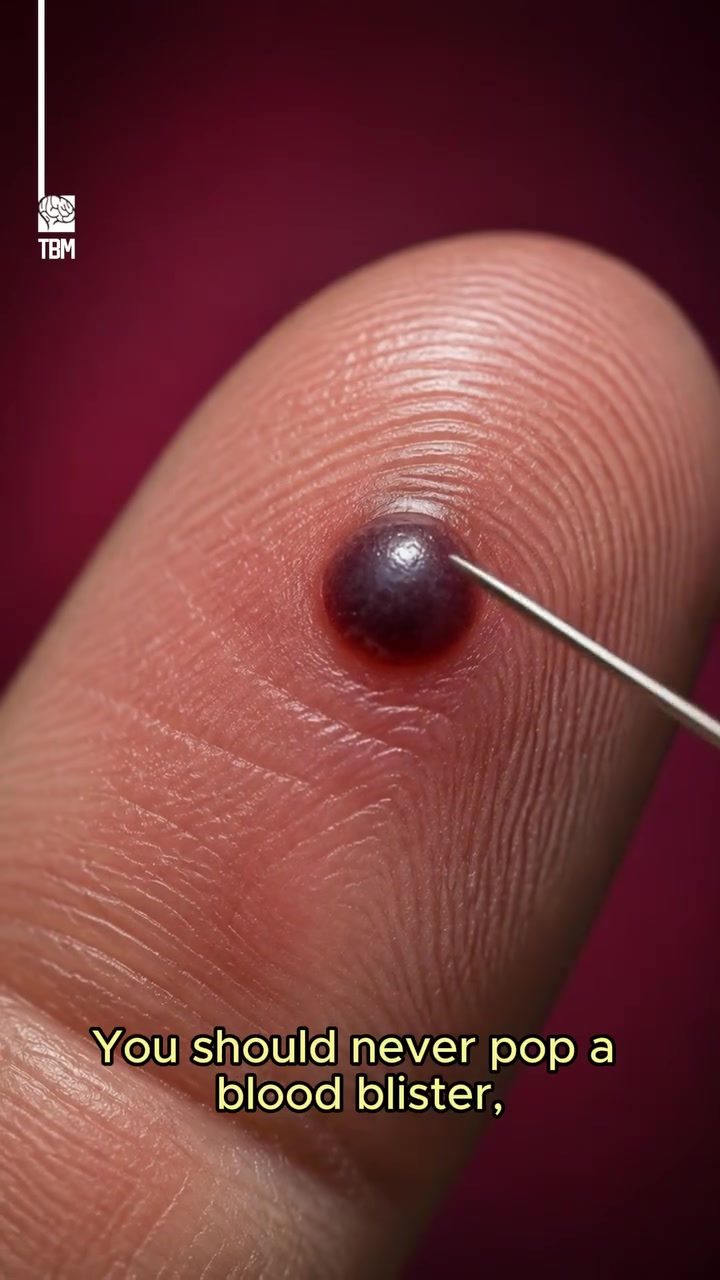
Blood Blisters: Why You Should Never Pop Them
Blood blisters can be alarming and uncomfortable, but it's crucial to understand that they serve a protective function and should be left alone to heal naturally.
Why This Matters
Understanding the importance of not popping a blood blister is vital for proper wound care and avoiding complications. Blood blisters form as part of the body's natural healing process, and interfering with this process can lead to further injury and infection.
What Are Blood Blisters?
Blood blisters form when tiny blood vessels under the skin break, but the outer layer of skin remains intact. This trapped blood creates a small cushion or "bubble" that protects the injured tissue underneath while it heals. Unlike clear fluid blisters, which contain serum, blood blisters are filled with blood, hence their characteristic dark red or purple appearance.
Why You Should Never Pop a Blood Blister
The Protective Role of Blood Blisters
The dark bubble of a blood blister is your body's natural protection. It acts as a shield, preventing bacteria and other irritants from entering the damaged tissue underneath. When you pop or peel off a blood blister, you remove this natural barrier, exposing the wound to potential infection.
Risks of Popping a Blood Blister
Popping a blood blister can lead to several complications:
- Infection: Exposing the wounded area to bacteria can cause an infection.
- Prolonged Healing: Removing the protective bubble can delay the healing process.
- Scarring: Interfering with the natural healing process can increase the risk of scarring.
- Increased Pain: Popping a blood blister can be painful and may cause further damage to the surrounding tissue.
How to Care for a Blood Blister
Most blood blisters heal on their own with proper care. Here are some practical tips to ensure your blood blister heals correctly:
Keep the Area Clean
Gently wash the area with mild soap and warm water. Avoid using harsh chemicals or scrubbing, as this can irritate the blister and increase the risk of infection.
Protect It from Further Injury
Avoid activities that may cause further rubbing or pressure on the blister. This includes wearing tight-fitting shoes or gloves that rub against the area.
Cover with a Bandage
If the blister is in a sensitive area or likely to be irritated, cover it with a sterile bandage. This can provide additional protection and reduce the risk of infection.
When to See a Doctor
While most blood blisters heal on their own, there are situations where medical attention is necessary:
- Signs of Infection: If the blister becomes painful, swollen, warm, or starts leaking pus, seek medical help.
- Severe Pain: If the pain is unbearable, consult a healthcare professional.
- Large or Deep Blisters: These may require medical intervention to ensure proper healing.
Important Takeaways
- Natural Protection: Blood blisters act as a protective cushion for the injured tissue underneath, shielding it from bacteria and other irritants.
- Avoid Popping: Popping a blood blister can lead to infection, prolonged healing, scarring, and increased pain.
- Proper Care: Keep the area clean, protect it from further injury, and cover it with a bandage if necessary.
- Seek Medical Help: If the blister shows signs of infection, is causing severe pain, or is large and deep, consult a healthcare professional.
Conclusion
Blood blisters are a natural part of the body's healing process and should be left alone to heal. Understanding the protective role of a blood blister and the risks associated with popping it can help you make informed decisions about your wound care. By following proper care guidelines, you can ensure that your blood blister heals efficiently and effectively, minimizing the risk of complications.
Watch the Reel
Questions readers ask
Why do blood blisters form and what is their purpose?
Blood blisters form when small blood vessels under the skin break, but the skin's outer layer remains intact, creating a protective cushion. Their purpose is to safeguard the injured tissue beneath, prevent infection, and promote the natural healing process.
What happens if you pop a blood blister?
Popping a blood blister can lead to several complications. It may increase the risk of infection, delay healing, and even cause scarring. The protective barrier is removed, leaving the injured tissue exposed.
How can you protect a blood blister and encourage healing?
To protect a blood blister and promote healing, avoid popping or picking at it. Keep the area clean and cover it with a bandage. Avoid activities that might cause further injury to the blister.
What is the typical healing time for a blood blister?
The healing time for a blood blister varies depending on the size and location, but typically, it takes about 1-2 weeks. Allowing the blister to heal naturally, without interference, can help minimize the risk of scarring and infection.
When should you seek medical attention for a blood blister?
Seek medical attention if the blister becomes very large, extremely painful, or shows signs of infection (such as increased redness, warmth, or pus). Additionally, if the blister is on a sensitive area like the face or genitals, or if you have a compromised immune system, consult a healthcare professional.
What are the risks of popping a blood blister?
Popping a blood blister can expose the injured tissue to bacteria, increasing the risk of infection. It can also prolong the healing process and may lead to scarring. The body's natural response to injury is disrupted, potentially causing further damage.
How can you prevent blood blisters from occurring?
To prevent blood blisters, wear well-fitting shoes and gloves, and ensure proper foot care. Regularly moisturize your skin to maintain its elasticity and avoid friction. If you engage in activities with a high risk of blisters, such as hiking or sports, use protective gear and wear appropriate clothing.
Related deep dives
Similar reads based on topic and creator.

Recent articles
Fresh deep dives from the latest Reels we unpacked.




Comments
Be the first to comment.