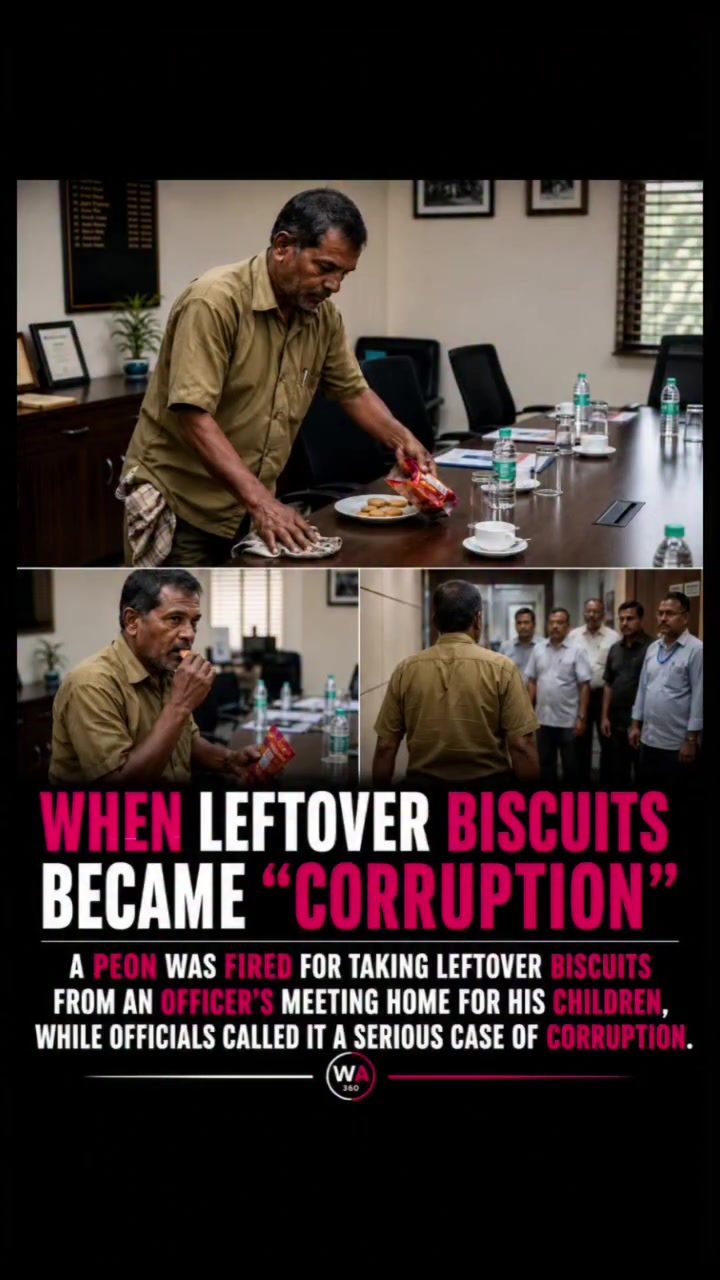
When Leftover Biscuits Became a Battle for Justice
The case of a peon being dismissed for taking leftover biscuits from an official meeting has sparked a nationwide debate about justice, ethics, and the appropriate application of workplace discipline. This seemingly innocuous act was deemed a serious case of corruption, leading to the peon's dismissal and igniting a conversation about the true meaning of justice.
Context: The Case
The incident involved a peon, a low-level employee in a government or public sector office. After an official meeting, the peon collected leftover biscuits intended for the attendees. The act was interpreted by authorities as a form of corruption, which resulted in the dismissal of the peon. This harsh punishment was met with widespread criticism as many questioned the proportionality and fairness of the disciplinary action.
The Legal Battle
The case eventually reached the courts, where the dismissal was closely examined. Legal experts and the public alike debated whether the severity of the punishment matched the minor nature of the offense. The courts considered factors such as the peon's intent, the lack of monetary or personal gain, and the absence of any clear dishonest motive.
The Core Issues
Proportionality
The punitive measures faced by the peon raised questions about proportionality in workplace discipline. Critics argued that the dismissal was an excessive punishment for a minor act. The debate underscored the need for a more nuanced approach to disciplinary actions, one that takes into account the context and intent behind an employee's actions.
Rule vs. Reason, Intent, and Humanity
The case highlighted a crucial aspect of workplace ethics: the balance between strict rule enforcement and humanity. While rules and policies are essential for maintaining order and integrity, they must be applied with a sense of reason and empathy. A minor act, especially one performed without clear dishonest intent, should not automatically result in the harshest possible punishment.
The Role of Compassion and Common Sense
The incident raised the question of whether justice should focus solely on strict compliance or if compassion and common sense should also play a role. Many argued that a fair and just workplace should consider the individual circumstances of each case, ensuring that punishments are not only proportionate but also humane.
Practical Tips for Workplace Ethics
-
Review and Update Policies Regularly Organizations should periodically review and update their policies to ensure they are fair, clear, and proportionate. This includes revisiting disciplinary guidelines to reflect a balanced approach that considers both rules and human factors.
-
Promote a Culture of Fairness and Transparency Create an environment where employees feel safe to raise concerns, and where disciplinary actions are transparent and consistent. This fosters trust and ensures that decisions are made for the benefit of all involved.
-
Consider Context and Intent When dealing with disciplinary issues, consider the context and intent behind the actions. A nuanced approach that takes into account the circumstances and the individual's intentions can lead to more just and equitable outcomes.
-
Encourage Open Dialogue Engage employees in open discussions about workplace ethics and disciplinary policies. This not only helps in understanding their perspectives but also in creating a sense of ownership and responsibility.
-
Provide Training and Support Offer training on ethics, fairness, and compassionate leadership. This empowers managers and supervisors to handle disciplinary issues with empathy and understanding.
Important Takeaways
-
Proportionality Matters: Disciplinary actions should be proportionate to the severity of the offense. Harsh punishments for minor infractions can be detrimental to workplace morale and fairness.
-
Human Factors are Crucial: Justice and discipline should consider the individual circumstances, intent, and context of an employee's actions.
-
Empathy and Reason: A compassionate and reasonable approach to workplace ethics can lead to more balanced and fair outcomes.
Conclusion
The case of the peon dismissed for taking leftover biscuits serves as a poignant reminder of the complexities inherent in workplace ethics and justice. It underscores the need for a balanced approach to discipline, one that considers not only rules but also reason, intent, and humanity. As we navigate the complexities of modern workplaces, it is essential to foster a culture of fairness, compassion, and open dialogue. This approach ensures that disciplinary actions are just, equitable, and conducive to a supportive and productive work environment.
Watch the Reel
Questions readers ask
Why was the peon dismissed for taking leftover biscuits?
The peon was dismissed because the authorities considered the act of taking leftover biscuits to be a form of corruption. This is why the punishment was deemed so severe.
What impact did the dismissal have on public opinion?
The dismissal sparked a national debate about workplace justice and the severity of the punishment in relation to the crime. Many felt that the punishment was disproportionate to the crime.
How do workplace rules compare to humanity in the biscuit theft dismissal?
The case has highlighted the tension between following workplace rules strictly and considering the humanity of the situation. Many argue that the intent behind the action should be considered, rather than the action itself.
Why is the biscuit theft dismissal considered a debate on workplace justice?
The dismissal has raised questions about the fairness and proportionality of workplace disciplinary actions. Many argue that the punishment should have been less severe, given the nature of the offense.
What role does intent play in this workplace dismissal case?
Intent is a key factor in this case, as many argue that the peon's intent was not malicious. The peon was taking leftover biscuits, not stealing from a secured area, and thus the severity of the punishment should have been lighter.
What is the significance of this case in the national conversation about workplace justice?
This case has brought to light the importance of considering context and intent in workplace disciplinary actions. The conversation surrounding this case is about workplace justice and what it means for the rest of the nation.
How can this case help shape future workplace disciplinary actions?
The case can help shape future workplace disciplinary actions by encouraging employers to consider the context and intent behind an employee's actions. This can lead to more fair and proportionate disciplinary actions.
Recent articles
Fresh deep dives from the latest Reels we unpacked.




Comments
Be the first to comment.