Birth Rate Projections for 2025: Key Insights and Trends
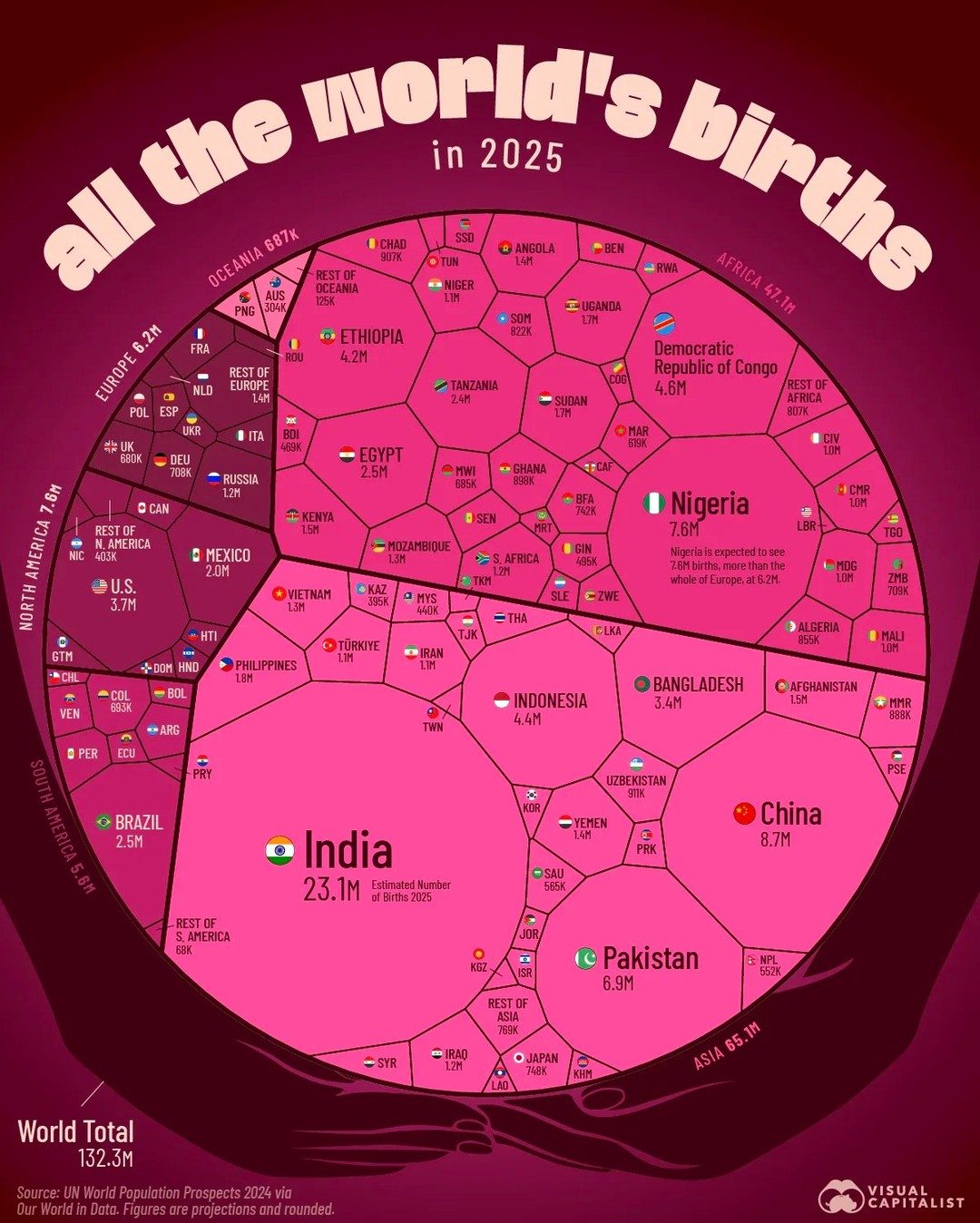
The world is on track to witness approximately 132 million births in 2025. These births will not be evenly distributed. Major regions such as Asia and Africa will see the highest number of births, with Nigeria alone projected to record more births than the entire continent of Europe. This concentration of births in a few regions highlights the shifting global population dynamics.
Context / Why This Matters
The distribution of births across the world has significant implications for various sectors, including healthcare, infrastructure, and economic development. Understanding these projections can help policymakers, economists, and planners anticipate future needs and allocate resources effectively. Let’s dive into the key trends and insights.
Main Discussion
A Concentrated Population Growth in Asia and Africa
Africa and Asia are expected to drive the majority of global births in 2025. The continent of Africa, in particular, is projected to have the highest concentration of births. Countries like Nigeria and India are anticipated to record especially high birth rates. This trend underscores the demographic changes that are reshaping the world's population landscape.
Significant Contributions from Specific Countries
Nigerian, Chinese, and Indian populations are expected to add large numbers to the global birth rate. Nigeria’s projected birth rate alone is expected to surpass that of the entire European continent. This disparity highlights the varying fertility rates and population growth trends across regions.
Other Notable Regions
While Asia and Africa will dominate birth projections, other regions will still contribute significantly. South America and Southeast Asia are also expected to see substantial birth rates, although not as high as those in Africa and Asia.
How Do These Birth Rates Compare to Previous Years?
Comparing these projections to previous years, we see a consistent trend of high birth rates in developing regions. This trend is a result of various factors, including higher fertility rates, younger populations, and improving healthcare systems. Understanding the historical context helps in forecasting future trends and preparing for the demographic shifts.
Practical Tips
For policymakers and planners, these projections offer valuable insights into future population dynamics. Here are some practical tips:
Preparing for Increased Birth Rates
In regions with high projected birth rates, it is crucial to invest in maternal and child healthcare. This includes improving access to prenatal care, vaccinations, and nutritional support. Ensuring that healthcare infrastructure can handle the increased demand is essential.
Urban Planning and Infrastructure Development
Urban planners should consider the projected population growth in their strategic planning. This involves building more schools, hospitals, and housing to accommodate the growing population. Proactive planning can prevent the strain on existing infrastructure, ensuring a smoother transition for the new generations.
Economic Development
Economic planners need to prepare for the influx of new workers and consumers. This can involve creating job opportunities, developing educational programs, and fostering economic growth. Investing in education and vocational training can help prepare the younger generations for the workforce, contributing to economic stability and growth.
Important Takeaways
- Asia and Africa: The majority of global births in 2025 will occur in Asia and Africa, with Nigeria alone surpassing Europe.
- Key Countries: Nigeria, China, and India will have the highest birth rates.
- Healthcare and Infrastructure: Preparing for increased birth rates requires significant investment in healthcare, education, and infrastructure.
- Economic Planning: Economic planners must anticipate the needs of a growing population to foster sustainable development.
Conclusion
As the world prepares for 132 million births in 2025, it is crucial to understand the distribution and implications of these projections. With the majority of births concentrated in Asia and Africa, particularly in countries like Nigeria, China, and India, policymakers and planners have a significant amount of work to do. By investing in healthcare, infrastructure, and economic development, regions can better prepare for the demographic shifts and ensure a stable future for the growing population.
Watch the Reel
Questions readers ask
Why are birth rates expected to be higher in Asia and Africa in 2025?
Asia and Africa have higher birth rates due to larger populations and younger demographics. Many countries in these regions have a significant portion of their people in the reproductive age group, leading to a higher number of births.
How many births are projected in Nigeria for 2025?
While the exact number is not specified, Nigeria is anticipated to have more births than the entire continent of Europe, highlighting its significant contribution to global birth rates.
What are the implications of these birth rate trends for healthcare systems?
The concentration of births in certain regions may lead to increased demand for maternity and child healthcare services. Policymakers will need to plan for more hospitals, medical staff, and resources to accommodate this growth.
How do these birth rate projections affect economic development?
Higher birth rates can lead to a larger workforce in the future, potentially driving economic growth. However, it also poses challenges in terms of employment opportunities, housing, and infrastructure development.
Why is it important to track global birth trends?
Tracking global birth trends helps in anticipating future population dynamics, which is crucial for policymakers and planners. It aids in resource allocation, infrastructure development, and preparing for potential challenges.
What can we expect in terms of population growth in Europe in 2025?
Europe is expected to have fewer births compared to regions like Asia and Africa, and specifically, Nigeria. This could lead to an aging population and potential labor shortages if not addressed through immigration or other means.
How do these projections influence planning in the African region?
With a high number of births projected, African countries will need to focus on expanding their healthcare systems, improving maternal and child health, and investing in infrastructure to support the growing population.
Recent articles
Fresh deep dives from the latest Reels we unpacked.




Comments
Be the first to comment.