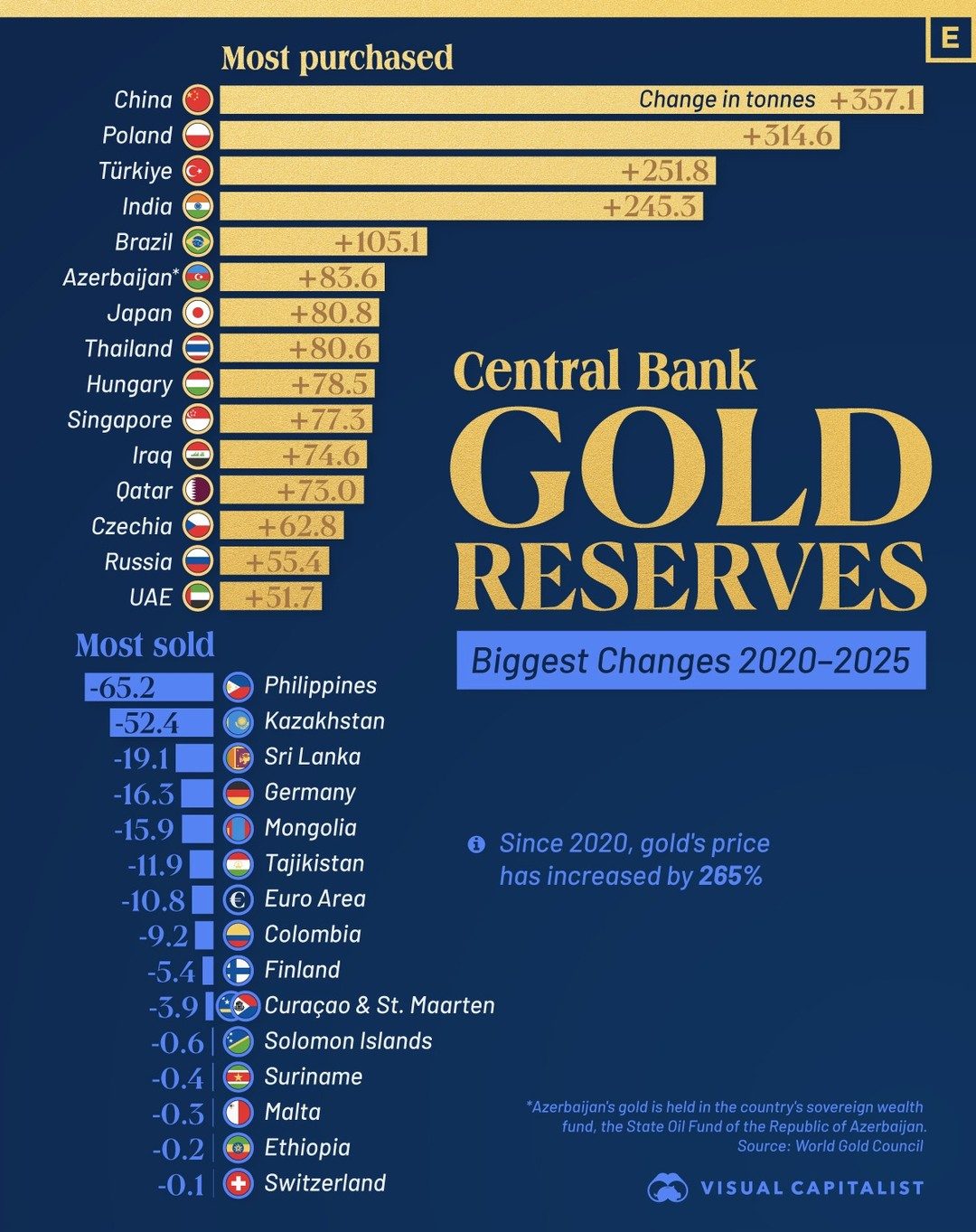
Gold Reserves: Central Bank Activities from 2020 to 2025
Central banks worldwide have been actively managing their gold reserves, with notable changes occurring between 2020 and 2025. This period saw significant fluctuations in gold prices, which surged by over 230%. As a result, many countries increased their gold holdings to mitigate currency risks and economic instability. Conversely, a smaller group reduced their gold reserves. Let's delve into the key players and trends that shaped this dynamic landscape.
Why This Matters
Gold reserves are a critical component of a country's economic strategy. They serve as a hedge against economic volatility and currency devaluation. Understanding the shifts in gold reserves can provide insights into the economic policies and risk management strategies of various nations. This analysis focuses on the biggest changes in central bank gold reserves from 2020 to 2025, highlighting the most significant increases and decreases.
Central Bank Gold Buying Trends
Leading Gold Buyers
China, Poland, and Türkiye emerged as the top gold buyers during this period. China led the pack with an impressive increase of 357.1 tonnes. This substantial boost in gold reserves underscores China's strategic approach to safeguarding its economy against global economic fluctuations.
Poland and Türkiye also made significant additions to their gold reserves, with increases of 314.6 tonnes and 245.3 tonnes, respectively. These countries joined China in recognizing the importance of gold as a stable asset in uncertain economic times.
Notable Gold Sellers
While many countries increased their gold reserves, others took a different approach. The Philippines saw the largest decrease, reducing its gold reserves by 65.2 tonnes. This move could be attributed to various factors, including liquidity needs or shifts in economic policy.
Other countries that reduced their gold holdings include Azerbaijan, Japan, and Germany. Azerbaijan's gold is notably held in its sovereign wealth fund, the State Oil Fund of Azerbaijan, which adds a layer of complexity to its reserve management strategy.
Gold Reserves in Context
Economic Policy and Gold Reserves
Central banks use gold reserves as a tool to manage economic risks. The surge in gold prices since 2020 has made gold an attractive asset for many countries. By increasing their gold holdings, countries like China, Poland, and Türkiye are effectively insulating their economies from the volatility of other financial instruments.
Conversely, countries that reduced their gold reserves might be pursuing different economic strategies. For instance, selling gold can provide immediate liquidity, which can be used to address short-term financial needs or invest in other assets.
Global Economic Implications
The changes in gold reserves reflect the broader economic trends and policies of various nations. Countries that increased their gold holdings are likely preparing for potential economic downturns or seeking to diversify their reserves. Conversely, those that reduced their holdings might be focusing on other economic priorities.
Practical Tips for Investors
For investors, understanding the trends in central bank gold reserves can provide valuable insights. Here are some practical tips:
- Diversify Your Portfolio: Including gold in your investment portfolio can help mitigate risks associated with economic volatility.
- Monitor Central Bank Policies: Pay attention to the gold reserve policies of major economies. These policies can influence global gold prices and market trends.
- Stay Informed: Keep up with economic indicators and news that impact gold prices. This includes inflation rates, currency exchange rates, and geopolitical events.
Important Takeaways
- Central Banks as Key Players: Central banks play a crucial role in managing gold reserves, which can significantly impact global gold prices and economic stability.
- Economic Hedging: Gold serves as a hedge against economic volatility and currency devaluation, making it a valuable asset for many countries.
- Strategic Moves: The decision to increase or decrease gold reserves is often strategic, reflecting a country's economic priorities and risk management strategies.
- Global Trends: The trends in gold reserves can provide insights into broader economic policies and global economic conditions. For example, China's significant increase in gold reserves reflects its strategy to mitigate economic risks.
Conclusion
The period from 2020 to 2025 saw significant changes in central bank gold reserves, with countries like China, Poland, and Türkiye leading the way in increasing their holdings. These shifts reflect broader economic strategies and risk management approaches. For investors, understanding these trends can provide valuable insights into global economic conditions and potential investment opportunities.
Watch the Reel
Questions readers ask
Which central banks made the most significant increases in their gold reserves from 2020 to 2025?
Central banks like those of China and Poland made some of the most significant increases in their gold reserves in this period. China has been steadily increasing gold reserves to fortify its economy and hedge against currency risks. Poland also made large purchases, notably a substantial acquisition in 2022, to boost its reserves.
What were the primary reasons behind the changes in gold reserves by central banks during 2020-2025?
The primary reasons included economic stability, currency risk mitigation, and hedging against market volatility. The surge in gold prices by over 230% made gold an attractive asset for many central banks.
Why did some central banks like the Philippines reduce their gold reserves?
The Philippines reduced their gold reserves as part of their economic strategy. It was likely to free up capital for other investments or to address immediate financial needs. Economic conditions and specific financial goals influenced this decision.
How can visualizations of central bank gold reserve changes from 2020 to 2025 be helpful?
Visualizations of central bank gold changes can provide a clear understanding of trends and shifts. They can help identify patterns, such as which countries are increasing or decreasing their gold reserves, and can offer insights into broader economic strategies and policies.
What role do gold reserves play in a country's economic strategy?
Gold reserves serve as a vital component in a country's economic strategy. They act as a safeguard against economic volatility and currency devaluation, providing stability and confidence in the financial system.
How have gold reserves in Turkey changed since 2020?
Turkey's central bank has seen significant fluctuations in its gold reserves. Due to economic instability and currency devaluation, Turkey has been actively managing its gold holdings, making strategic adjustments to mitigate risks and stabilize its financial position.
What can we learn from the gold reserve changes of central banks between 2020 and 2025?
The changes in gold reserves during this period reveal a lot about the economic strategies and risk management practices of various central banks. It shows how different countries respond to global economic shifts, including fluctuations in gold prices and changes in their financial policies to navigate changing economic landscapes.
Recent articles
Fresh deep dives from the latest Reels we unpacked.




Comments
Be the first to comment.