Job Market Dynamics: Understanding the Best and Worst States for Job Seekers
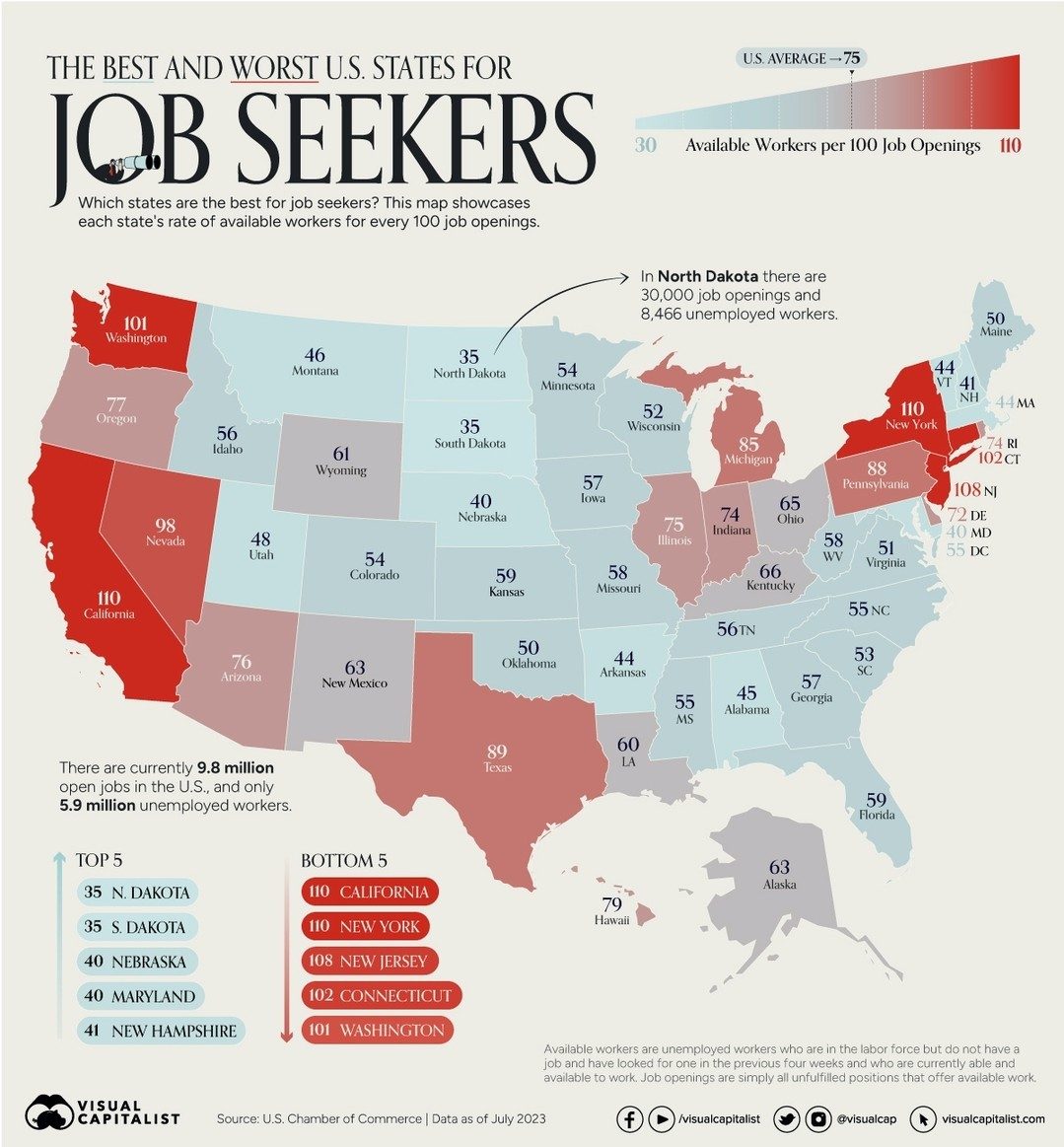
In the United States, as of July 2023, there were approximately 75 workers available for every 100 job openings. This disparity highlights a significant gap between the available labor force and the number of job openings, indicating both challenges and opportunities for job seekers across different states. This data, sourced from the U.S. Chamber of Commerce, provides a clear picture of which states are currently the most and least favorable for job seekers.
Context: Why This Matters
Understanding the job market landscape is crucial for job seekers, employers, and policymakers. For job seekers, knowing which states have a higher ratio of job openings to available workers can guide relocation decisions and career planning. Employers benefit from this information by identifying areas with a surplus of skilled workers or by recognizing regions with labor shortages. Policymakers can use this data to develop strategies that address labor market imbalances and support economic growth.
The Best States for Job Seekers
To find the best employment opportunities, consider looking at states with a lower number of workers per 100 job openings. These states typically offer more job opportunities relative to the available workforce, which can be advantageous for job seekers. As of July 2023, the top five states with the most favorable job seeker conditions are:
- California - With a ratio of available workers to job openings, California tops the list. The state's robust economy and diverse industries, including technology, healthcare, and entertainment, create a high demand for workers.
- South Dakota - Known for its strong agricultural and healthcare sectors, South Dakota offers a favorable job market with a low ratio of workers to job openings.
- Maryland - Maryland's economic strengths lie in sectors such as biotechnology, aerospace, and government, making it an attractive option for job seekers.
- New Hampshire - With a diverse economy that includes manufacturing, healthcare, and tourism, New Hampshire provides ample job opportunities for its residents.
- New Jersey - New Jersey's proximity to major metropolitan areas and its robust industries, such as pharmaceuticals and finance, contribute to its favorable job market.
The Worst States for Job Seekers
Conversely, states with a higher number of workers per 100 job openings may present more challenges for job seekers. These states generally have a larger pool of workers competing for fewer job openings, which can make the job search more competitive. As of July 2023, the bottom five states with the least favorable job seeker conditions include:
- California - Despite being the top state for job seekers, California also has a very high ratio of available workers, indicating intense competition for some positions.
- New York - New York's high cost of living and competitive job market make it a challenging state for job seekers, especially in industries with high demand.
- New Jersey - Similar to New York, New Jersey's job market can be highly competitive, with many workers vying for available positions.
- Washington - Washington, particularly the Seattle area, has a thriving tech industry, but it also faces a high ratio of available workers, leading to a competitive job market.
Factors Influencing Job Market Dynamics
Several factors contribute to the job market dynamics in each state, including:
-
Economic Diversity - States with a diverse range of industries tend to offer more job opportunities, as they are less susceptible to economic downturns in any single sector.
-
Population Growth - Areas with significant population growth often experience increased demand for services and infrastructure, leading to more job openings.
-
Inward Migration - States that attract a large number of new residents, either for work or lifestyle reasons, often see an increase in job opportunities and a higher demand for labor.
-
Policy and Regulation - State policies regarding labor laws, minimum wage, and economic incentives can significantly impact the job market. For example, states with favorable business environments may attract more companies, leading to more job opportunities.
-
Industry-Specific Trends - Certain industries may be more dominant in specific states, creating unique job market conditions. For example, states with strong tech sectors, like Washington and California, may have a higher demand for tech-related jobs.
Practical Tips for Job Seekers
Navigating the job market can be challenging, but with the right strategies, job seekers can increase their chances of success:
-
Research the Market - Understand the job market trends in the states you are considering. Look for industries with high demand and growth potential.
-
Tailor Your Resume and Cover Letter - Customize your application materials to highlight skills and experiences relevant to the job and the state's industry trends.
-
Network - Building a network of professionals in your desired industry can provide valuable insights and potential job leads. Attend industry events, join professional organizations, and connect with others on platforms like LinkedIn.
-
Consider Relocation - If you are open to moving, consider relocating to a state with a more favorable job market. This can increase your chances of finding a job and may offer a better quality of life.
-
Stay Flexible - Be open to different roles and industries. Sometimes, taking a job in a related field can open doors to better opportunities in the future.
Important Takeaways
Understanding the job market dynamics is essential for job seekers and employers alike. As of July 2023, states like California, South Dakota, and Maryland offer some of the best opportunities for job seekers, while New York, New Jersey, and Washington present more challenging conditions. Factors such as economic diversity, population growth, and industry-specific trends significantly influence the job market in each state. By researching the market, tailoring your application materials, networking, considering relocation, and staying flexible, job seekers can navigate the job market more effectively and find the best opportunities for their careers.
Conclusion
The job market in the United States is complex and varies significantly from state to state. By analyzing the data from the U.S. Chamber of Commerce, job seekers can gain valuable insights into where to find the best opportunities and how to navigate the job market effectively. Whether you are just starting your career or looking to make a change, understanding the job market dynamics can help you make informed decisions and achieve your career goals.
Watch the Reel
Questions readers ask
What are the best states for job seekers in 2023?
The best states for job seekers in 2023 are those with a lower ratio of available workers to job openings, such as Idaho, Utah, and South Dakota. These states have more job opportunities relative to their workforce, making them ideal for those looking to find employment quickly.
How does the job market vary across different states?
The job market varies significantly across the U.S. In 2023, while some states have abundant job openings, others face challenges with a lower ratio of jobs to available workers. For instance, states like Alaska and West Virginia may present more hurdles for job seekers due to fewer job openings relative to their labor force.
What factors should job seekers consider when evaluating job market data?
Job seekers should consider the ratio of available jobs to workers, the types of industries thriving in each state, and the cost of living. States with a higher number of job openings relative to available workers may offer more opportunities, but job seekers should also weigh these against the cost of living and other personal factors.
What are the worst states for job seekers in 2023?
The worst states for job seekers in 2023 are those with a higher ratio of available workers to job openings, such as Alaska, West Virginia, and New Mexico. These states have fewer job opportunities relative to their workforce, making it more challenging for job seekers to find employment.
How can job seekers use this data to inform their relocation decisions?
Job seekers can use this data to make informed decisions about where to focus their job search or potentially relocate. By targeting states with a higher ratio of job openings to available workers, job seekers can increase their chances of finding employment more quickly. It's also beneficial to research specific industries thriving in these states to tailor job applications effectively.
Why is the ratio of available workers to job openings important to job seekers?
The ratio of available workers to job openings is crucial as it indicates the level of competition for jobs. A lower ratio means less competition, giving job seekers a better chance of securing a position. Conversely, a higher ratio may suggest a more competitive job market, making it harder for job seekers to find employment.
Which states have the most job openings relative to their workforce in 2023?
States with the most job openings relative to their workforce in 2023 include Idaho, Utah, and South Dakota. These states offer a more favorable job market for seekers, with a lower ratio of available workers to job openings, making them attractive for those looking to secure employment quickly.
Recent articles
Fresh deep dives from the latest Reels we unpacked.




Comments
Be the first to comment.