Whole-Food Sources for a Balanced Diet
A balanced diet is essential to overall health and performance. The body needs protein, carbohydrates, and fats working together to function optimally. Understanding the best sources of these macronutrients can help you build a nutritious meal plan. There's a lot more to nutrition than just counting calories. Let's dive into the best whole-food sources of protein, clean carbs, and healthy fats, as well as the importance of electrolytes.
Why This Matters
Your body needs a balance of macronutrients to thrive. Protein is crucial for building and repairing muscle tissue. Carbohydrates provide the energy needed for workouts, recovery, and daily performance. Healthy fats support hormones, brain function, nutrient absorption, and long-term health. Electrolytes help regulate hydration, muscle contractions, energy levels, and recovery. Neglecting any of these components can lead to reduced performance, slowed recovery, and overall poor health.
The Best Protein Sources
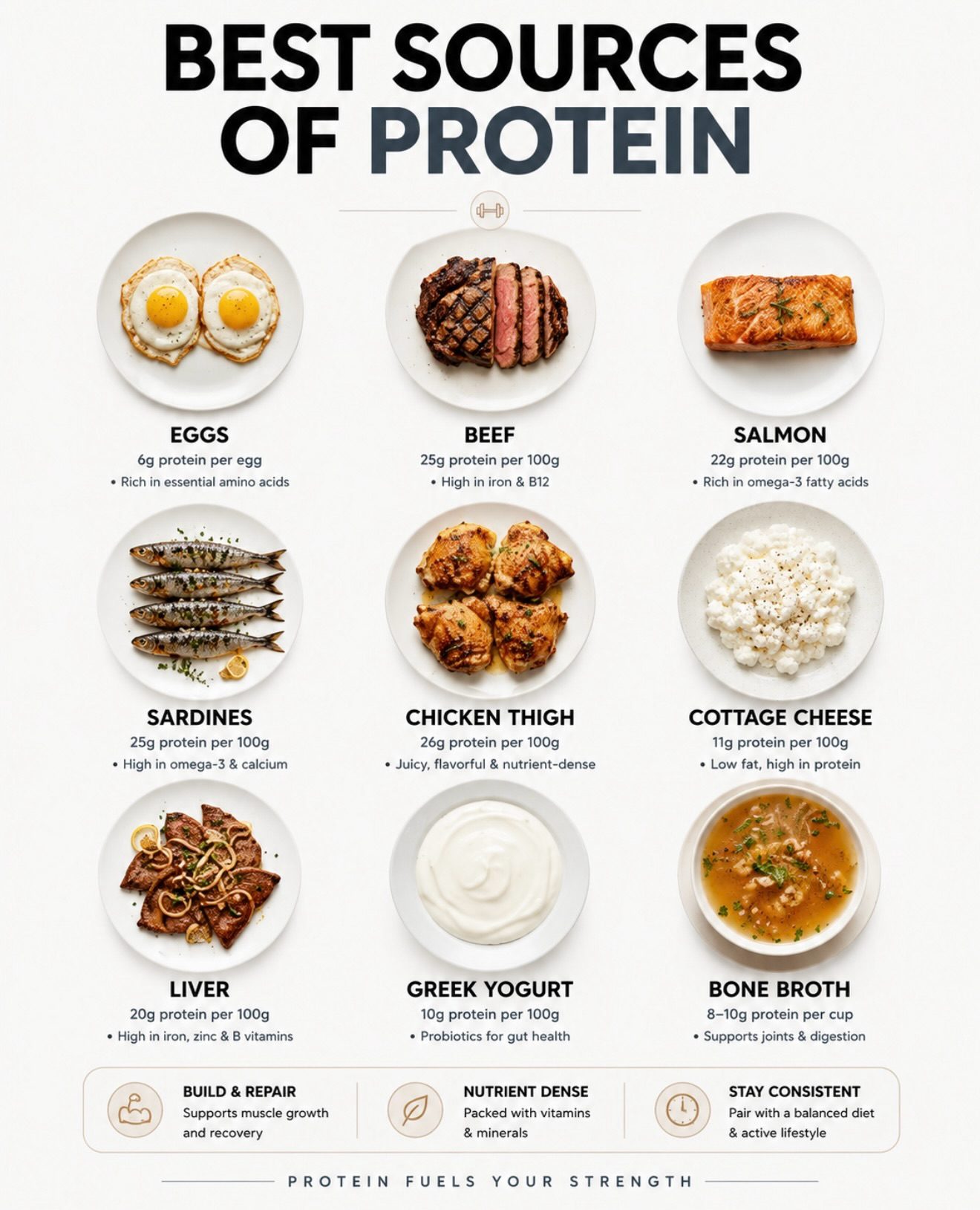
Protein is a fundamental building block for the body, essential for muscle repair and growth. Some of the best whole-food sources of protein include:
- Eggs: Versatile and packed with high-quality protein, eggs are a staple in many diets.
- Beef: A rich source of protein and essential minerals like iron and zinc.
- Salmon: Not only high in protein but also rich in omega-3 fatty acids, which are beneficial for heart health.
- Sardines: A small fish with a big nutritional punch, sardines are high in protein and omega-3s.
- Chicken Thigh: While chicken breast is often highlighted, chicken thighs offer more flavor and a good balance of protein and fat.
- Cottage Cheese: A low-calorie, high-protein option that's great for snacking or adding to meals.
- Liver: Packed with protein and essential vitamins, liver is a nutrient-dense option.
- Greek Yogurt: Thicker and creamier than regular yogurt, Greek yogurt is high in protein and probiotics.
- Bone Broth: Rich in collagen and amino acids, bone broth supports joint health and digestion.
Clean Carb Sources
Carbohydrates are the body's primary energy source, fueling workouts and daily activities. Opt for clean carbs that provide sustained energy and are rich in nutrients:
- White Rice: Easily digestible and a good source of energy, especially for post-workout recovery.
- Sweet Potato: High in fiber and vitamins, sweet potatoes provide a steady release of energy.
- Banana: A quick energy source, bananas are also rich in potassium, which aids in muscle function.
- Raw Honey: A natural sweetener with antioxidants, raw honey provides a quick energy boost.
- Berries: Packed with antioxidants and fiber, berries are a nutritious addition to any diet.
- Oats: A great source of fiber and slow-releasing carbohydrates, oats keep you full and energized.
- Potatoes: Versatile and high in potassium, potatoes are an excellent source of energy.
- Sourdough: Fermented bread that is easier to digest and has a lower glycemic index.
- Squash: A versatile vegetable that provides a good balance of carbs and fiber.
Healthy Fat Sources
Healthy fats are essential for hormone regulation, brain function, and nutrient absorption. Incorporate these whole-food sources of healthy fats into your diet:
- Avocados: Rich in monounsaturated fats, avocados support heart health and nutrient absorption.
- Butter: While high in saturated fat, butter is also a good source of vitamins A, D, E, and K.
- Tallow: Rendered beef or mutton fat, tallow is stable at high temperatures and contains vitamins A, D, E, and K.
- Olive Oil: High in monounsaturated fats, olive oil supports heart health and is rich in antioxidants.
- Macadamia Nuts: Rich in monounsaturated fats and low in omega-6 fats, macadamia nuts are a heart-healthy option.
- Walnuts: High in omega-3 fatty acids, walnuts support brain function and heart health.
- Sardines: In addition to protein, sardines are a good source of omega-3 fatty acids.
- Egg Yolks: Often overlooked, egg yolks are rich in vitamins and healthy fats.
- Coconut Oil: High in medium-chain triglycerides, coconut oil is easily digestible and supports energy production.
The Role of Electrolytes
Electrolytes are essential for regulating hydration, muscle contractions, energy levels, and recovery. Some of the best sources of electrolytes include:
- Sea Salt: A natural source of sodium and other minerals, sea salt helps maintain electrolyte balance.
- Coconut Water: Rich in potassium and other electrolytes, coconut water is a natural hydration solution.
- Bone Broth: In addition to protein, bone broth is a good source of electrolytes and minerals.
- Watermelon: High in water and potassium, watermelon aids in hydration and electrolyte balance.
- Pumpkin Seeds: Rich in magnesium and other minerals, pumpkin seeds support muscle function and energy production.
- Dates: A good source of potassium and other electrolytes, dates provide a natural energy boost.
- Mineral Water: Water naturally rich in minerals, mineral water supports hydration and electrolyte balance.
- Leafy Greens: Packed with vitamins and minerals, leafy greens support overall health and electrolyte balance.
Practical Tips for Incorporating Whole Foods
Incorporating whole-food sources of protein, carbs, and fats into your diet doesn't have to be complicated. Here are some practical tips:
- Plan Your Meals: Prep meals in advance to ensure you have balanced options ready to go.
- Snack Smart: Choose nutrient-dense snacks like nuts, fruits, and yogurt to keep your energy levels up.
- Hydrate Regularly: Aim for at least 2 liters of water daily, and consider electrolyte-rich beverages for intense workouts.
- Focus on Quality: Prioritize whole foods over processed options to maximize nutrient intake.
- Monitor Progress: Use a fitness app to track your nutrition, workouts, and progress.
Important Takeaways
- Balance Matters: Your body needs a mix of protein, carbohydrates, and fats for optimal performance and recovery.
- Choose Whole Foods: Opt for nutrient-dense, whole-food sources to maximize your nutrient intake.
- Hydration is Key: Electrolytes play a crucial role in maintaining hydration, muscle function, and energy levels.
Conclusion
Nutrition is about more than just counting calories. It's about fueling your body with the right nutrients to support your goals. By incorporating a variety of whole-food sources of protein, carbs, and fats, and staying hydrated, you can optimize your performance, recovery, and overall well-being.
Watch the Reel
Questions readers ask
What are the top whole-food sources of protein for a balanced diet?
The top whole-food sources of protein include lean meats like beef and poultry, fatty fish such as salmon, and eggs. These foods are high in protein and provide essential amino acids for muscle growth and repair, as well as other important nutrients.
Why are electrolytes important for hydration and recovery?
Electrolytes, including sodium, potassium, and magnesium, are crucial for maintaining proper hydration and aiding in muscle recovery. They help regulate fluid balance, support nerve and muscle function, and can be obtained from foods like bananas, spinach, and coconut water, as well as through proper hydration strategies.
Which whole foods are the best sources of clean carbohydrates for energy?
The best whole-food sources of clean carbohydrates are complex carbohydrates like whole grains (oats, brown rice, quinoa), starchy vegetables (sweet potatoes, potatoes), and legumes (lentils, chickpeas). These foods provide sustained energy for workouts, recovery, and daily activities, while also offering fiber and other beneficial nutrients.
What are the benefits of consuming healthy fats from whole foods?
Healthy fats from whole foods, such as avocados, nuts, seeds, and olive oil, support various bodily functions, including hormone regulation, brain function, and nutrient absorption. They also promote long-term health by reducing inflammation, supporting heart health, and aiding in the absorption of fat-soluble vitamins.
How can I incorporate whole-food protein sources into my meals?
You can incorporate whole-food protein sources into your meals by including lean meats, fish, and eggs in your breakfast, lunch, and dinner. For example, you can have an omelette for breakfast, grilled chicken salad for lunch, and baked salmon with quinoa for dinner. Additionally, plant-based protein sources like legumes, lentils, and beans can be incorporated into soups, stews, and salads.
What are some whole-food sources of electrolytes for hydration and recovery?
Whole-food sources of electrolytes include fruits and vegetables like bananas, spinach, and avocados, as well as dairy products like milk and yogurt. Coconut water is a natural source of electrolytes and can be used as a post-workout drink to support hydration and muscle recovery.
How can a balanced diet with whole-food sources benefit overall health and performance?
A balanced diet with whole-food sources can benefit overall health and performance by providing the body with the necessary nutrients for optimal function. Protein supports muscle growth and repair, carbohydrates provide energy, and healthy fats support various bodily functions. Additionally, a balanced diet can improve hydration, reduce inflammation, and support long-term health.
Recent articles
Fresh deep dives from the latest Reels we unpacked.




Comments
Be the first to comment.