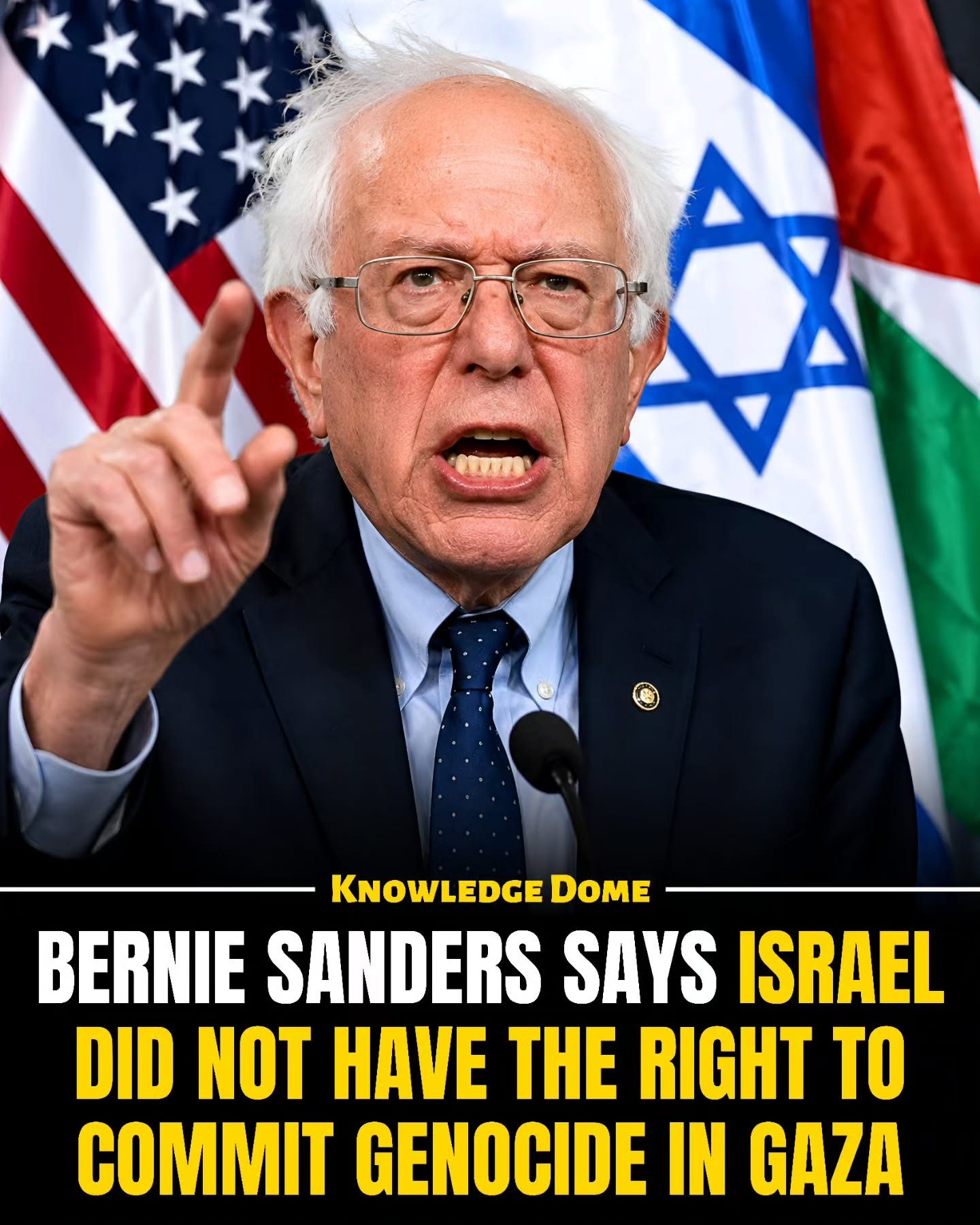
The Impact of Bernie Sanders' Criticism on U.S.-Israel Relations
Senator Bernie Sanders' recent public statements about the Israeli-Palestinian conflict have sparked significant debate and scrutiny. At an event in Minnesota, Sanders made a bold claim that Israel did not have the right to commit genocide against the people of Gaza. This accusation, directed at the government of Prime Minister Benjamin Netanyahu, has had substantial implications for U.S.-Israel relations and the broader geopolitical landscape.
Context / Why this matters
The conflict between Israel and Palestine is one of the most enduring and complex issues in global politics. Sanders' remarks have highlighted the ongoing humanitarian crisis in Gaza, where the war has resulted in over 73,000 deaths and 173,000 injuries. The conflict has disproportionately affected vulnerable populations, including women, children, and the elderly. Infrastructure in Gaza, such as schools, hospitals, water systems, wastewater plants, the electric grid, and housing units, has been severely damaged or destroyed.
Sanders' call for an end to U.S. military aid to Israel has added another layer of complexity to the situation. His stance has garnered both support and criticism, as it challenges the traditional U.S. policy of providing military support to Israel. This move comes at a time when the U.S. is reevaluating its foreign policy, particularly in the Middle East, and seeking to balance its strategic interests with humanitarian concerns.
Main discussion
The Historical Context of U.S.-Israel Relations
The United States and Israel have a long-standing alliance that dates back to the establishment of Israel in 1948. The U.S. has consistently provided military, economic, and diplomatic support to Israel, viewing it as a key ally in a volatile region. This support has been justified on strategic grounds, as Israel is seen as a bulwark against regional threats, including those from Iran and various militant groups.
However, the alliance has not been without its controversies. Critics argue that U.S. support for Israel has often come at the cost of Palestinian rights and has contributed to the ongoing conflict. Sanders' recent statements reflect a growing sentiment among some U.S. politicians and the public that a more nuanced approach to the Israeli-Palestinian conflict is needed, one that takes into account the humanitarian cost of the war.
The Humanitarian Crisis in Gaza
Gaza has long been a focal point of the Israeli-Palestinian conflict, with periods of intense violence and intermittent ceasefires. The humanitarian situation in Gaza is dire, with many residents living in poverty and lacking access to basic services. The recent escalation of the conflict has exacerbated this crisis, with a significant portion of Gaza's infrastructure either damaged or destroyed.
Sanders' remarks have drawn attention to the devastating impact of the conflict on civilians, particularly women, children, and the elderly. His claims that 92% of housing units in Gaza have been damaged or destroyed underscore the extent of the destruction. This situation is a reminder of the broader humanitarian implications of the conflict, which often go overlooked in the broader geopolitical discussion.
Political and Diplomatic Implications
Sanders' criticism of the Israeli government has been met with a mixed response. Some have praised his stance as a necessary critique of Israeli policy and a call for accountability. Others, including some U.S. politicians and Israeli officials, have viewed it as an unjustified attack on a key ally and a potential threat to regional stability.
The diplomatic fallout from Sanders' remarks has been significant. The U.S. has long been a key mediator in the Israeli-Palestinian conflict, and its stance on the issue has traditionally been one of supporting Israel while encouraging negotiations with the Palestinians. Sanders' call for an end to military aid has challenged this approach, raising questions about the future of U.S. policy in the region.
Practical tips
Understanding the Complexities of the Conflict
For those looking to understand the complexities of the Israeli-Palestinian conflict, it is essential to approach the issue with an open mind and a willingness to consider multiple perspectives. Engaging with a variety of sources, including academic texts, news articles, and firsthand accounts, can provide a more nuanced understanding of the conflict. It is also important to recognize the role of historical, cultural, and religious factors in shaping the conflict and the broader geopolitical context.
Staying Informed
Keeping up with the latest developments in the Israeli-Palestinian conflict is crucial for anyone interested in global politics. Following reliable news sources and expert analysis can provide valuable insights into the evolving situation. Social media platforms and online forums can also offer opportunities for engagement and discussion, though it is important to be mindful of misinformation and bias.
Advocacy and Activism
For those looking to take a more active role in addressing the crisis, there are numerous advocacy and activist groups working on the issue. These organizations often provide opportunities for volunteering, fundraising, and lobbying. It is important to do thorough research to ensure that any group you support aligns with your values and goals.
Important takeaways
- Bernie Sanders' comments have brought significant attention to the ongoing crisis in Gaza and the broader Israeli-Palestinian conflict.
- The humanitarian situation in Gaza is dire, with infrastructure and civilian populations bearing the brunt of the conflict.
- Sanders' call for an end to U.S. military aid to Israel has sparked debate and raised questions about the future of U.S. policy in the region.
- Understanding the complexities of the conflict requires engaging with multiple perspectives and staying informed about the latest developments.
Conclusion
Bernie Sanders' criticism of Israeli actions in Gaza and his call for an end to U.S. military aid have brought renewed attention to the long-standing Israeli-Palestinian conflict. The humanitarian toll in Gaza, with its devastating impact on civilians and infrastructure, highlights the urgency of addressing the crisis. As the U.S. reevaluates its foreign policy, Sanders' remarks serve as a reminder of the delicate balance between strategic interests and humanitarian concerns. For those seeking to understand and engage with this complex issue, staying informed and considering multiple perspectives are crucial steps in navigating the ever-evolving landscape of global politics.
Watch the Reel
Questions readers ask
What specific actions has Bernie Sanders called for regarding U.S. involvement in the Israeli-Palestinian conflict?
Bernie Sanders has publicly called for an end to U.S. military aid to the region. This move is aimed at addressing the humanitarian crisis in Gaza and is a response to his accusations that Israel is committing genocide in Gaza. Sanders' actions are a direct challenge to existing U.S. foreign policy towards Israel, which may cause geopolitical repercussions.
How has the Israeli government responded to Senator Sanders' accusations?
While the article does not detail specific responses from the Israeli government, such accusations typically provoke strong reactions and denials. The Israeli government may view Sanders' statements as inflammatory and damaging to their international reputation. This could lead to increased tension between the U.S. and Israel and heighten scrutiny of U.S. foreign policy in the region.
What are the key points of Bernie Sanders' criticism against the Israeli government?
Sanders has accused Israel of committing genocide against the people of Gaza, a serious allegation that has significant implications. He has also called for an end to U.S. military aid to the region, and his criticism highlights the ongoing humanitarian crisis, which has resulted in extensive casualties and injuries. This criticism is part of a broader critique of U.S. foreign policy and its alliance with Israel.
Why has this matter intensified scrutiny of U.S. foreign policy in the Middle East?
Sanders' statements have brought renewed attention to the U.S.'s military aid and support for Israel, particularly in light of the ongoing humanitarian crisis in Gaza. This scrutiny can lead to increased public and political debate about the U.S. role in the Israeli-Palestinian conflict, potentially affecting future policy decisions and alliances.
What is the significance of the Israeli-Palestinian conflict in global politics?
The Israeli-Palestinian conflict is one of the longest-running and most complex issues in global politics, with significant geopolitical implications. It involves a deep-rooted struggle over territory, resources, and human rights. Sanders' comments have brought this conflict back into the spotlight, potentially influencing public opinion and policy decisions in the U.S. and internationally.
Recent articles
Fresh deep dives from the latest Reels we unpacked.




Comments
Be the first to comment.