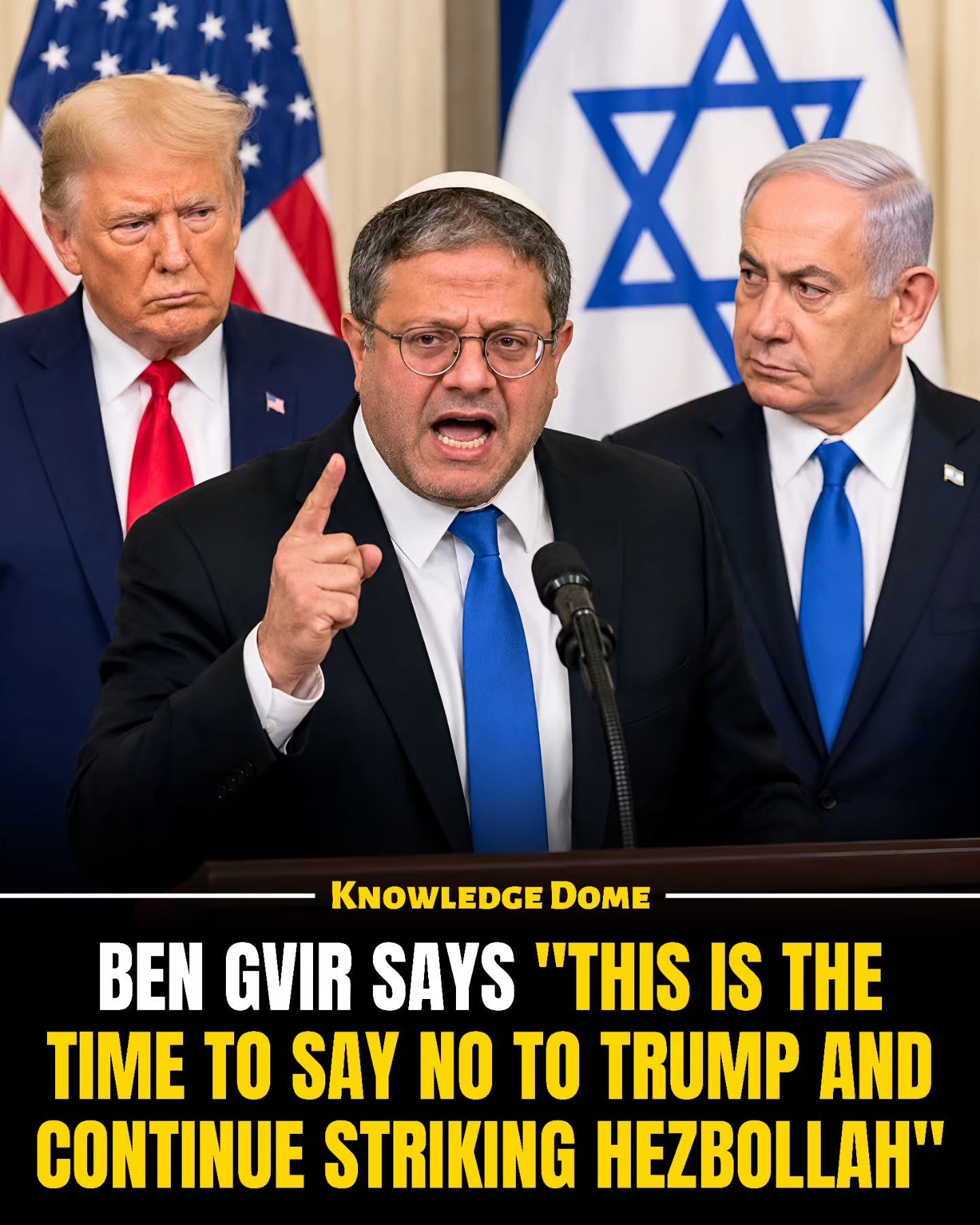
Political Commentary: Ben-Gvir and Trump
In early June 2026, Israeli National Security Minister Itamar Ben-Gvir sparked international attention with a bold statement aimed at U.S. President Donald Trump. His message was clear: it was "time to say no to President Trump" and to continue military strikes against Hezbollah in Lebanon. The statement came at a critical juncture, amid escalating tensions between Washington and Israel's hardline leaders.
Context / Why this matters
Ben-Gvir's remarks underscore the complex and often contentious relationship between Israel and the United States, particularly during times of heightened regional conflict. The political landscape in the Middle East is marked by intricate alliances, historical grievances, and strategic maneuvering, making every public statement and diplomatic move significant for understanding the broader geopolitical dynamics.
Main discussion
The Ben-Gvir Statement
Ben-Gvir, a prominent figure within Prime Minister Benjamin Netanyahu’s far-right coalition, has long advocated for a more aggressive military stance against Hezbollah. His recent statement echoed this position, urging Netanyahu to disregard U.S. pressure and continue military operations in Lebanon. Ben-Gvir’s argument hinged on the idea that a strong prime minister should know when to say "yes" to the U.S. and when to assert Israel’s own interests by saying "no."
Ben-Gvir’s call to action was framed not just as a military necessity but as a matter of national sovereignty. By quoting Netanyahu’s own past words, he positioned the current government’s approach as akin to what a true leader should do: deferring to the U.S. when advantageous, but taking a firm stance when Israel’s security is at stake. This rhetoric resonated with his nationalist base and aligned with his longstanding push for a more aggressive campaign against Hezbollah.
Tensions with the United States
The backdrop of this statement was marked by significant tension between Israel and the United States. Reports indicated that Israel had delayed a planned attack on the southern suburbs of Beirut due to pressure from Trump and other U.S. officials. The U.S. administration sought to prevent the conflict from escalating further, a stance that clashed with Israel’s more aggressive approach.
This tension is not new. Over the years, the U.S. and Israel have had differing views on the best course of action in the Middle East. The U.S. often advocates for diplomatic solutions and regional stability, while Israel, particularly under hardline leadership, tends to favor a more assertive military approach to protect its borders and citizens.
The Hezbollah Factor
Hezbollah, a prominent Lebanese political and military organization, has been a longstanding adversary of Israel. The group has been involved in various conflicts and is considered a terrorist organization by Israel and several other countries. Ben-Gvir’s insistence on continuing strikes against Hezbollah reflects a broader Israeli strategy to maintain military pressure on the group, aimed at preventing it from gaining a stronger foothold in the region.
Practical tips
For those looking to understand the broader implications of such political statements, it’s essential to stay informed about the current events and historical context. Here are some practical tips:
- Stay Updated with Reliable Sources: Follow trusted news outlets and experts in Middle Eastern politics for accurate and timely information.
- Understand the Historical Context: Both Israel and the U.S. have complex histories in the region, so a solid understanding of past events is crucial.
- Analyze Political Statements Carefully: Consider the motivations behind political statements and how they align with broader strategic goals.
Important takeaways
- Ben-Gvir’s statement reflects a hardline stance on national security and sovereignty.
- The U.S.-Israel relationship is marked by ongoing tensions, particularly regarding military actions in the Middle East.
- Hezbollah remains a critical factor in the region, influencing both Israeli and U.S. policies.
Conclusion
Ben-Gvir’s statement in early June 2026 highlights the delicate balance between national sovereignty and diplomatic relations in the Middle East. His call to continue military operations against Hezbollah, despite U.S. pressure, underscores the complex and often contentious relationship between Israel and the United States. By understanding the context and implications of such statements, we gain a deeper insight into the geopolitical dynamics that shape the region.
Watch the Reel
Questions readers ask
What prompted Itamar Ben-Gvir to defy U.S. President Donald Trump?
Ben-Gvir's defiance was sparked by his desire to continue Israeli military strikes against Hezbollah in Lebanon, despite opposition from Trump. This stance is part of Ben-Gvir’s push for greater Israeli sovereignty in security matters, particularly in the midst of increasing Middle Eastern tensions.
What is the significance of Ben-Gvir's stance on Israeli military strategy?
Ben-Gvir's advocacy for a more aggressive military strategy signals a shift towards prioritizing Israeli independence in security matters. This approach aims to address rising regional tensions and conflicts, such as those with Hezbollah, by asserting Israeli control over its security decisions.
How has Ben-Gvir's position impacted the relationship between Israel and the United States?
Ben-Gvir’s remarks have highlighted the complex and often contentious nature of the relationship between Israel and the United States. His defiance of Trump underscores the potential for disagreements between the two nations, particularly during times of heightened regional conflict.
What role does Hezbollah play in the recent tensions between Israel and the United States?
Hezbollah serves as a focal point in the escalating tensions, with Ben-Gvir vowing to continue strikes against the group in Lebanon. This has drawn attention to the differing views on appropriate military responses, with Trump advocating for restraint, while Ben-Gvir pushes for an aggressive approach.
What is the significance of Ben-Gvir's push for Israeli sovereignty in security matters?
Ben-Gvir’s push for greater Israeli sovereignty in security matters emphasizes the desire for Israel to make independent decisions regarding its military actions. This stance is particularly relevant in the context of regional conflicts, where Israel seeks to assert its control over security strategies.
How has Netanyahu responded to Ben-Gvir's statements?
While the article does not provide specific details regarding Netanyahu's response to Ben-Gvir's statements, it is important to note that Netanyahu, as the Prime Minister, may need to balance Israel's relationship with the United States while addressing the increasing regional tensions and domestic political dynamics.
Recent articles
Fresh deep dives from the latest Reels we unpacked.




Comments
Be the first to comment.