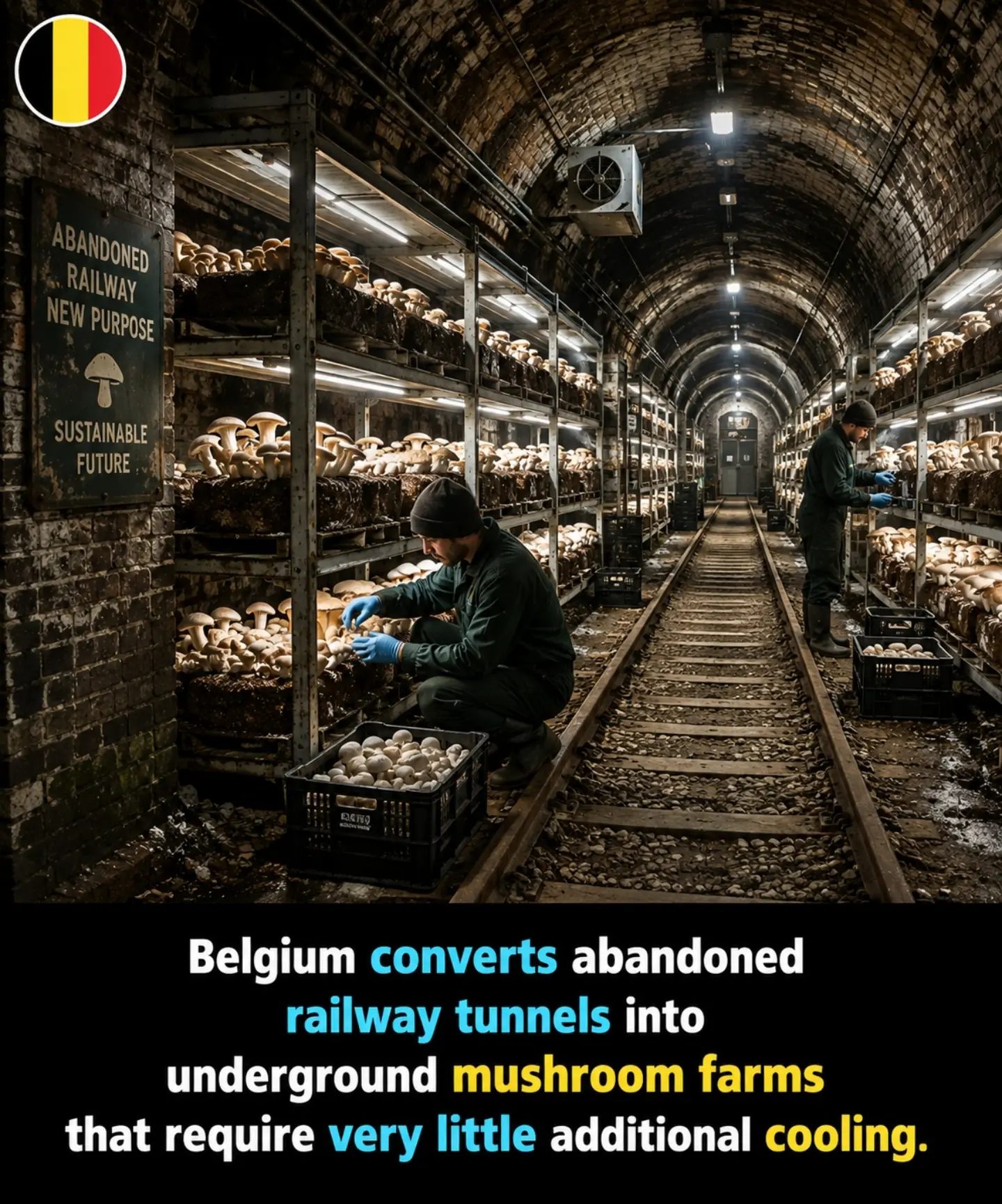
Mushroom Farming in Abandoned Railway Tunnels
Growing mushrooms in abandoned railway tunnels is an innovative and sustainable approach to agriculture, particularly in regions like Belgium. This method leverages the naturally cool and stable environment of underground tunnels to create ideal growing conditions for mushrooms. The conversion of these spaces not only repurposes unused infrastructure but also promotes efficient and eco-friendly farming practices.
Why This Matters
The growing demand for fresh, locally produced food, combined with the need for sustainable agricultural practices, makes the concept of mushroom farming in abandoned railway tunnels particularly relevant. By utilizing existing infrastructure, farmers can reduce the environmental impact of new construction and lower operational costs. Additionally, the cooler temperatures in underground tunnels eliminate the need for extensive cooling systems, making the process more energy-efficient.
Main Discussion
Repurposing Abandoned Infrastructure
Abandoned railway tunnels offer a unique opportunity for repurposing. These structures, once vital for transporting goods and people, are often left to decay. Converting them into mushroom farms not only provides a new, practical use for these spaces but also contributes to the local economy. By creating jobs and providing a steady supply of fresh produce, these repurposed tunnels can become community assets.
The Natural Cooling Advantage
One of the key benefits of growing mushrooms in abandoned railway tunnels is the natural cooling effect. The underground environment maintains a consistent cool temperature, which is essential for mushroom growth. This eliminates the need for artificial cooling systems, reducing energy consumption and associated costs. The stable temperature also ensures that the mushrooms grow at a consistent rate, leading to higher yields and better quality produce.
Environmental Benefits
Mushroom farming in tunnels is a sustainable practice. The lack of need for artificial lighting and cooling systems reduces carbon emissions, making it an eco-friendly option. Additionally, the controlled environment helps prevent the spread of pests and diseases, reducing the need for pesticides and other chemicals. This not only benefits the environment but also results in healthier, more nutritious mushrooms.
Practical Tips
For those interested in setting up a mushroom farm in an abandoned railway tunnel, here are some practical tips to consider:
Assessing the Space
Before converting a tunnel into a mushroom farm, conduct a thorough assessment of the space. Consider factors such as the size of the tunnel, access points, and the stability of the structure. Ensure that the space is free from hazards and can accommodate the necessary infrastructure for mushroom cultivation.
Ensuring Proper Ventilation
Even though the natural environment in the tunnel will be beneficial, proper ventilation is essential. Ensure that there is adequate airflow to prevent the buildup of moisture and stagnant air, which can lead to the growth of mold and other harmful organisms.
Choosing the Right Variety
Select mushroom varieties that thrive in cool, dark environments. Common varieties suitable for tunnel farming include Shiitake, Oyster, and Maitake mushrooms. These types are not only well-suited to the conditions but also have high market demand, making them a good choice for commercial farming.
Monitoring and Maintenance
Regular monitoring and maintenance are crucial for successful mushroom farming. Keep an eye on humidity levels, temperature, and any signs of pests or diseases. Use organic methods for controlling pests and maintaining the health of the mushrooms.
Important Takeaways
- Repurposing abandoned infrastructure can provide new opportunities for agriculture.
- Natural cooling in underground tunnels reduces energy consumption and operational costs.
- Sustainable practices such as reducing the need for artificial lighting and pesticides contribute to a healthier environment.
- Proper assessment, ventilation, and maintenance are essential for successful mushroom farming in tunnels.
Conclusion
Converting abandoned railway tunnels into mushroom farms is an innovative and sustainable approach to agriculture. By leveraging the natural cooling effects of underground spaces, farmers can reduce energy consumption and operational costs while promoting eco-friendly practices. This method not only repurposes unused infrastructure but also contributes to the local economy and community. As the demand for fresh, locally produced food continues to rise, mushroom farming in tunnels presents a promising solution for sustainable agriculture.
Watch the Reel
Questions readers ask
What makes abandoned railway tunnels ideal for mushroom farming?
Abandoned railway tunnels offer naturally cool and stable conditions, which are perfect for mushroom cultivation. These underground spaces provide consistent temperatures and humidity, reducing the need for artificial climate control and making the farming process more efficient.
How does growing mushrooms in tunnels benefit the environment?
This practice reduces the need for new construction, which means less energy and resources are consumed, making it an eco-friendly choice. Additionally, it repurposes unused infrastructure, turning abandoned spaces into productive community resources.
What are some benefits of sustainable mushroom farming in Belgium?
By growing mushrooms in tunnels, Belgium farmers can produce fresh, locally grown food while minimizing environmental impact. This method also promotes efficient use of resources and reduces the reliance on imported food and the environmental impact of transportation.
How is the process of mushroom farming in tunnels different from traditional farming methods?
Mushroom farming in tunnels relies on the natural conditions of the underground environment, eliminating the need for extensive artificial lighting and climate control. Mushrooms can grow year-round in these stable conditions, whereas traditional farming often depends on seasonal changes and weather conditions.
What are the advantages of converting abandoned infrastructure for agriculture?
Converting abandoned infrastructure for agriculture, like growing mushrooms in railway tunnels, reduces waste and promotes sustainability. It also creates opportunities for local food production and can stimulate economic growth in the community.
How can mushroom farming in tunnels address the demand for fresh, locally produced food?
By utilizing abandoned infrastructure, farmers can grow mushrooms close to urban centers, reducing the distance food needs to travel. This not only ensures fresher produce but also supports local economies and reduces the carbon footprint associated with long-distance food transportation.
What kind of infrastructure is typically used for sustainable mushroom farming in Belgium?
In Belgium, abandoned railway tunnels are commonly repurposed for sustainable mushroom farming. These tunnels provide a naturally controlled environment that is ideal for growing mushrooms, making them a practical and eco-friendly choice for farmers.
Recent articles
Fresh deep dives from the latest Reels we unpacked.




Comments
Be the first to comment.