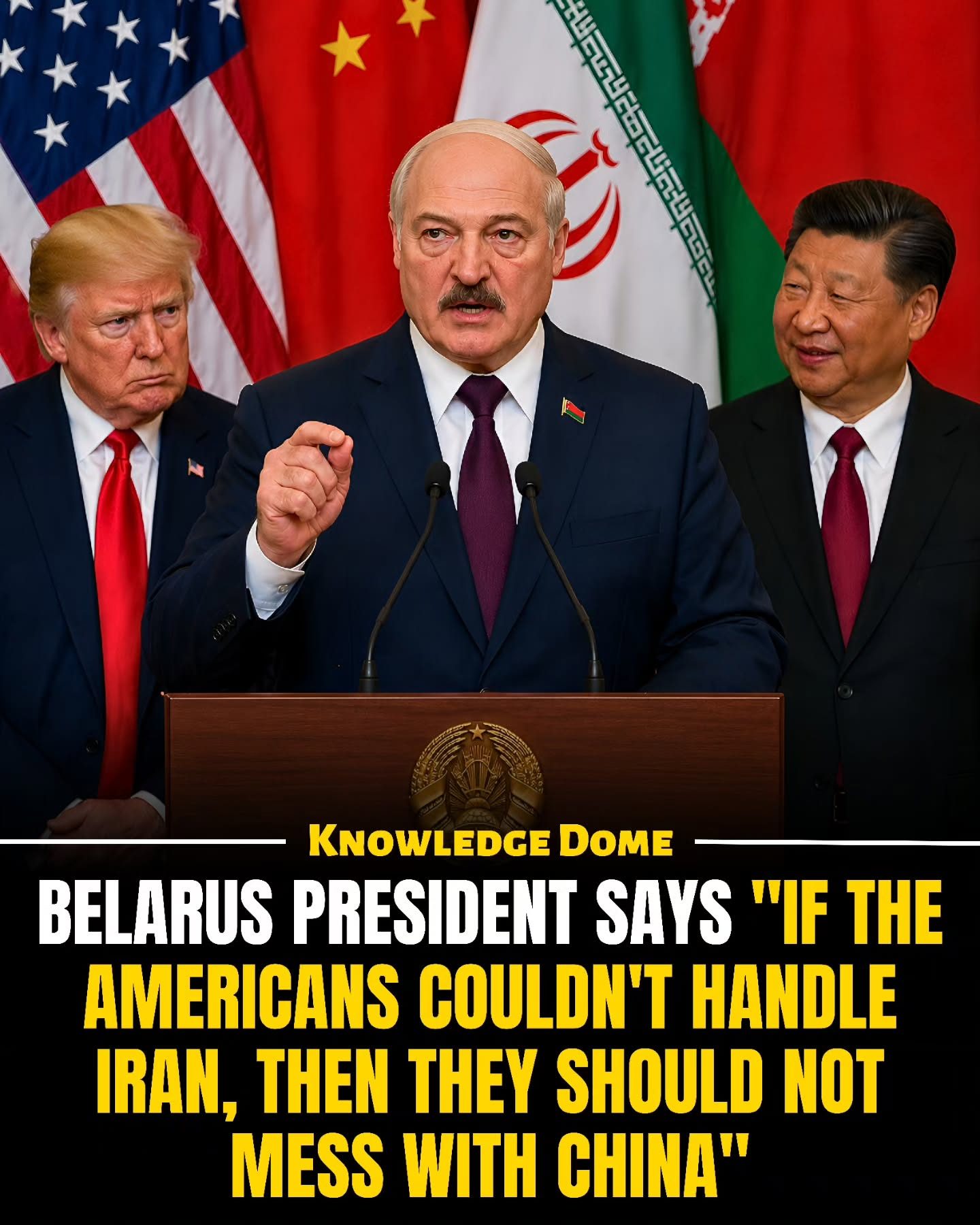
Belarusian President Lukashenko's Comments on U.S. Power and Global Influence
Belarusian President Alexander Lukashenko made striking comments about the United States' power and influence in a recent TV interview. During the discussion, he addressed the rising tensions between the United States and Iran, offering a perspective on America's ability to control global situations.
Context / Why This Matters
Lukashenko's remarks come at a time when geopolitical tensions are high, with several hotspots around the world drawing significant international attention. Understanding the nuances of power dynamics between major world players, such as the United States, China, and Iran, is crucial for grasping the current global political landscape.
Main Discussion
The Iran Crisis and American Power
Lukashenko asserted that the United States is not as powerful as many believe. He pointed to America's struggles to control the situation in Iran as evidence that Washington's influence is not omnipotent. This perspective challenges the common perception of the U.S. as an all-powerful global actor, suggesting instead that the country faces significant limitations in its ability to assert dominance in international affairs.
His specific reference to the Iran crisis highlights a critical moment in recent geopolitics. Lukashenko's view is that the ongoing issues between the United States and Iran demonstrate that American power is not as strong as many people believe. This assessment is grounded in the idea that the U.S. has struggled to bring the situation under control, despite its significant military and economic resources.
Lukashenko's Views on China
In addition to his comments on Iran, Lukashenko extended his analysis to China, stating that Beijing is a much more formidable power than Iran. He warned that if the United States found it difficult to manage the situation in Iran, a confrontation with China could be even more challenging. This raises important questions about the balance of power in the world, especially as China continues to grow in economic and military strength.
Lukashenko's warnings are aimed at the United States, suggesting that Washington should think carefully before challenging a power as significant as China. His comments imply a more nuanced view of global power dynamics, where China's growing influence is seen as a potential threat that the U.S. may not be able to easily counter.
Implications for Global Politics
The implications of Lukashenko's remarks extend beyond the specific conflicts mentioned. They suggest a world where American power is not as dominant as previously thought, and where other nations, particularly China, are rising to challenge the established global order. This shift in power dynamics could have significant consequences for international relations, trade, and security.
Practical Tips
When interpreting statements from world leaders, it's essential to consider the broader context and the motivations behind the comments. Lukashenko's remarks were made in the context of rising tensions and shifting power dynamics, and his words reflect a perspective that challenges the traditional view of American dominance.
In analyzing such statements, consider:
- Context: Understand the historical and political context in which the remarks are made. This can provide valuable insights into the motivations and objectives behind the comments.
- Source: Consider the credibility of the source. A statement from a world leader carries weight, but it’s essential to evaluate the reliability and accuracy of the information presented.
- Implications: Think about the potential implications of the comments. How might they influence global politics, military strategy, and diplomatic efforts?
Important Takeaways
- Limits of American Power: Lukashenko's comments suggest that the United States faces significant limitations in its ability to control global situations, as evidenced by its struggles with Iran.
- Rising Power Dynamics: The rise of China as a global power is a significant factor in contemporary geopolitics, and Lukashenko’s warnings highlight the potential challenges the U.S. might face in confronting Beijing.
- Global Shifts: The world is experiencing a shift in power dynamics, with traditional hegemons like the United States facing new challenges from rising powers like China.
Conclusion
Understanding the complexities of global power dynamics is crucial in today's interconnected world. Lukashenko's comments offer a perspective that challenges traditional views of American dominance and highlights the rising influence of China. As tensions continue to rise and power dynamics shift, it is essential to stay informed about the nuanced views and analyses presented by world leaders.
Watch the Reel
Questions readers ask
Why did Belarusian President Alexander Lukashenko comment on U.S. power and influence, particularly in relation to Iran?
President Lukashenko addressed this topic during a recent TV interview, highlighting the U.S.'s struggles in maintaining control over its relationship with Iran. He believes that the U.S.'s challenges with Iran are evidence of its limited global influence and power.
How does Alexander Lukashenko perceive the U.S.-China relations, especially in the context of a potential confrontation?
Lukashenko warns that a confrontation between the U.S. and China could present even greater challenges for the U.S. than its current struggles with Iran, suggesting that the U.S. may not be adequately prepared to handle such a conflict.
What are the broader implications of Lukashenko’s statements on U.S. global influence?
By questioning the U.S.'s ability to handle Iran and potentially China, Lukashenko sheds light on the shifting power dynamics in global politics. His statements encourage a reevaluation of the U.S.'s perceived dominance in international affairs.
Why is it important to understand the nuances of power dynamics between the U.S., China, and Iran?
With geopolitical tensions rising, understanding the interplay between these major world players is crucial for interpreting current global political landscape. These dynamics influence international policies, alliances, and conflicts, making it essential for a comprehensive analysis of global events.
How do Belarusian statements impact the perception of US power?
Lukashenko's comments can contribute to a changing narrative about U.S. power, potentially influencing how other nations view the U.S.'s global capabilities and resolve. These statements may also prompt other countries to assess their own strategies in dealing with U.S. involvement in international relations.
What is the significance of Lukashenko's remarks on Iran's relationship with the U.S.?
By highlighting the U.S.'s struggles with Iran, Lukashenko suggests that the U.S. may not be as dominant or influential as it appears, which could encourage other nations to reassess their positions and strategies in global affairs. This reassessment may lead to shifts in alliances and international policies.
How might Lukashenko's statements influence U.S.-China conflict?
Lukashenko's warning about the potential challenges of a U.S.-China confrontation may serve as a cautionary note for both countries. It could prompt a reevaluation of their policies and strategies, leading to a more cautious approach in handling bilateral issues and global conflicts.
Recent articles
Fresh deep dives from the latest Reels we unpacked.




Comments
Be the first to comment.