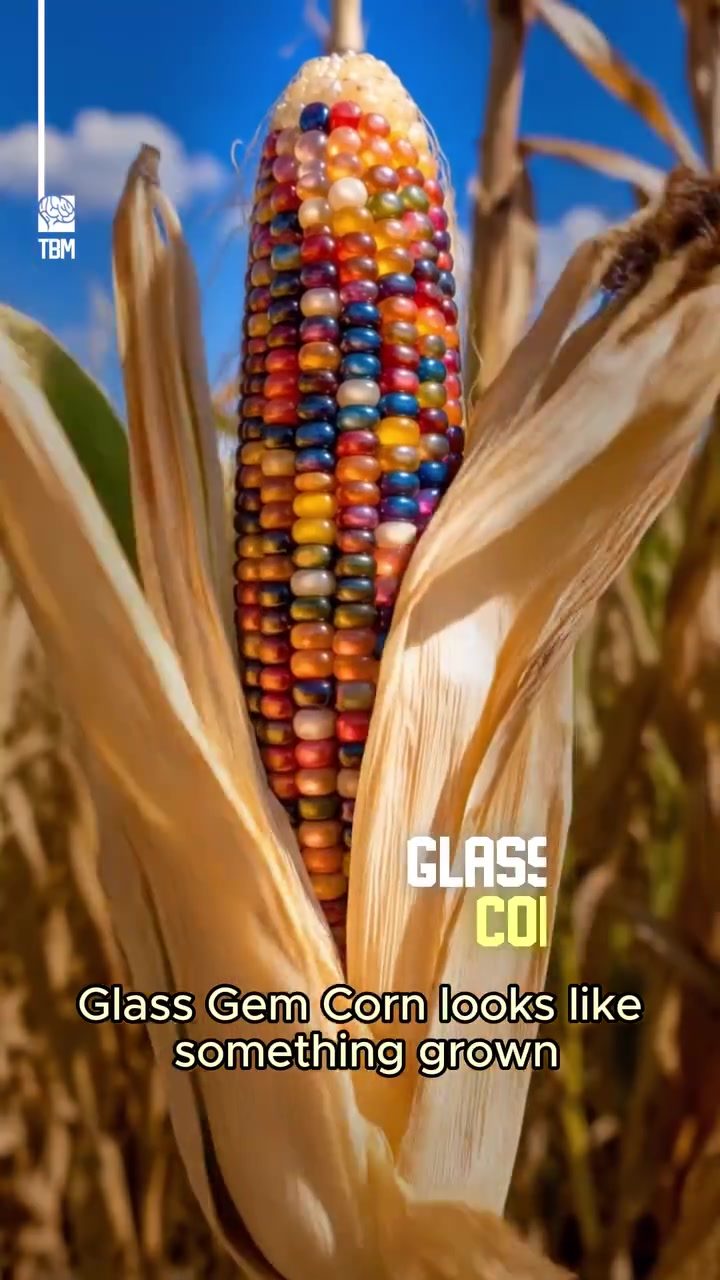
Glass Gem Corn is an eye-catching varietal known for its vibrant, kaleidoscopic kernels. Each cob is a mesmerizing blend of blue, red, purple, gold, and pink, reminiscent of a gemstone collection. This variety is a type of flint corn, meaning its kernels are harder and starchier than sweet corn. The gem-like appearance of the kernels, and the brilliant colors, are the result of careful selective breeding over generations.
Why This Matters
Glass Gem Corn is not merely a feast for the eyes, but also a testament to the power of selective breeding and genetic diversity. The corn is a living artifact of traditional farming methods, preserving ancient corn varieties and combining them to create something truly extraordinary. The history of corn is deeply intertwined with human civilization, and Glass Gem Corn offers a unique lens through which to explore that history.
What is Glass Gem Corn?
Glass Gem Corn is a unique flint corn variety, known for its colorful kernels. But what sets it apart from other varieties?
Appearance
Glass Gem Corn's most striking feature is its appearance. The kernels on a single cob can be a dazzling array of colors, with each kernel resembling a tiny, natural gemstone. The colors—ranging from blues and purples to golds and pinks—are a result of natural pigments within the kernels, not artificial dyes or genetic modifications.
Origins and History
The origins of Glass Gem Corn can be traced back to the Hopi tribe in the Southwestern United States, who have a long history of corn cultivation and selective breeding. The variety was later developed by a farmer named Carl "Doc" Fransen in Oklahoma, who, with the help of his Native American friends, created it using other corn varieties. This process of selective breeding involved combining different corn varieties over time, preserving ancient types and cultivating unique characteristics.
Genetic Diversity
Glass Gem Corn's real power lies in its genetic diversity. The variety represents a rich tapestry of genetic traits that have been preserved and enhanced through careful breeding. Unlike many modern corn varieties, which have been bred for uniformity and high yields, Glass Gem Corn celebrates the natural diversity of corn.
Uses and Preparation
Glass Gem Corn is not typically eaten fresh off the cob. The kernels are harder and starchier, making them less suitable for fresh consumption. Instead, the corn is often dried and then ground into cornmeal. This cornmeal can be used in a variety of traditional and modern recipes, from cornbread to tortillas.
Drying and Preservation
One of the key advantages of Glass Gem Corn is its ability to be dried and preserved. After harvest, the corn can be dried to remove moisture, which extends its shelf life. Drying also enhances the corn's flavor and makes it easier to grind into cornmeal.
The dried corn can also be used to make a variety of corn-based products, such as:
- Popcorn: The corn can be popped like regular popcorn. The kernels will have a unique flavor and color, adding a vibrant touch to your snacks.
- Flour: Ground into a fine flour, Glass Gem Corn can be used to make a variety of baked goods, from bread to pancakes.
- Cornmeal: Coarse ground cornmeal can be used in traditional dishes, adding a unique texture and flavor.
Nutritional Profile
While Glass Gem Corn is primarily known for its stunning appearance and historical significance, it also offers some nutritional benefits. Like other corn varieties, it is rich in carbohydrates, fiber, and various plant compounds. Its colorful pigments, such as anthocyanins and carotenoids, may add antioxidant variety to your diet.
However, it is important to note that Glass Gem Corn's nutritional profile is similar to that of regular corn. It is not dramatically stronger in terms of nutrients, but its real power lies in its genetic diversity, beauty, and history.
Practical Tips
If you're interested in growing Glass Gem Corn, here are some practical tips to get you started:
Growing Conditions
Glass Gem Corn thrives in well-drained soil with plenty of sunlight. It is relatively hardy and can tolerate a range of conditions, making it suitable for many climates. Proper soil preparation and fertilization are essential for a bountiful harvest.
Harvesting and Storage
Harvest the corn when the husks are dry and the kernels are hard. Remove the husks and allow the corn to dry thoroughly. After drying, store the corn in a cool, dry place. Proper storage will help preserve the corn's quality and extend its shelf life.
Important Takeaways
Glass Gem Corn is more than just a unique-looking varietal—it is a living testament to the power of selective breeding and the beauty of natural genetic diversity. Its vibrant, gem-like kernels are a product of centuries of careful cultivation and preservation. While it is not dramatically different in nutritional value from regular corn, its visual appeal and historical significance make it a valuable addition to any garden or kitchen.
Conclusion
Glass Gem Corn is a fascinating and beautiful variety that showcases the best of nature's artistry and human ingenuity. Its vibrant colors, rich history, and versatile uses make it a standout among corn varieties. By growing and using Glass Gem Corn, you are not only adding a unique element to your culinary repertoire but also participating in a long tradition of corn cultivation and preservation.
Watch the Reel
Questions readers ask
What makes the colors of Glass Gem Corn so vibrant?
The vibrant colors of Glass Gem Corn are due to a combination of natural pigments and selective breeding. Over generations, farmers have chosen and cultivated the most striking kernels, enhancing and preserving the brilliant colors we see today.
Is Glass Gem Corn a type of sweet corn?
No, Glass Gem Corn is a variety of flint corn. Unlike sweet corn, it has harder, starchier kernels. This makes Glass Gem Corn more suitable for grinding into flour or for decorative purposes, rather than eating fresh off the cob.
Why are the kernels of Glass Gem Corn so hard?
The kernels of Glass Gem Corn are hard because it is a type of flint corn. Flint corn varieties have a tough outer layer and are higher in starch content, making them more durable and suitable for long-term storage and grinding into flour.
What role does selective breeding play in Glass Gem Corn's development?
Selective breeding has been crucial in developing the unique appearance of Glass Gem Corn. By carefully choosing and cultivating kernels with the most desirable traits and colors, farmers have shaped the corn to showcase a stunning array of natural colors.
How does Glass Gem Corn relate to traditional farming methods?
Glass Gem Corn is a product of traditional farming methods, preserving and combining ancient corn varieties. It showcases the rich history of corn and human civilization, as well as the art of natural selection and breeding.
Can Glass Gem Corn be eaten like regular corn?
While Glass Gem Corn can be eaten, its hard kernels and starchier texture make it less suitable for eating fresh compared to sweet corn. Instead, it is often dried and used for decoration, grinding into flour, or for popcorn.
What is the significance of Glass Gem Corn's genetic diversity?
The genetic diversity of Glass Gem Corn is significant because it represents a wide range of natural corn colors and kernels. This diversity is a result of traditional breeding methods and the preservation of ancient corn varieties, contributing to the rich history and future of corn cultivation.
Related deep dives
Similar reads based on topic and creator.

Recent articles
Fresh deep dives from the latest Reels we unpacked.




Comments
Be the first to comment.