Battery Mineral Deficit: Understanding the Supply Challenges
The demand for key battery minerals such as lithium, cobalt, nickel, and manganese is set to surge dramatically in the coming decade. By 2034, lithium demand alone is projected to more than triple, necessitating over $40 billion in investment to meet supply needs. This significant increase is driven by the growing adoption of electric vehicles (EVs) and other renewable energy technologies, which rely heavily on these minerals.
Why This Matters
The projected deficit in battery minerals poses a critical challenge for the renewable energy sector. The increasing demand for EVs and renewable energy storage solutions means that the supply of essential minerals must keep pace. However, current projections indicate that the supply will fall short, potentially leading to significant shortages and increased costs. This situation requires careful planning and strategic investment to ensure a stable supply chain.
The Key Minerals in Demand
Lithium
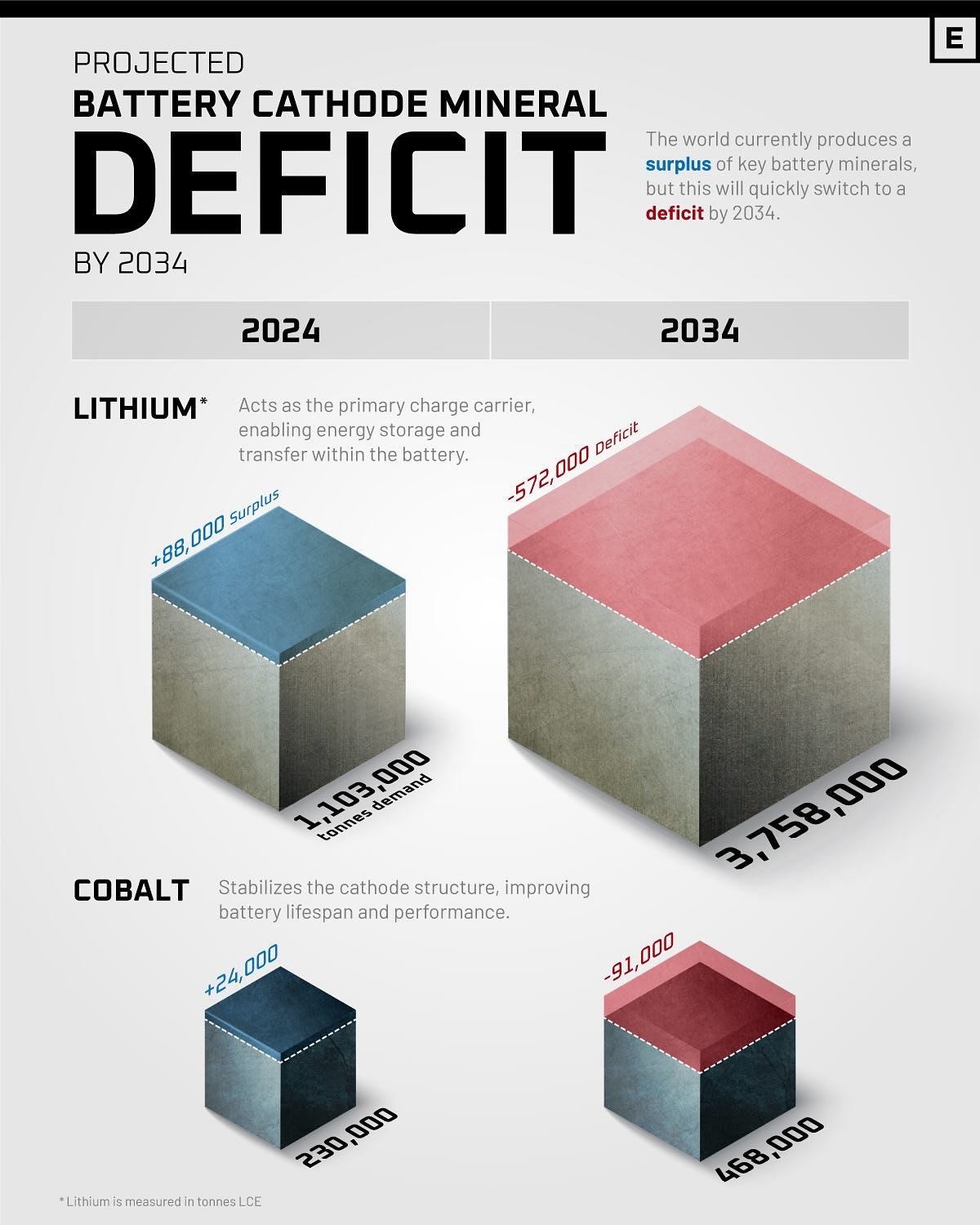
Lithium is a cornerstone of modern battery technology, particularly in lithium-ion batteries used in EVs and energy storage systems. As of 2024, there is a surplus of over +88,000 tonnes, but by 2034, this is expected to shift to a deficit of -572,000 tonnes. The demand is projected to reach 1,103,000 tonnes, far outstripping the current supply.
Cobalt
Cobalt is another critical component in rechargeable batteries, known for its ability to enhance battery performance. The surplus of 24,000 tonnes in 2024 is expected to dwindle to a deficit of 91,000 tonnes by 2034. With a demand for 230,000 tonnes, the supply gap for cobalt will need to be addressed urgently.
Nickel
Nickel is essential for producing high-performance batteries, especially for EVs that require longer ranges and higher power densities. In 2024, there is a surplus of 117,000 tonnes, but by 2034, this will turn into a significant deficit of 839,000 tonnes. The demand for nickel is projected to be 3,440,000 tonnes, necessitating new mining and recycling initiatives.
Manganese
Manganese is used in various battery applications, including as a component in cathode materials. Currently, there is a surplus of 11,000 tonnes, but this will transition into a deficit of 307,000 tonnes by 2034. The demand for manganese is expected to reach 119,000 tonnes, highlighting the need for expanded production capabilities.
Addressing the Deficit
Investment in Mining
One of the primary solutions to the mineral deficit is increased investment in mining operations. This includes both new mining projects and the expansion of existing ones. Companies and governments need to collaborate to identify and develop new mineral resources. However, this must be done responsibly, considering environmental and social impacts.
Recycling and Circular Economy
A critical aspect of addressing the mineral deficit is improving recycling rates and promoting a circular economy. Recycling used batteries can recover valuable minerals, reducing the need for new mining operations. Advances in recycling technology and policies that encourage recycling can play a significant role in closing the supply gap.
Technological Innovation
Innovation in battery technology can also help alleviate the mineral deficit. Researchers are exploring new battery chemistries that rely less on critical minerals or use alternative materials. For example, lithium-sulfur and solid-state batteries are emerging as promising alternatives that could reduce the demand for traditional battery minerals.
Diversifying Supply Chains
Diversifying the supply chain can mitigate the risks associated with reliance on a few key producers. By sourcing minerals from multiple regions, companies can ensure a more stable supply and reduce the impact of geopolitical risks. This involves investing in mining operations in different countries and fostering international cooperation.
Practical Tips
For those invested in the renewable energy sector, whether as consumers, companies, or policymakers, here are some practical steps to consider:
- Stay Informed: Keep track of the latest developments in battery technology and mineral supply. Resources from organizations like Benchmark Mineral Intelligence can provide valuable insights.
- Support Sustainable Practices: Encourage and invest in mining practices that prioritize environmental and social responsibility.
- Promote Recycling: Advocate for policies and programs that enhance battery recycling and reuse.
- Diversify Supply Sources: Work with suppliers from different regions to build a resilient supply chain.
- Invest in Innovation: Support research and development in new battery technologies that can reduce reliance on critical minerals.
Important Takeaways
The projected deficit in key battery minerals is a significant challenge for the renewable energy sector. Addressing this issue requires a multi-faceted approach, including increased investment in mining, improved recycling, technological innovation, and diversified supply chains. Stakeholders must collaborate to ensure a stable and sustainable supply of these critical resources.
Conclusion
The future of renewable energy and electric vehicles hinges on the availability of essential battery minerals. By 2034, the demand for lithium, cobalt, nickel, and manganese is set to outstrip supply, necessitating strategic investment and innovative solutions. Understanding the factors driving this deficit and taking proactive steps can help secure a sustainable future for the energy sector.
Watch the Reel
Questions readers ask
What are the primary battery minerals facing a deficit?
The primary battery minerals facing a significant deficit are lithium, cobalt, and nickel, with lithium demand alone projected to triple by 2034. Additionally, manganese is also expected to face supply challenges.
What is driving the surge in demand for battery minerals?
The surge in demand for battery minerals is primarily driven by the growing adoption of electric vehicles (EVs) and the increasing use of renewable energy technologies, which require these minerals for their batteries.
Why is the supply of battery minerals a critical challenge?
The supply of battery minerals is a critical challenge because the projected demand far outstrips the current and near-future supply capabilities. This imbalance can lead to increased costs and potential disruptions in the production of EVs and renewable energy solutions.
What investments are needed to meet future battery mineral supply needs?
To meet the projected supply needs, particularly for lithium, over $40 billion in investment is required by 2034. This investment is necessary to develop new mining operations, improve extraction technologies, and enhance recycling processes.
How will the deficit in battery minerals affect the cost of electric vehicles and renewable energy technologies?
The deficit in battery minerals is likely to cause an increase in the costs associated with producing electric vehicles and renewable energy technologies. This cost increase can make these technologies less accessible and may slow down their adoption.
What are some potential solutions to the battery mineral deficit?
Potential solutions to the battery mineral deficit include increasing mining and extraction efforts, investing in recycling and reusing materials, and exploring alternative battery technologies that require fewer of these minerals.
Recent articles
Fresh deep dives from the latest Reels we unpacked.




Comments
Be the first to comment.