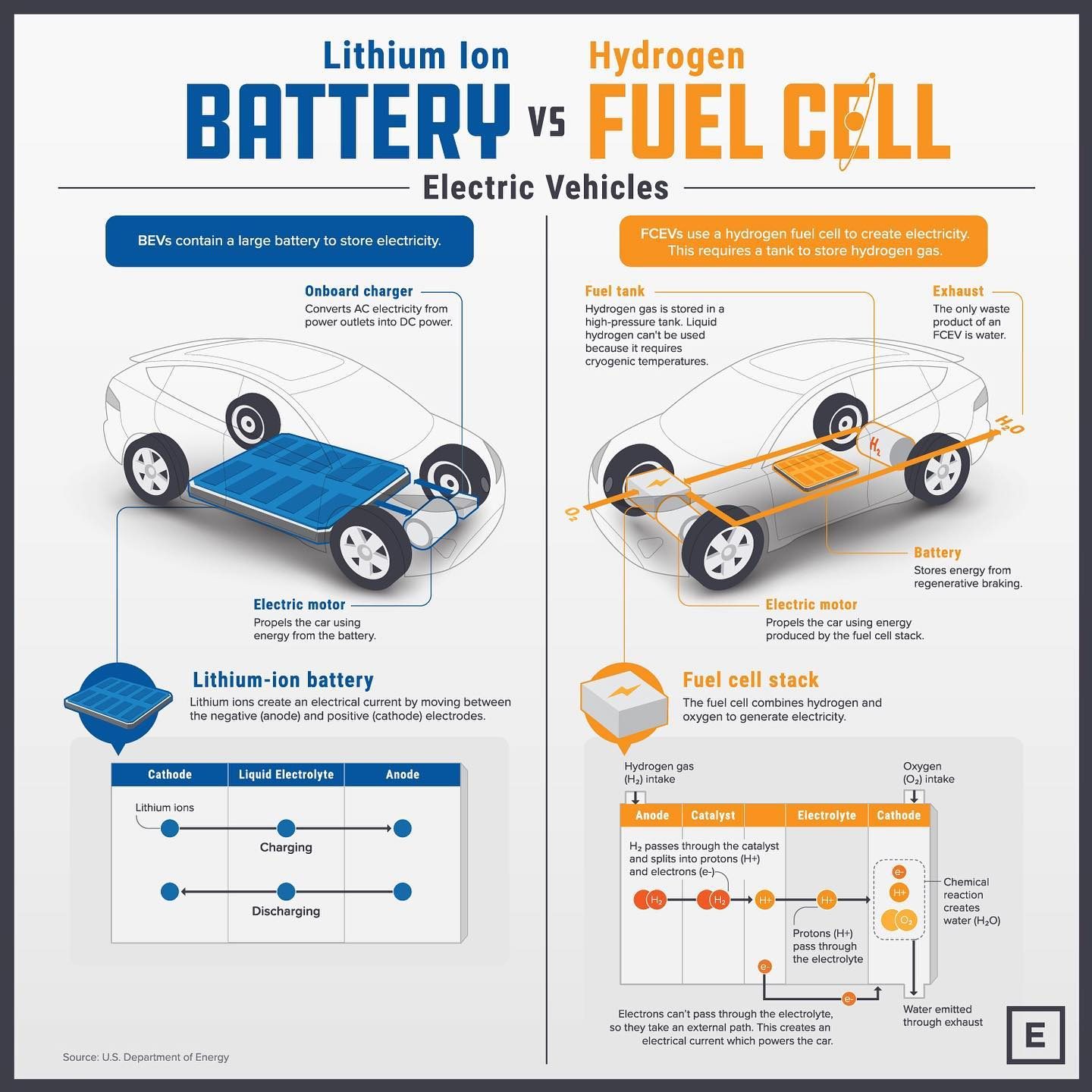
Battery-Powered Electric Vehicles (BEVs) vs. Fuel Cell Electric Vehicles (FCEVs)
Since the introduction of the Nissan Leaf (2010) and Tesla Model S (2012), the automotive industry has seen a significant shift towards battery-powered electric vehicles (BEVs). This trend is accelerating rapidly, with China selling 3 million BEVs in 2021, up from 1 million the previous year. In the U.S., the number of available BEV models is expected to double by 2024. However, meeting global climate targets will require a substantial increase in mineral use, which could strain supply. This is where fuel cell electric vehicles (FCEVs) come into play as an alternative solution for decarbonizing transportation.
Why This Matters
The push for electric vehicles (EVs) is driven by the urgent need to reduce greenhouse gas emissions and combat climate change. While BEVs have gained significant traction, they are not the only solution. FCEVs, which use hydrogen fuel cells to generate electricity, offer a viable alternative with unique advantages and challenges. Understanding the differences between BEVs and FCEVs can help consumers and policymakers make informed decisions about the future of transportation.
Battery-Powered Electric Vehicles (BEVs)
How BEVs Work
BEVs use large batteries to store electricity. These batteries are typically lithium-ion, which store energy through the movement of lithium ions between the anode (negative electrode) and the cathode (positive electrode). During discharging, the stored energy is converted into electrical current to power the electric motor, propelling the car. When the battery is depleted, it can be recharged by plugging the vehicle into an external power source.
Advantages of BEVs
- Zero Emissions: BEVs produce no tailpipe emissions, making them an eco-friendly choice.
- Energy Efficiency: BEVs are highly energy-efficient, converting 59%–62% of the energy from the grid to power at the wheels. This is more efficient than internal combustion engines, which only convert about 17%-21% of the energy stored in gasoline.
- Renewable Energy: BEVs can be charged using renewable energy sources, further reducing their environmental impact.
- Cost Savings: Over time, BEVs can be cheaper to operate due to lower fuel and maintenance costs.
Challenges of BEVs
- Range Anxiety: The distance a BEV can travel on a single charge is often less than that of a conventional vehicle, and charging infrastructure can be lacking in some areas.
- Charging Time: Recharging a BEV can take significantly longer than refueling a conventional vehicle, although fast-charging technologies are improving.
- Battery Lifespan: The lifespan and performance of lithium-ion batteries can degrade over time, which can affect the long-term value of the vehicle.
- Mineral Supply: The increasing demand for the minerals needed to make lithium-ion batteries could lead to supply chain issues and increased costs.
Fuel Cell Electric Vehicles (FCEVs)
How FCEVs Work
FCEVs use hydrogen fuel cells to generate electricity. Hydrogen gas (H₂) is stored in a high-pressure tank and combined with oxygen (O₂) from the air in a fuel cell stack. The chemical reaction between hydrogen and oxygen produces electricity, which powers the electric motor. The only byproduct of this reaction is water (H₂O), making it a clean and efficient process.
Advantages of FCEVs
- Quick Refueling: FCEVs can be refueled in a similar amount of time as conventional vehicles, typically taking around 3-5 minutes.
- Long Range: FCEVs can travel longer distances on a single tank of hydrogen, often exceeding 300 miles.
- Zero Emissions: Like BEVs, FCEVs produce no tailpipe emissions, making them environmentally friendly.
- Energy Efficiency: FCEVs are highly energy-efficient, converting about 45%-60% of the energy content of hydrogen to power at the wheels.
Challenges of FCEVs
- Hydrogen Infrastructure: The distribution and availability of hydrogen fueling stations are currently limited, making it difficult for FCEVs to gain widespread adoption.
- Hydrogen Production: Producing hydrogen can be energy-intensive and may involve the use of fossil fuels, potentially offsetting the environmental benefits of FCEVs.
- Cost: FCEVs are generally more expensive than BEVs due to the high cost of fuel cell technology and hydrogen production.
Practical Tips for Choosing Between BEVs and FCEVs
For Daily Commuters
If you have access to charging infrastructure at home or work, a BEV might be the right choice. With a range of up to 300 miles on a single charge, a BEV can easily handle daily commuting needs. Additionally, the lower operating costs and potential for renewable energy charging make BEVs an attractive option.
For Long-Distance Travelers
FCEVs are ideal for those who frequently travel long distances. With a refueling time similar to conventional vehicles and a range exceeding 300 miles, FCEVs offer the convenience of traditional gasoline cars with the environmental benefits of electric vehicles.
For Early Adopters
If you are an early adopter of new technologies and comfortable with the limitations of current infrastructure, an FCEV could be an exciting choice. Keep in mind that the hydrogen fueling infrastructure is still developing, so this may come with some inconveniences.
Important Takeaways
- Both BEVs and FCEVs offer significant environmental benefits compared to conventional vehicles.
- BEVs have a well-established charging infrastructure and are more affordable, making them a practical choice for many consumers.
- FCEVs provide a longer range, faster refueling, and are well-suited for long-distance travel, although they require a more developed hydrogen infrastructure.
- The choice between a BEV and an FCEV depends on individual driving habits, access to charging or refueling infrastructure, and personal preferences.
Conclusion
The shift towards electric vehicles is a critical step in reducing greenhouse gas emissions and combating climate change. BEVs have become the primary focus of the automotive industry, but FCEVs offer a promising alternative with unique advantages. As the infrastructure for both technologies continues to develop, consumers and policymakers will have more options for decarbonizing transportation. By understanding the differences and benefits of both BEVs and FCEVs, we can make informed decisions that support a sustainable future.
Watch the Reel
Questions readers ask
What are the main differences between battery electric vehicles (BEVs) and fuel cell electric vehicles (FCEVs)?
The primary difference lies in their power source. BEVs use lithium batteries to store energy, while FCEVs generate electricity using hydrogen and oxygen through a chemical reaction. This means BEVs need to be plugged in to recharge, whereas FCEVs can be refueled quickly, similar to conventional cars.
What are the advantages of hydrogen cars over battery-powered electric vehicles?
Hydrogen cars, or FCEVs, offer faster refueling times and a longer driving range compared to BEVs. They can also operate in extremely cold temperatures more efficiently than battery-powered vehicles. Additionally, they produce only water vapor as a byproduct, making them a true zero-emission vehicle.
How does the infrastructure for electric vehicle charging compare to hydrogen fueling stations?
Currently, electric vehicle charging stations are more widely available than hydrogen fueling stations. However, the infrastructure for hydrogen is growing. As of now, electric cars are more convenient for daily use due to the extensive charging network, but this could change with increased hydrogen infrastructure investment.
What are the environmental impacts of battery-powered electric vehicles and hydrogen cars?
Both BEVs and FCEVs produce zero tailpipe emissions, but their overall environmental impact differs. BEVs rely on lithium and cobalt, which have mining and supply chain impacts. FCEVs, on the other hand, depend on hydrogen production, which can be environmentally friendly if sourced from renewable energy, but less so if produced from natural gas.
Why are fuel cell electric vehicles considered an alternative solution for decarbonizing transportation?
FCEVs are seen as an alternative because they address some of the limitations of BEVs, such as long charging times and range anxiety. They also have the potential to use hydrogen produced from renewable sources, further reducing their carbon footprint. This makes them a viable option for achieving climate goals in addition to battery-powered electric vehicles.
How do fuel cells work in electric vehicles?
Fuel cells in electric vehicles generate electricity through a chemical reaction between hydrogen and oxygen. This process produces electrical energy, which powers the vehicle, and water vapor as a byproduct. Unlike batteries, fuel cells do not store energy but continuously produce it as long as hydrogen is supplied.
What challenges does the fuel cell industry face compared to the electric car technology?
The fuel cell industry faces challenges such as the high cost of fuel cell technology, the need for a extensive hydrogen infrastructure, and the lack of widespread consumer awareness. Additionally, producing hydrogen efficiently and sustainably is a technical and economic hurdle that needs to be overcome. In comparison, electric car technology has made significant strides in battery efficiency and charging infrastructure.
Related deep dives
Similar reads based on topic and creator.


Recent articles
Fresh deep dives from the latest Reels we unpacked.




Comments
Be the first to comment.