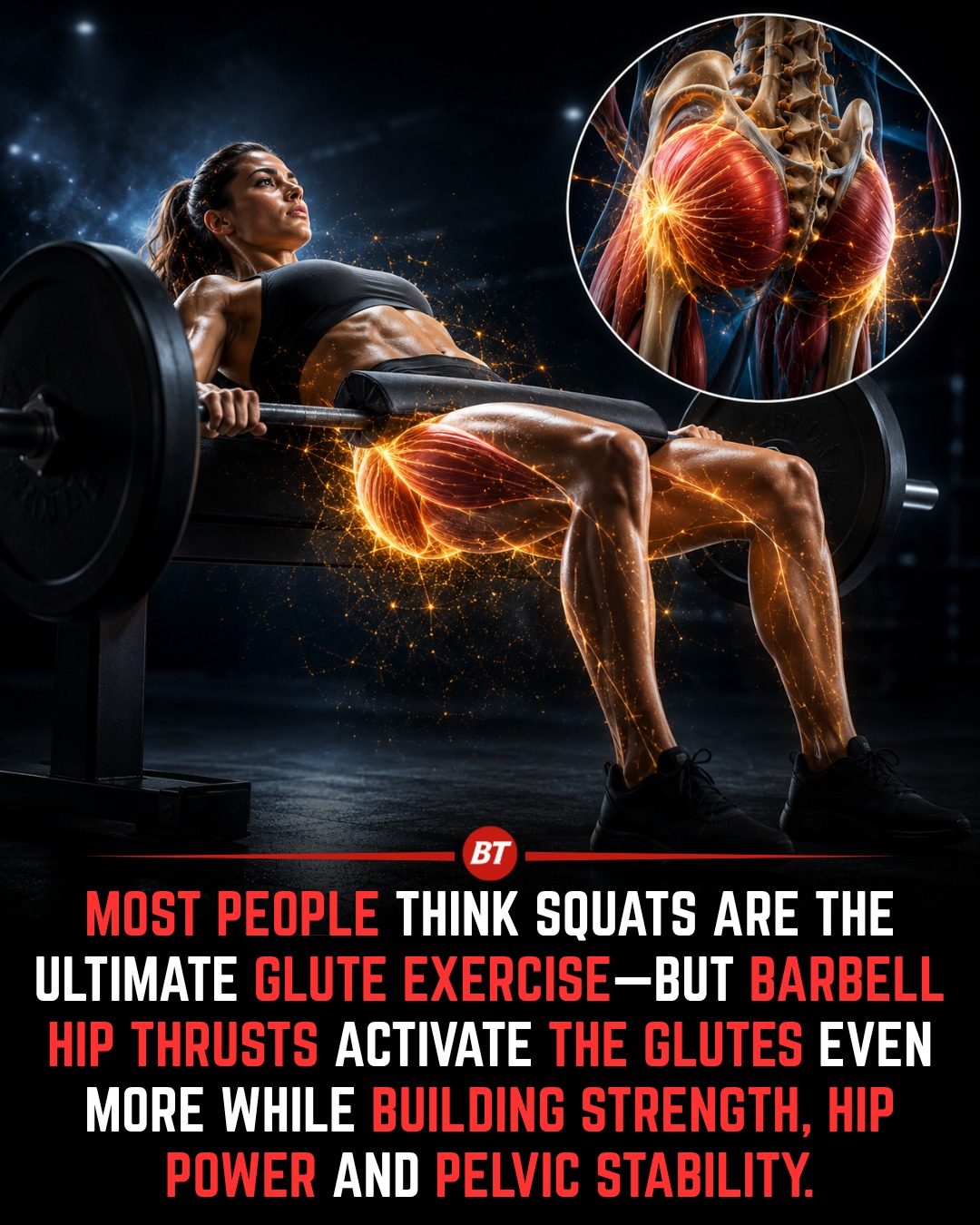
Barbell Squats vs. Hip Thrusts: Understanding Glute Activation
The gluteus maximus, the largest muscle in the human body, plays a crucial role in hip extension—a movement essential for standing, climbing, and explosive actions like sprinting and jumping. While barbell squats are a staple in many workout routines, exercises designed around hip extension, particularly barbell hip thrusts, offer unique benefits for glute development.
Context / Why this matters
Glute strength is vital for overall athletic performance and daily activities. The gluteus maximus is not just the body's largest muscle; it also generates powerful hip extension, which is key in movements that involve pushing off the ground, such as running and jumping. Therefore, exercises that effectively target and activate this muscle can significantly enhance performance and reduce the risk of injury.
Main discussion
The Role of the Gluteus Maximus
The gluteus maximus is responsible for powerful hip extension, a critical movement for various activities. This muscle activates during actions that involve pushing off the ground, such as standing up from a seated position, climbing stairs, and explosive movements like sprinting and jumping. Given its role, exercises that specifically target the gluteus maximus can lead to better performance and reduced injury risk. This explains the emphasis on hip extension exercises like barbell hip thrusts.
Barbell Squats vs. Barbell Hip Thrusts
While barbell squats are effective for overall lower-body strength, they distribute the workload across multiple muscles, including the glutes, quadriceps, hamstrings, and core. This distribution means that the gluteus maximus may not be under constant, high tension throughout the movement.
In contrast, barbell hip thrusts focus more intensely on the gluteus maximus. This exercise keeps the muscle under high tension, especially during the top portion of the movement, where it can generate its greatest force. Several studies, including research published in the Journal of Applied Biomechanics, have shown that barbell hip thrusts produce greater muscle activation in the gluteus maximus than traditional back squats.
Benefits of Barbell Hip Thrusts
One of the primary benefits of barbell hip thrusts is their ability to activate the gluteus maximus more effectively than squats. This activation is crucial for developing stronger glutes, which in turn improves sprint performance, jumping ability, and overall hip power.
Strength coaches often incorporate hip thrusts into training programs to enhance glute strength and overall hip power. The high muscle activation during hip thrusts can lead to better muscular development and improved performance in activities that require powerful hip extension.
Practical tips
-
Incorporate Hip Thrusts into Your Routine: Perform barbell hip thrusts 1–2 times per week, focusing on a full range of motion. Squeeze your glutes at the top of the movement for 1–2 seconds to maximize muscle activation.
-
Combine Exercises: Don't replace squats entirely with hip thrusts. Deep squats remain one of the best lower-body exercises for building strength and muscle because they train multiple muscle groups at once. Combining both exercises can lead to more balanced development and improved overall fitness.
-
Focus on Form: Ensure proper form during both barbell squats and hip thrusts. Correct technique helps to target the right muscles and reduces the risk of injury. For hip thrusts, keep your shoulders on the bench, feet flat on the floor, and maintain a neutral spine.
-
Progressive Overload: Gradually increase the weight or resistance as you get stronger. This progressive overload is key to continuous muscle development and strength gains.
Important takeaways
-
Gluteus Maximus Activation: Barbell hip thrusts activate the gluteus maximus more effectively than barbell squats, making them a valuable addition to any strength training routine.
-
Muscle Function: Understanding the role of the gluteus maximus in hip extension helps in selecting the right exercises for targeted muscle development.
-
Combination Approach: Combining barbell squats and hip thrusts can provide a more comprehensive lower-body workout, targeting multiple muscle groups and improving overall fitness and performance.
Conclusion
Whether you're an athlete looking to improve performance or someone seeking to enhance daily functional strength, incorporating exercises that effectively target the gluteus maximus is essential. Barbell hip thrusts offer a unique advantage by focusing on hip extension, which is crucial for powerful and efficient movements. By combining hip thrusts with traditional squats, you can develop stronger, more balanced lower-body muscles, leading to better overall fitness and performance.
Watch the Reel
Questions readers ask
What is the primary difference in muscle engagement between hip thrusts and squats?
Hip thrusts primarily focus on the gluteus maximus, concentrating the workload on the gluteal muscles. Conversely, squats engage multiple muscle groups, including the quadriceps, hamstrings, and glutes, distributing the effort more broadly.
Why are barbell hip thrusts considered beneficial for athletic performance?
Barbell hip thrusts target the gluteus maximus, enhancing hip extension. This strengthens the muscles used in explosive movements like sprinting and jumping, thereby improving overall athletic performance.
Can you replace squats with hip thrusts in a workout routine?
While hip thrusts offer unique benefits for glute development, they should not entirely replace squats. Squats provide a comprehensive lower-body workout, engaging multiple muscle groups. Incorporating both exercises into a routine ensures balanced muscle development.
How do squats and hip thrusts differ in terms of muscle activation?
Squats engage the quadriceps and hamstrings more significantly, making them a compound exercise. Hip thrusts, on the other hand, are more isolated, focusing specifically on the gluteus maximus, providing a more targeted approach to glute development.
What are some additional benefits of including hip thrusts in a workout routine?
Including hip thrusts can lead to improved posture, reduced risk of lower back pain, and increased power in movements involving hip extension. They are particularly useful for activating the gluteus maximus, which is essential for daily activities and athletic performance.
How can barbell hip thrusts be incorporated into a glute workout routine?
To incorporate hip thrusts into a glute workout, start by performing 3-4 sets of 10-15 reps, with a weight that challenges your glutes but allows for proper form. This can be done 1-2 times a week, alongside other glute exercises and lower-body workouts for comprehensive muscle development.
Are there any variations of hip thrusts that can target the glutes differently?
Yes, variations such as single-leg hip thrusts can further isolate the gluteus maximus by forcing each leg to work independently. This variation can help address muscle imbalances and enhance overall glute strength and stability.
Related deep dives
Similar reads based on topic and creator.




Recent articles
Fresh deep dives from the latest Reels we unpacked.




Comments
Be the first to comment.