The Alarming Attack in Balochistan: A Detailed Look at the Incident and Its Consequences
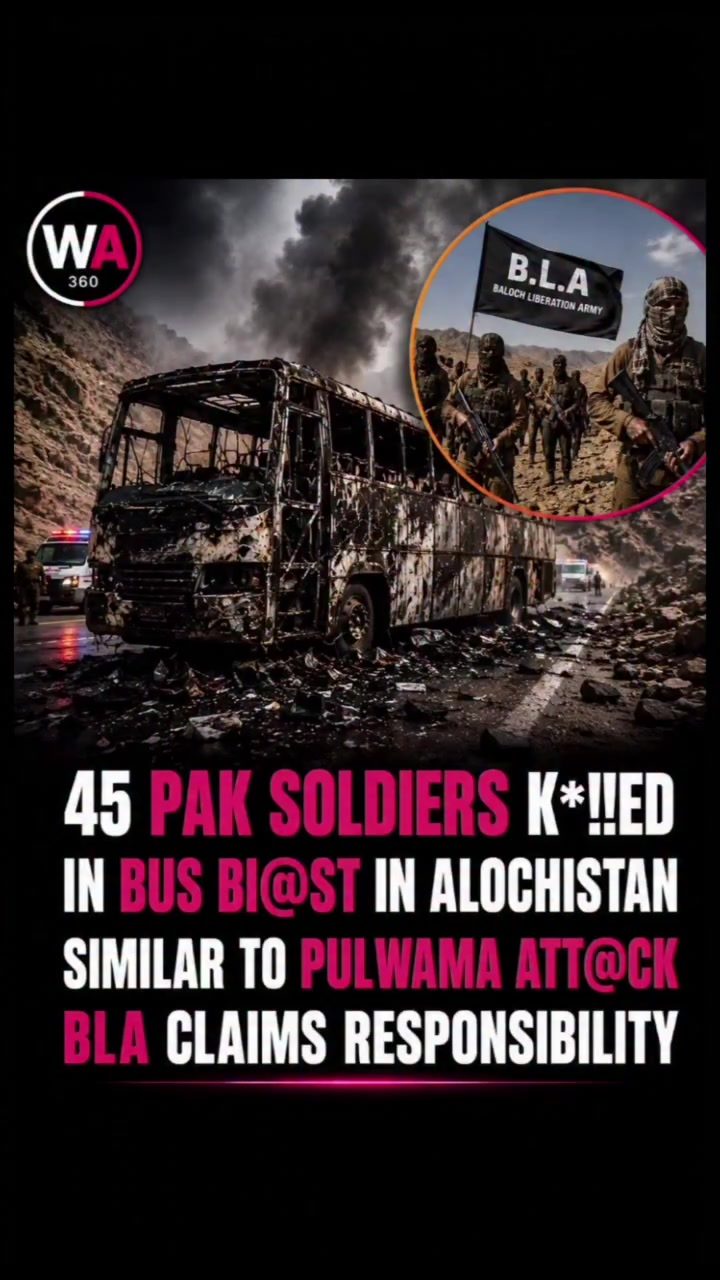
The recent attack in Balochistan, Pakistan, has sent shockwaves through the region, drawing immediate comparisons to the 2019 Pulwama incident in Kashmir. The devastating explosion targeted a bus carrying Pakistani security forces, resulting in the tragic loss of 45 soldiers. The Baloch Liberation Army (BLA) has claimed responsibility for the attack, shedding light on the escalating security crisis and geopolitical tensions in the area.
Why This Matters
Balochistan, a province in southwestern Pakistan, has long been a hotspot for separatist movements and insurgent activities. The attack underscores the ongoing conflict in the region, which has significant implications for both Pakistan and its neighboring countries. Understanding the context and consequences of this incident is crucial for grasping the broader geopolitical landscape of South Asia.
The Pulwama Incident: A Point of Comparison
To fully appreciate the gravity of the Balochistan attack, it is essential to recall the Pulwama incident. In February 2019, a suicide bomb attack on a convoy of Indian security forces in Pulwama, Kashmir, resulted in the deaths of 40 Indian soldiers. The attack was carried out by a Pakistan-based militant group, leading to severe diplomatic and military tensions between India and Pakistan. The recent attack in Balochistan echoes these events, highlighting the region's persistent instability and the potential for further escalation.
The Baloch Liberation Army's Role
The BLA is a separatist group advocating for an independent Balochistan. The group has been active for decades, engaging in various forms of insurgency, including attacks on Pakistani security forces and infrastructure. The BLA's claim of responsibility for the recent attack highlights the group's continued capacity to conduct large-scale, high-impact operations, despite Pakistani security forces' efforts to suppress their activities.
The Geopolitical Implications
The attack in Balochistan comes at a time of heightened geopolitical tensions in the region. Pakistan's ongoing conflict with separatist groups, particularly in Balochistan and Kashmir, has significant implications for its internal stability and external relations. The attack also raises concerns about the potential for further violence and the possibility of international involvement, given the region's strategic importance.
Understanding the Attack
The Target and the Method
The attack targeted a bus carrying Pakistani security forces, a tactic reminiscent of previous insurgent operations in the region. The use of a blast to attack the bus suggests a level of planning and execution that is characteristic of organized militant groups. The choice of target—security forces—is also significant, as it indicates a deliberate attempt to undermine the Pakistani state's security apparatus and strike at its symbolic heart.
The Casualties
The loss of 45 soldiers is a stark reminder of the human cost of the conflict in Balochistan. It also underscores the BLA's capacity to inflict significant damage on Pakistani security forces. The high number of casualties suggests that the attack may have involved a substantial explosive device, highlighting the group's access to sophisticated weaponry and explosives.
Practical Tips for Staying Informed
Gaining a comprehensive understanding of the situation in Balochistan and the broader geopolitical landscape requires a nuanced approach. Here are some practical tips for staying informed:
Follow Reputable News Sources
Rely on credible news outlets and analysts to get accurate and up-to-date information about the situation in Balochistan. Avoid sensationalized reporting and seek out sources that provide in-depth analysis and context.
Contextualize the Information
Understand the historical context and the broader geopolitical landscape. The attack in Balochistan is part of a larger narrative of conflict and instability in the region. Familiarize yourself with the key players, including the BLA, Pakistani security forces, and other relevant actors.
Analyze the Implications
Consider the potential implications of the attack for regional stability and international relations. The conflict in Balochistan has broader ramifications, affecting not just Pakistan but also its neighbors and global powers.
Important Takeaways
The attack in Balochistan is a stark reminder of the ongoing conflict and instability in the region. The BLA's claim of responsibility and the comparison to the Pulwama incident highlight the persistent threat of insurgent violence and the potential for further escalation. The high number of casualties underscores the human cost of the conflict and the need for effective countermeasures.
The Need for Effective Countermeasures
Pakistan must develop and implement effective countermeasures to address the threat posed by the BLA and other separatist groups. This includes enhancing security measures, intelligence gathering, and diplomatic efforts to address the root causes of the conflict.
The Human Cost of Conflict
The loss of 45 soldiers in the attack is a tragic reminder of the human cost of conflict. It highlights the need for efforts to resolve the conflict peacefully and to support those affected by the violence.
Conclusion
The attack in Balochistan is a significant event with far-reaching implications for the region and beyond. The BLA's claim of responsibility and the comparison to the Pulwama incident underscore the persistent threat of insurgent violence and the need for effective countermeasures. By staying informed, contextualizing the information, and analyzing the implications, we can better understand the complex dynamics at play and work towards a more stable and peaceful future.
Watch the Reel
Questions readers ask
What is the significance of comparing the Balochistan blast to the 2019 Pulwama attack?
The comparison draws attention to the severity of the Balochistan blast, as the Pulwama attack was a high-profile incident that resulted in significant casualties. It also highlights that such attacks are not isolated incidents, but part of a broader pattern of violence in the region.
What is the Baloch Liberation Army (BLA) and why did they claim responsibility for the attack?
The Baloch Liberation Army (BLA) is a separatist group operating in Balochistan, Pakistan. They claimed responsibility for the attack to assert their role in the ongoing conflict and to potentially gain leverage in negotiations or to garner support for their cause.
How has the recent blast in Balochistan affected the region's tensions?
The recent blast has escalated tensions in Balochistan, drawing more attention to the region's longstanding conflict. It has also raised concerns about the effectiveness of Pakistan's security measures and the potential for further violence.
What can be expected in terms of updates and responses to the Balochistan blast?
Updates are likely to include statements from Pakistani authorities regarding the investigation and response to the attack, as well as potential statements from the BLA or other separatist groups. Expect to see increased security measures and possible retaliation from Pakistani forces.
Who were the targets of the Balochistan blast and why were they chosen?
The targets of the Balochistan blast were Pakistani security forces. They were chosen due to their role in maintaining control and combating separatist movements in the region. The BLA often targets security forces to disrupt their operations and assert their presence.
What is the current geography of the conflict in Balochistan?
The conflict in Balochistan is concentrated in the province's southwestern region of Pakistan. It involves separatist groups like the BLA, Pakistani security forces, and sometimes other militant organizations. The geography of the conflict includes remote areas, urban centers, and strategic locations like military bases and checkpoints.
What are the potential implications of the Balochistan blast for regional stability?
The blast may lead to increased instability in the region, as it could provoke further retaliatory actions and intensify the ongoing conflict. It may also impact diplomatic relations, with Pakistan potentially seeking support from allies in responding to the attack, and potentially leading to an increase in cross-border tensions.
Recent articles
Fresh deep dives from the latest Reels we unpacked.




Comments
Be the first to comment.