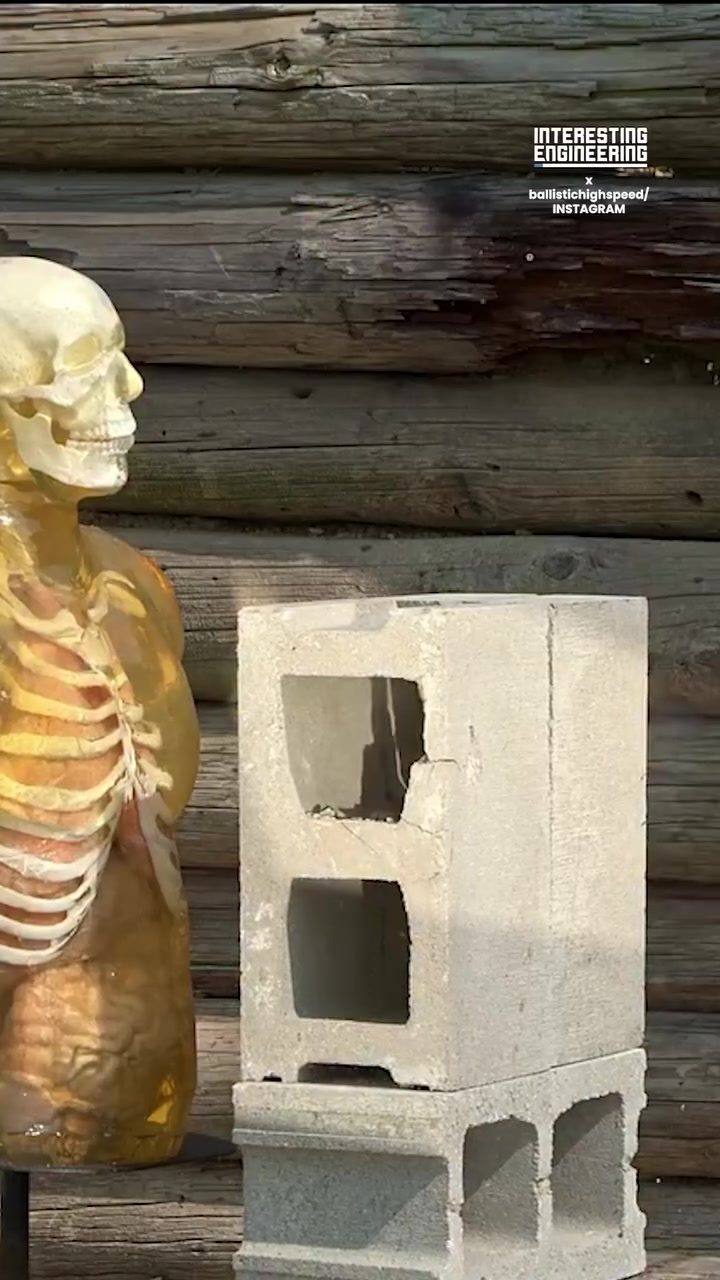
Ballistic Gel Test: Understanding Projectile Performance Through Barriers
Ballistic gel tests offer a unique perspective on how different projectiles behave when they encounter barriers, such as concrete. These tests are crucial for understanding the effectiveness of various ammunition types and the protective capabilities of different materials. The tests shown here involve firing different calibers through a concrete cinder block before impacting a ballistic gel torso. This setup demonstrates how barriers affect projectile performance, including penetration, energy loss, fragmentation, and cavity formation.
Why This Matters
Understanding how projectiles interact with barriers and ballistic gel is essential for various fields, including law enforcement, military operations, and personal defense. This knowledge helps in designing better protective gear, assessing the lethality of different ammunition types, and improving safety protocols. By comparing the effects of handgun, rifle, shotgun, and large-caliber rounds, these tests provide valuable insights into the varying impacts of different projectiles.
Main Discussion
Penetration and Energy Loss
One of the key factors in ballistic gel tests is penetration. Penetration refers to the depth a projectile can travel through a material before coming to a stop. When a projectile strikes a barrier, such as a concrete cinder block, it loses kinetic energy. The amount of energy lost depends on the type of projectile and the density and thickness of the barrier. For example, a .45 FMJ (Full Metal Jacket) round fired at a concrete block demonstrates how much energy is absorbed by the barrier before the round impacts the ballistic gel.
Fragmentation and Cavity Formation
Fragmentation and cavity formation are other critical aspects of ballistic gel tests. Fragmentation occurs when a projectile breaks apart upon impact with a barrier. The resulting fragments can cause additional damage to the target, as seen in the deformation of the ballistic gel. Cavity formation, on the other hand, refers to the temporary or permanent cavity created in the gel by the projectile's impact. The size and shape of the cavity can provide insights into the projectile's energy and its potential for causing injury.
Effectiveness of Barriers
The effectiveness of barriers like concrete cinder blocks is another crucial aspect of these tests. Concrete is a dense material that can significantly slow down and sometimes stop projectiles. When a projectile travels through a concrete barrier, it loses a considerable amount of energy, reducing its penetration capability in the ballistic gel. This energy loss is evident in the reduced deformation and smaller cavity formation in the gel after the projectile has passed through the barrier.
Practical Tips
Choosing the Right Ammunition
When selecting ammunition for self-defense or law enforcement purposes, it's essential to consider the type of barrier the projectile may encounter. For example, a .45 FMJ round may be suitable for situations where the projectile needs to penetrate clothing and skin but may not be effective against hard barriers like concrete. In contrast, a 12-gauge slug or a 750 gr. 50 BMG round can penetrate through barriers more effectively, making them suitable for situations where the target may be protected by concrete or other dense materials.
Evaluating Protective Gear
Understanding the effects of projectiles on barriers and ballistic gel can help in evaluating the effectiveness of protective gear. For example, body armor designed to resist bullet penetration can be tested using ballistic gel to determine its effectiveness. By observing the deformation and cavity formation in the gel, researchers can assess the protective capabilities of different materials and designs.
Safety Protocols
These tests also highlight the importance of safety protocols when handling firearms and ammunition. Understanding how projectiles behave when they encounter barriers can help in developing safety guidelines for law enforcement, military personnel, and civilians. For instance, knowing the potential for fragmentation and the energy loss of different projectiles can inform guidelines for safe distance and handling procedures.
Important Takeaways
Understanding Projectile Behavior
Ballistic gel tests provide a clear understanding of how different projectiles behave when they encounter barriers. By observing the penetration, energy loss, fragmentation, and cavity formation, researchers can assess the effectiveness of various ammunition types and protective gear.
Importance of Barrier Testing
Testing the effectiveness of barriers, such as concrete cinder blocks, is crucial for understanding how they affect projectile performance. This knowledge helps in designing better protective gear and developing safety protocols.
Impact on Safety and Defense
The insights gained from these tests have significant implications for safety and defense. By understanding how projectiles interact with barriers and ballistic gel, law enforcement, and military personnel can make informed decisions about ammunition selection, protective gear, and safety protocols.
Conclusion
In summary, ballistic gel tests offer valuable insights into the behavior of projectiles when they encounter barriers. By comparing the effects of different calibers, including handgun, rifle, shotgun, and large-caliber rounds, these tests help in understanding penetration, energy loss, fragmentation, and cavity formation. This knowledge is essential for designing better protective gear, assessing the effectiveness of different ammunition types, and developing safety protocols.
Watch the Reel
Questions readers ask
What types of projectiles are typically tested in a ballistic gel test involving concrete barriers?
Various calibers and types of projectiles can be used in these tests, ranging from small handgun rounds to high velocity rifle cartridges. The tests often include common ammunition types such as 9mm, .45 ACP, 5.56 NATO, and 7.62 NATO to assess how different projectiles behave when fired through concrete barriers. Some tests also include jacketed hollow points, full metal jacket (FMJ) rounds, and other specialized ammunition.
How does a concrete barrier affect the penetration and fragmentation of a projectile?
When a projectile impacts a concrete barrier, it experiences significant resistance, leading to a loss of velocity and kinetic energy. This impact can cause the projectile to fragment or deform, reducing its penetration capability. For instance, a 9mm FMJ bullet fired through a concrete barrier may lose up to half of its velocity, decreasing its ability to penetrate a ballistic gel torso.
Why is a ballistic gel torso used in these tests?
A ballistic gel torso is used to simulate the density and consistency of human tissue, providing a clear representation of how a projectile would behave upon impact with a human body. By observing the trajectory and deformation of the projectiles after they have been fired through concrete, researchers can evaluate the potential damage caused to a human target.
What is the significance of understanding projectile behavior through concrete barriers?
This understanding is crucial for designing effective protective gear, such as bulletproof vests and helmets, and for assessing the effectiveness of different types of ammunition in real-world scenarios involving barriers. This information can be used to improve safety measures for law enforcement officers, military personnel, and civilians.
What safety measures can be improved based on the results of a high-speed ballistic test?
The results of these tests can help to enhance safety measures by providing insights into the effectiveness of barriers and protective gear, and by identifying vulnerable points in defensive structures. For example, the tests can inform the development of more robust concrete barriers. Additionally, they can highlight the importance of wearing appropriate protective gear, such as ballistic vests, in high-risk situations.
Related deep dives
Similar reads based on topic and creator.

Recent articles
Fresh deep dives from the latest Reels we unpacked.




Comments
Be the first to comment.