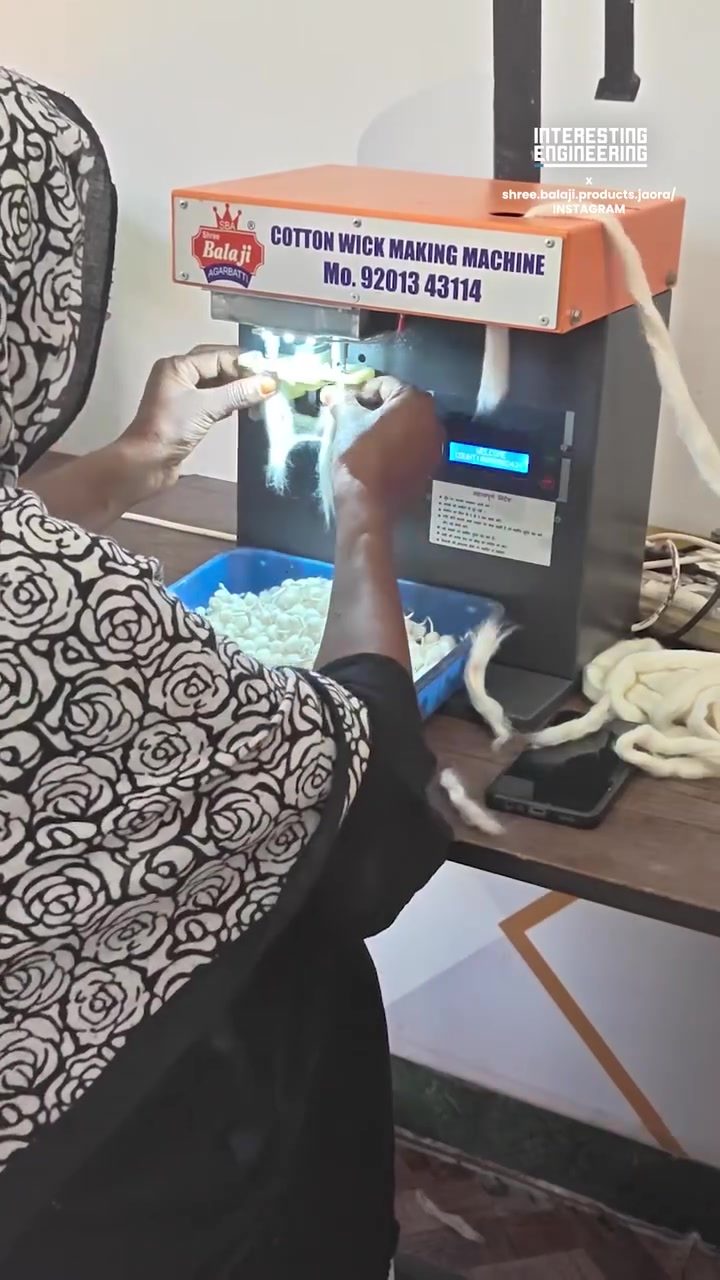
Balaji Agarbatti Cotton Wick Making Machine
Cotton wick making machines are essential for the production of high-quality agarbatti (incense sticks). These machines convert raw cotton fibers into evenly sized wicks, a critical component in the manufacturing process. The Balaji Agarbatti Cotton Wick Making Machine, in particular, stands out for its efficiency and reliability.
Why This Matters
The production of agarbatti involves several steps, and the creation of cotton wicks is one of the most crucial. The quality of the wicks can significantly impact the burning time, fragrance release, and overall performance of the incense sticks. Automated wick making machines like the one produced by Balaji Agarbatti help ensure consistency and efficiency in this process, making them invaluable for manufacturers aiming to scale their production.
Main Discussion
The Importance of Cotton Wicks in Agarbatti Production
Cotton wicks serve as the core of agarbatti, providing the structure that holds the incense material together. The quality and uniformity of these wicks are paramount for consistent burning and fragrance distribution. Poorly made wicks can lead to uneven burning, excessive smoke, or even extinguishing of the incense stick before it has fully burned.
The Balaji Agarbatti Cotton Wick Making Machine
The Balaji Agarbatti Cotton Wick Making Machine is designed to automate the process of converting raw cotton fibers into evenly sized wicks. This machine employs controlled feeding and twisting mechanisms to ensure that each wick is of consistent size and quality. The automation minimizes human error and increases production efficiency, making it an ideal choice for both small-scale and large-scale agarbatti manufacturers.
Key Features
- Controlled Feeding and Twisting: The machine ensures that the cotton fibers are fed and twisted in a controlled manner, resulting in wicks of uniform size and density.
- Scalability: Despite its compact design, the machine is capable of handling high volumes of production, making it suitable for businesses looking to scale their operations.
- Ease of Operation: The machine is relatively simple to operate, requiring minimal training for personnel to handle it effectively.
- Reliability: Known for its durability and low maintenance requirements, the machine offers a reliable solution for consistent wick production.
The Production Process
The production process involves several steps, each crucial for the final quality of the wicks. Here’s a breakdown of how the Balaji Agarbatti Cotton Wick Making Machine operates:
- Raw Material Feeding: Raw cotton fibers are fed into the machine through a controlled mechanism. This ensures that the fibers are evenly distributed and ready for processing.
- Twisting: The machine then twists the fibers into tightly wound wicks. The controlled twisting process ensures that the wicks are of consistent size and density.
- Final Cutting: Once the wicks are formed, they are cut to the desired length and collected into a container. This step ensures that the wicks are ready for the next stage of the agarbatti production process.
Visual Insights
The visual summary of the machine showcases its operational efficiency. The machine takes raw cotton and forms it into tightly wound wicks, which then fall into a container. The compact design of the machine makes it suitable for various production settings, from small workshops to large manufacturing units. The person operating the machine is seen collecting the finished wicks, highlighting the machine's user-friendly design and ease of use.
Practical Tips
Maximizing Efficiency with the Balaji Agarbatti Cotton Wick Making Machine
While the machine is designed for efficiency, there are a few practical tips that can help maximize its performance:
- Maintenance: Regular maintenance is key to keeping the machine in optimal condition. This includes cleaning the machine, checking for any wear and tear, and ensuring that all moving parts are well-lubricated.
- Quality Control: Regularly inspect the wicks produced to ensure that they meet the required standards. Any deviations can indicate issues with the machine that need to be addressed promptly.
- Operator Training: Ensure that the operators are well-trained in handling the machine. Proper training can help prevent errors and improve the overall efficiency of the production process.
Choosing the Right Machine
When selecting a cotton wick making machine, consider the following factors:
- Production Capacity: Ensure that the machine can handle the volume of production required by your business.
- Ease of Use: A user-friendly design can save time and reduce the need for extensive training.
- Maintenance Requirements: Opt for machines that require minimal maintenance and have readily available spare parts.
- Durability: Investing in a durable machine can save costs in the long run, as it will require fewer repairs and replacements.
Important Takeaways
The Balaji Agarbatti Cotton Wick Making Machine is a reliable and efficient solution for agarbatti manufacturers looking to scale their production. Its controlled feeding and twisting mechanisms ensure consistent wick quality, while its compact design and ease of operation make it suitable for various production settings. Regular maintenance, quality control, and proper operator training are essential for maximizing the machine's performance and ensuring high-quality wick production.
Conclusion
Scaling agarbatti production without compromising on quality is a challenge that many manufacturers face. The Balaji Agarbatti Cotton Wick Making Machine addresses this challenge by providing an efficient, reliable, and user-friendly solution for producing consistent, high-quality cotton wicks. By investing in such a machine, manufacturers can streamline their production process and meet the growing demand for high-quality agarbatti.
Watch the Reel
Questions readers ask
What are the key benefits of using the Balaji Agarbatti Cotton Wick Making Machine?
The machine automates the production of cotton wicks, ensuring consistent sizing and high quality. This consistency is crucial for uniform burning and fragrance release in agarbatti, enhancing their overall performance. Additionally, it improves production efficiency by reducing manual labor and increasing output.
How does the machine improve the quality of agarbatti?
The Balaji Agarbatti Cotton Wick Making Machine ensures that each wick is of consistent size and quality. This uniformity is vital for maintaining a steady burn rate and consistent fragrance release, which directly impacts the quality and user experience of the incense sticks.
Can this machine be integrated into existing agarbatti production lines?
Yes, the Balaji Agarbatti Cotton Wick Making Machine is designed to be integrated into existing agarbatti production processes. It can streamline the wick making stage, enhancing the overall efficiency of the production line. Manufacturers should consult with Balaji Agarbatti for specific integration details.
What makes the Balaji Agarbatti Cotton Wick Making Machine stand out?
The machine is renowned for its efficiency and reliability. It produces high-quality wicks with uniform sizing, which is essential for the consistent performance of incense sticks. Its automated process reduces human error and increases production output, making it a valuable addition to any agarbatti manufacturing setup.
What role does the cotton wick play in agarbatti production?
The cotton wick is a critical component in agarbatti production as it affects the burning time and fragrance release. A well-made, consistent wick ensures that the incense stick burns evenly, providing a uniform fragrance experience.
How does automating wick production benefit manufacturers?
Automating wick production with a machine like the one from Balaji Agarbatti reduces the need for manual labor, which can be time-consuming and prone to inconsistencies. This automation leads to increased production efficiency, cost savings, and improved product quality.
Related deep dives
Similar reads based on topic and creator.

Recent articles
Fresh deep dives from the latest Reels we unpacked.




Comments
Be the first to comment.