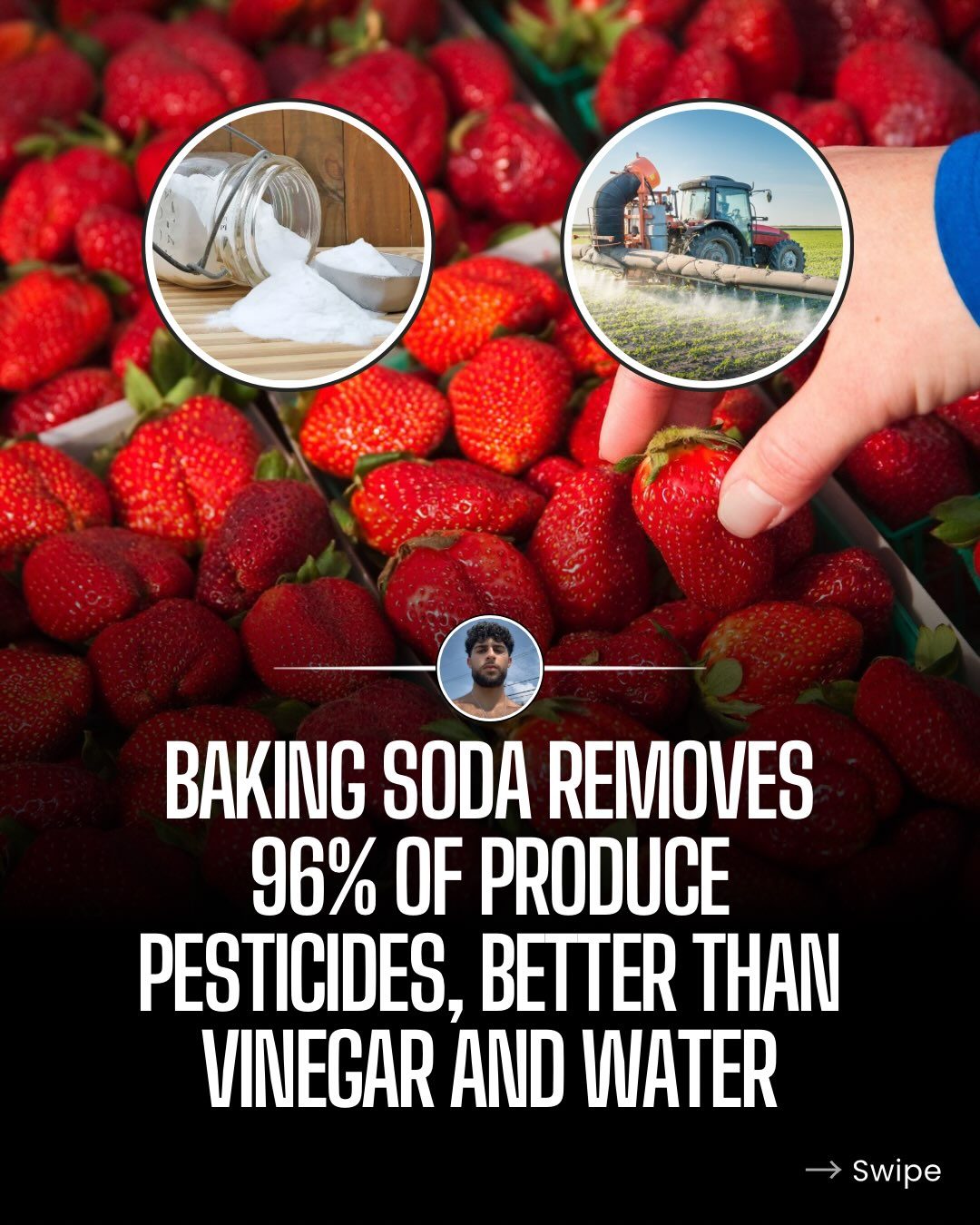
Pesticide Removal with Baking Soda
Pesticide residue on produce is a common concern, but a simple solution might be hiding in your pantry: baking soda. This household staple has been shown to effectively remove pesticides from the surface of various fruits and vegetables. This is a safe and practical method to help mitigate pesticide exposure.
Why This Matters
Pesticides are widely used in agriculture to protect crops from pests and diseases. However, the residues of these chemicals can remain on produce, posing potential health risks. While washing produce with water can help, it is often insufficient. Alkaline solutions, like baking soda, are more effective. Knowing how to properly clean produce can provide peace of mind and improve food safety.
Main Discussion
Understanding Pesticide Residues
Pesticide residues can accumulate on the surface of produce and even penetrate beneath the skin. While peeling or removing the outer layers of certain fruits and vegetables can help, it is not always practical or possible. A better approach is to use a solution that effectively breaks down these residues without compromising the quality of the produce.
The Science Behind Baking Soda
Baking soda, or sodium bicarbonate, is a mild alkaline substance that can help break down the chemical bonds of pesticides. Research from the University of Massachusetts, tested how different washing methods impact the removal of pesticides. The study showed that soaking apples in a 1% baking soda and water solution for 12 to 15 minutes removed approximately 80% of the fungicide thiabendazole and 95.6% of the pesticide phosmet. This method was significantly more effective than washing with plain tap water.
How to Wash Produce with Baking Soda
To remove pesticides from your produce, follow these steps:
- Prepare the Solution: Dissolve 1 teaspoon of baking soda in 2 cups of water.
- Soak the Produce: Place the produce in the solution and let it soak for 12 to 15 minutes.
- Rinse Thoroughly: After soaking, rinse the produce thoroughly with clean water. This step is crucial to remove any remaining pesticides and baking soda residue.
- Dry and Store: Pat the produce dry with a clean towel and store it as usual.
Common Pesticides and Their Removal
Some of the most common pesticides found on produce include phosmet and thiabendazole. Phosmet is an organophosphate insecticide often used on fruits like apples, while thiabendazole is a fungicide commonly applied to various fruits and vegetables. Soaking produce in a baking soda solution has shown to effectively reduce these residues:
- Phosmet: Baking soda can remove up to 96% of phosmet from the surface of produce.
- Thiabendazole: The same solution can remove up to 80% of thiabendazole.
Limitations of Baking Soda
While baking soda is effective in removing surface pesticides, it is important to note that up to 20% of pesticides can still penetrate beneath the skin. This is why choosing organic produce is recommended to minimize pesticide exposure. Organic produce is generally grown without synthetic pesticides, making it a safer option.
Organic Produce: A Safer Alternative
Organic produce is often a better choice when it comes to reducing pesticide exposure. Studies generally find that organic produce has lower pesticide residues than conventional produce. When available, opting for organic fruits and vegetables can provide an additional layer of safety.
Practical Tips
- Consistency is Key: Make it a habit to soak and rinse your produce regularly.
- Store Baking Soda Properly: Keep your baking soda in an airtight container to maintain its effectiveness.
- Check Labels: Look for produce labeled as "USDA Organic" or "organics" to ensure lower pesticide residues.
Important Takeaways
- Effectiveness: Baking soda is a highly effective method for removing surface pesticides from produce.
- Consistency: Regular use of this method can significantly reduce pesticide exposure.
- Complementary Measures: Choosing organic produce and proper storage can further enhance food safety.
Conclusion
Using baking soda to remove pesticides from produce is a practical and effective method. By soaking your fruits and vegetables in a baking soda solution, you can significantly reduce pesticide residues and improve food safety. Additionally, incorporating organic produce into your diet can offer further benefits. Taking these steps ensures that you and your family can enjoy fresh, clean produce with peace of mind.
Watch the Reel
Questions readers ask
How does baking soda help in removing pesticide residues from fruits and vegetables?
Baking soda's alkaline properties make it an effective tool for breaking down and removing pesticide residues. Pesticides often have lower solubility in alkaline solutions, which allows baking soda to dissolve and wash away pesticide residues more effectively than water alone. It's a simple and practical way to reduce exposure to chemical residues.
Can baking soda remove specific pesticides like thiabendazole and phosmet?
Yes, baking soda has been shown to effectively remove specific pesticides. For example, studies have indicated that a baking soda solution can significantly reduce thiabendazole and phosmet residues on apples. This makes it a versatile and reliable method for cleaning a variety of produce.
Is it safe to use baking soda to clean all types of fruits and vegetables?
Baking soda is generally safe for cleaning most fruits and vegetables. However, it's important to note that some produce may be more delicate and could be affected by the alkaline solution. To be cautious, avoid using baking soda on very soft or delicate produce like berries, and always rinse thoroughly after soaking.
How long should I soak fruits and vegetables in a baking soda solution?
The ideal soaking time can vary, but a common recommendation is to soak produce in a baking soda solution (about 1-2 teaspoons of baking soda per quart of water) for 12-15 minutes. This duration allows the baking soda to effectively break down and remove pesticide residues without causing significant damage to the produce.
Can I use baking soda to clean organic produce?
Yes, using baking soda to clean organic produce is a good practice. While organic produce is grown without synthetic pesticides, it can still come into contact with natural pesticides or other contaminants. Using a baking soda solution ensures an extra layer of cleanliness, helping to remove any unwanted residues and providing peace of mind.
Recent articles
Fresh deep dives from the latest Reels we unpacked.




Comments
Be the first to comment.