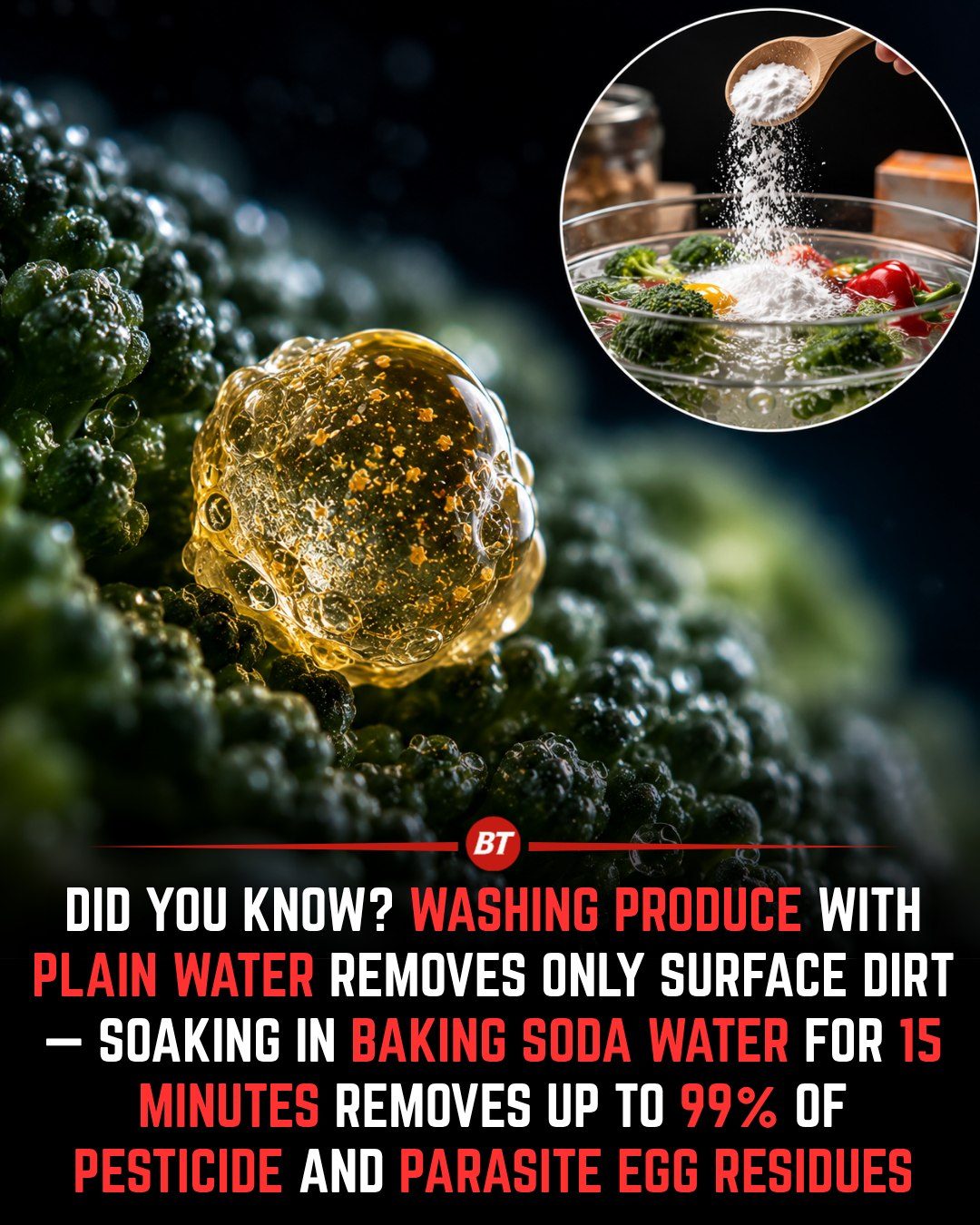
Produce Washing for Better Food Safety
Washing fruits and vegetables is an essential step in food preparation. However, a simple rinse under plain water may not be enough to remove all harmful residues from your produce. Research has indicated that while rinsing can remove some surface dirt, soaking in a baking soda solution can be more effective at reducing pesticide residues and parasite eggs. This method offers a practical and accessible way to improve the safety of your produce.
Why this Matters
Ensuring food safety is a critical aspect of healthy eating. Consuming fruits and vegetables is vital for a balanced diet, but they can sometimes carry unwanted contaminants. Pesticides, parasite eggs, and other harmful microorganisms can pose health risks. Understanding how to effectively wash produce helps to minimize these risks, making your meals safer and healthier.
Main Discussion
The Limitations of Plain Water
Rinsing produce under plain water does help remove surface dirt and some residues. However, this method has its limitations. Water alone cannot penetrate the skin of fruits and vegetables, meaning it can't reach pesticides that have already been absorbed. Additionally, plain water rinsing is not effective in removing all harmful microorganisms, including parasite eggs.
The Benefits of Baking Soda
Soaking fruits and vegetables in a baking soda solution is a more effective method for reducing surface pesticide residues. A 2017 study published in the Journal of Agricultural and Food Chemistry found that soaking apples in a baking soda and water solution for 12-15 minutes removed significantly more pesticide residue compared to plain water rinsing or using a commercial bleach-based produce wash. This method works because baking soda helps to break down and loosen some pesticides, making them easier to wash away.
Practical Tips
- Prepare a Baking Soda Solution: Mix 1 teaspoon of baking soda into 2 cups of water. This should be sufficient for soaking a moderate amount of produce.
- Soak for 10-15 Minutes: Place your fruits or vegetables in the solution and let them soak for at least 10-15 minutes. This duration allows the baking soda to effectively break down and remove pesticide residues.
- Rinse Thoroughly: After soaking, rinse the produce thoroughly under clean running water. This step ensures that any remaining baking soda and loosened residues are washed away.
Storing Produce
After washing, it's crucial to dry your produce thoroughly. Moisture can promote the growth of bacteria, so pat your fruits and vegetables dry with a clean towel or paper towel.
Additional Safety Measures
Washing produce is just one step in ensuring food safety. Other important practices include:
- Cooking Properly: Cooking can kill harmful bacteria and parasites that may be present on produce.
- Peeling When Appropriate: For fruits and vegetables where the skin will not be consumed, peeling can remove any remaining pesticides and residues.
- Buying from Trusted Sources: Purchasing produce from reliable sources can reduce the likelihood of consuming contaminated fruits and vegetables.
Common Myths and Misconceptions
One common misconception is that commercial produce washes are always more effective. While some commercial washes may be effective, they are often more expensive and may contain chemicals that some people prefer to avoid. Baking soda is a natural, cost-effective alternative.
Important Takeaways
- Rinsing with Plain Water: Helps remove surface dirt but not all pesticide residues or harmful microorganisms.
- Baking Soda Solution: More effective at reducing surface pesticide residues and parasite eggs.
- Soaking Time: Aim for 10-15 minutes for the baking soda method to work effectively.
- Additional Safety Measures: Cooking, peeling, and buying from trusted sources are crucial for overall food safety.
Conclusion
Washing produce with a baking soda solution is a simple yet effective way to reduce harmful residues on fruits and vegetables. This method, backed by scientific research, provides a practical solution for improving food safety. Incorporating this technique into your produce preparation routine can help ensure that you and your family are consuming safer, healthier produce.
Watch the Reel
Questions readers ask
How does a baking soda soak help in removing pesticides from produce?
A baking soda soak helps to break down and remove more pesticide residues compared to a simple water rinse. The alkaline nature of baking soda assists in dissolving certain pesticides, making it more effective at reducing these contaminants on the surface of fruits and vegetables.
What is the recommended method for washing produce with baking soda?
To wash produce with baking soda, mix one teaspoon of baking soda with two cups of water. Submerge the produce in the solution and let it soak for 12-15 minutes. After soaking, rinse thoroughly with clean water to remove any residue.
Can a baking soda soak remove parasite eggs from produce?
Yes, soaking produce in a baking soda solution can help remove parasite eggs. The solution can penetrate and dislodge eggs that may be present on the surface of fruits and vegetables, reducing the risk of contamination.
Why is a baking soda soak more effective than just rinsing with water?
A baking soda soak is more effective than a simple water rinse because it not only removes surface dirt but also breaks down and dissolves some pesticide residues and parasite eggs. The soaking process allows the solution to penetrate and lift off contaminants more thoroughly.
How long should I soak my produce in a baking soda solution?
The recommended soaking time for produce in a baking soda solution is 12-15 minutes. This duration allows the solution to effectively break down and remove pesticides and parasite eggs, enhancing the overall cleaning process.
Is a baking soda soak suitable for all types of produce?
A baking soda soak is suitable for most fruits and vegetables, but it's important to note that delicate produce may require a gentler approach. For example, soft or thin-skinned fruits like berries may not benefit as much and can be gently rinsed instead. Always consider the type of produce and adjust the cleaning method accordingly.
Can a baking soda soak be used to remove dirt from produce?
Yes, a baking soda soak can help remove dirt from produce. The solution can loosen and dissolve dirt particles, making it easier to rinse them off. However, for produce with heavy soil, a preliminary rinse under running water may be beneficial before soaking.
Related deep dives
Similar reads based on topic and creator.




Recent articles
Fresh deep dives from the latest Reels we unpacked.




Comments
Be the first to comment.