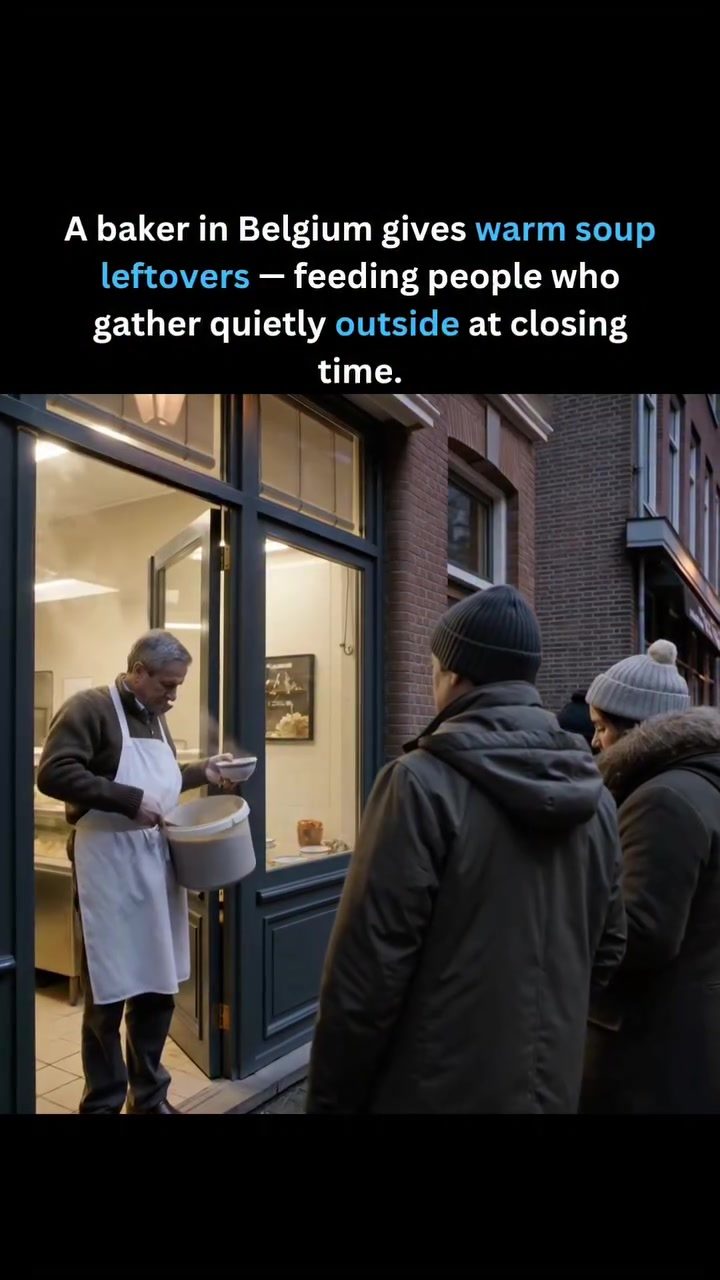
Donating Leftover Soup: A Baker's Acts of Kindness in Belgium
Bakers, hard at work each day, are often seen as the backbone of their communities. One baker in Belgium has taken this role to heart, beyond the fresh bread and delightful pastries. This baker has made a difference by donating leftover soup to those in need. The act of generosity has become a daily ritual.
Why This Matters
In today’s world, where food waste is a growing concern, initiatives like this one are crucial. They not only help reduce waste but also provide sustenance to those who might otherwise go hungry. For the people who gather at the bakery each day, this act of kindness provides a warm, nourishing meal. It also fosters a sense of community and mutual support, which is invaluable in today's fast-paced society.
The Daily Ritual
Timing and Location
Every day, as the bakery closes, people gather outside. The timing is strategic: it coincides with the end of the day, when the bakery has surplus soup. The act takes place outside the bakery, making it accessible and visible to the community. It’s a simple yet powerful gesture that resonates deeply with those who witness it.
The Unity of the Bows
The bowl of soup is more than just a meal; it’s a symbol of community and caring. The baker’s daily ritual of handing out bowls of soup to those gathered outside is a poignant display of generosity. The act, while simple, highlights the importance of sharing and caring for one another.
The Warmth Beyond the Soup
The soup is not just a meal; it’s a beacon of warmth and kindness. The act of providing a warm bowl of soup to those in need is a powerful example of how small acts of kindness can make a big difference. The warmth of the soup extends to the hearts of those who receive it, fostering a sense of community and mutual support.
Practical Tips
Starting a Food Donation Program
If you’re inspired to start a food donation program, consider the following steps:
- Identify Surplus Food: Start by identifying the surplus food that can be donated. This could be leftover soup, bread, or other baked goods.
- Find a Trusted Partner: Partner with a local charity or organization that can help distribute the food. This ensures that the food reaches those who need it most.
- Create a Schedule: Establish a consistent schedule for food distribution. This helps build trust and reliability within the community.
- Engage the Community: Involve your community in the initiative. Encourage them to participate, whether it’s by donating food, volunteering, or spreading the word.
On-Site Food Distribution
If you prefer to distribute food on-site, consider the following:
- Choose a Comfortable Location: Find a comfortable, accessible location outside your establishment. This makes it easier for people to gather and receive the food.
- Maintain Quality: Ensure that the food is fresh and of high quality. This helps build trust and encourages more people to participate.
- Provide a Warm Welcome: Greet each person with a warm smile and a friendly word. This makes the experience more personal and meaningful.
Important Takeaways
Simple Acts of Kindness
From personal experience, simple acts of kindness can have a profound impact. By giving a warm bowl of soup, the baker is providing a small measure of comfort and nourishment, but the impact of the act is far greater. It builds community, fosters mutual support, and shows that a simple act of kindness can make a big difference. This can inspire us to find ways to give back to our communities, whether it's through food donations, volunteering, or other acts of kindness.
Encouraging Others
Witnessing such acts of kindness can inspire others to do the same. By sharing your story, you can encourage others to follow suit. This ripple effect can lead to a more compassionate and supportive community.
Conclusion
A baker in Belgium donating leftover soup is a beautiful example of how simple acts of kindness can make a big difference. This daily ritual not only helps reduce food waste but also provides a warm, nourishing meal to those in need. It fosters a sense of community and mutual support, making it a powerful example of how we can all contribute to a more compassionate world.
Watch the Reel
Questions readers ask
Who is the Belgian baker that provides daily soup handouts?
The article features a Belgian baker who has made it a daily practice to donate leftover soup to those in need. The exact baker is not named.
Where can I find a soup kitchen in Belgium?
The article mentions a baker in Belgium who provides soup to those in need, but does not specify the exact location of the bakery. For more information, contact local charities and community centers.
How does this initiative help reduce food waste?
The baker's initiative helps reduce food waste by repurposing leftover soup that would otherwise go to waste. This not only helps the environment but also provides nourishing meals to those in need.
What impact does the soup donation have on the community?
The daily soup donation fosters a sense of community and mutual support. It allows the community to come together and provides sustenance to those who might otherwise go hungry.
What are the benefits of donating leftover soup?
Donating leftover soup has multiple benefits. It helps reduce food waste, provides nourishing meals to those in need, and fosters a sense of community and mutual support.
How can I support similar initiatives in my community?
To support similar initiatives, you can start by identifying local businesses that generate food waste, such as bakeries or restaurants, and offer to help them donate their leftovers to those in need.
What are some ways to reduce food waste?
Reducing food waste can be achieved through initiatives such as donating leftover food to those in need, composting, and repurposing leftovers into new meals. The baker's initiative in Belgium is a great example of the first method.
Recent articles
Fresh deep dives from the latest Reels we unpacked.




Comments
Be the first to comment.